
UAE Air Defences Successfully Intercept Iranian Missile and Drones
Here's what it means for you.
Your safety in Dubai remains a priority, but ongoing regional conflicts could influence economic stability and security measures.
Why it matters
The interception highlights the UAE's defensive capabilities amid escalating tensions in the Middle East, impacting regional security dynamics.
What happened (in 30 seconds)
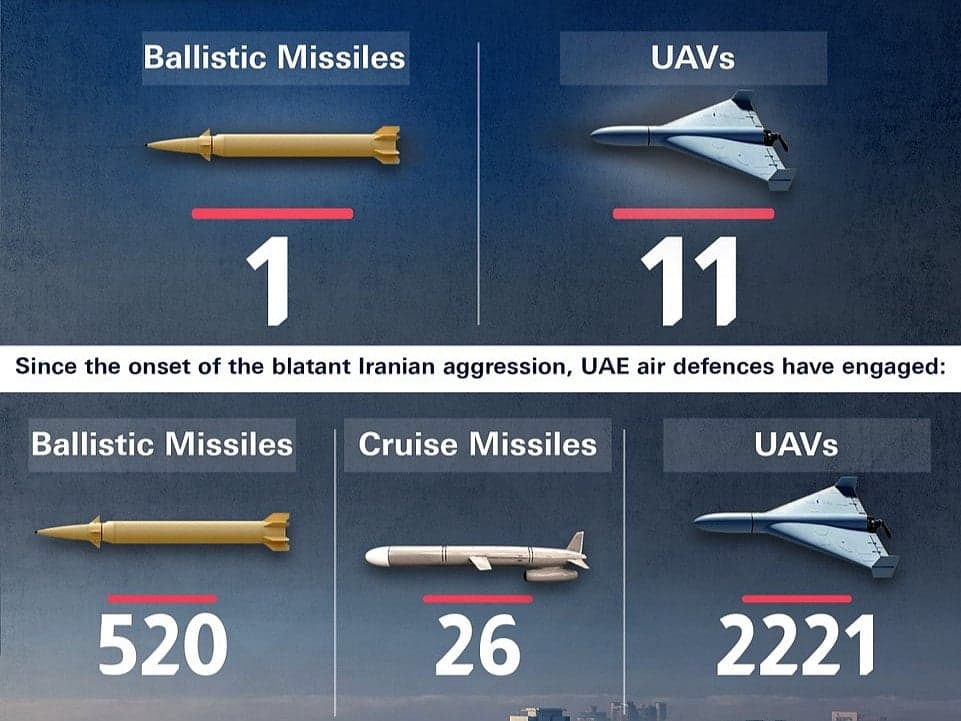
- On April 7, 2026, UAE air defences intercepted one ballistic missile and 11 drones launched from Iran.
- The Ministry of Defence confirmed no casualties or damage, emphasizing readiness to counter threats.
- This incident is part of a broader series of Iranian attacks linked to the US-Israel conflict, with 520 missiles intercepted since the campaign began.
The context you actually need
- Iran's aerial attacks on the UAE began in late February 2026, targeting facilities perceived to support US-Israel military actions.
- UAE air defences have engaged a total of 520 ballistic missiles, 26 cruise missiles, and 2,221 drones since the onset of these attacks.
- Limited casualties have been reported, totaling 13 fatalities and 221 injuries, indicating a need for robust defensive measures.
What's really happening
The April 7 interception is a critical event in the ongoing conflict between Iran and the UAE, which has intensified due to the UAE's alignment with US and Israeli military strategies. Iran's recent missile and drone strikes are perceived as retaliatory actions against the UAE for its support of the US-Israel war on Iran. This conflict has led to a series of aerial assaults targeting facilities in the UAE, including those linked to US interests, such as aluminium plants.
Since the beginning of these attacks, the UAE has demonstrated a strong defensive posture, successfully intercepting a significant number of aerial threats. The recent interception of one ballistic missile and 11 drones showcases the effectiveness of the UAE's air defence systems. The Ministry of Defence's statement reaffirming its commitment to national sovereignty and security reflects a broader strategy to deter further Iranian aggression.
While the immediate aftermath of the interception saw no casualties or damage, the broader implications for the UAE's security landscape are profound. The ongoing conflict has already resulted in significant economic repercussions, including a $120 billion loss in the UAE stock market in March 2026. This economic instability can have a cascading effect on various sectors, particularly those reliant on foreign investment and tourism.
Moreover, the UAE's defensive measures and military readiness are likely to influence regional dynamics, prompting neighboring countries to assess their own security strategies. The situation remains fluid, with the potential for further escalations as Iran continues its campaign against perceived adversaries in the region.
As the UAE navigates these challenges, the implications for residents and businesses in Dubai are significant. While the April 7 interception did not result in immediate disruptions, previous incidents have caused minor property damage and injuries. The ongoing threat of aerial attacks necessitates heightened vigilance and preparedness, which could lead to increased security measures and potential impacts on daily life.
Who feels it first (and how)
- Residents of Dubai: Increased security measures may affect daily routines and peace of mind.
- Business sectors: Companies reliant on stability may face challenges due to regional tensions.
- Investors: Fluctuations in the stock market and economic instability could impact investment decisions.
What to watch next
- Further Iranian attacks: Monitoring the frequency and scale of Iranian aerial assaults will be crucial for assessing regional security.
- UAE military responses: Any escalation in military actions by the UAE could indicate a shift in the conflict's dynamics.
- Economic indicators: Watch for stock market reactions and foreign investment trends in the UAE as the situation evolves.
The UAE successfully intercepted one ballistic missile and 11 drones on April 7, 2026.
Ongoing tensions will continue to influence regional security and economic stability.
The long-term impact of these conflicts on UAE's foreign relations and economic growth remains uncertain.
Frequently Asked Questions
- Why it matters?
- The interception highlights the UAE's defensive capabilities amid escalating tensions in the Middle East, impacting regional security dynamics.
- What happened (in 30 seconds)?
- On April 7, 2026, UAE air defences intercepted one ballistic missile and 11 drones launched from Iran. The Ministry of Defence confirmed no casualties or damage, emphasizing readiness to counter threats. This incident is part of a broader series of Iranian attacks linked to the US-Israel conflict, with 520 missiles intercepted since the campaign began.
- What's really happening?
- The April 7 interception is a critical event in the ongoing conflict between Iran and the UAE, which has intensified due to the UAE's alignment with US and Israeli military strategies. Iran's recent missile and drone strikes are perceived as retaliatory actions against the UAE for its support of the US-Israel war on Iran. This conflict has led to a series of aerial assaults targeting facilities in the UAE, including those linked to US interests, such as aluminium plants. Since the beginning of
- Who feels it first (and how)?
- Residents of Dubai: Increased security measures may affect daily routines and peace of mind. Business sectors: Companies reliant on stability may face challenges due to regional tensions. Investors: Fluctuations in the stock market and economic instability could impact investment decisions.
- What to watch next?
- Further Iranian attacks: Monitoring the frequency and scale of Iranian aerial assaults will be crucial for assessing regional security. UAE military responses: Any escalation in military actions by the UAE could indicate a shift in the conflict's dynamics. Economic indicators: Watch for stock market reactions and foreign investment trends in the UAE as the situation evolves.
UAE-based English-language newspaper covering regional politics, economics, and global affairs.
"The National reflects Emirati policy perspectives while maintaining international editorial standards."
— A47 Editor
UAE intercepts one ballistic missile and 11 drones on Tuesday
On April 7, 2026, the United Arab Emirates (UAE) intercepted one ballistic missile and 11 drones, marking a continuation of its defensive operations amid escalating military tensions in the region. This incident underscores the UAE's commitment to sa...
UAE-based newspaper covering Gulf politics, society, and international developments.
"Gulf News is one of the UAE’s most prominent English-language publications."
— A47 Editor
UAE air defences intercept 1 ballistic missile and 11 drones
The United Arab Emirates (UAE) air defense systems successfully intercepted one ballistic missile and eleven drones on April 7, 2026, as part of ongoing military operations to protect its airspace from threats. This interception highlights the UAE's ...
UAE-based newspaper covering Gulf politics, society, and international developments.
"Gulf News is one of the UAE’s most prominent English-language publications."
— A47 Editor
UAE air defences intercept Iranian missiles and drones
The United Arab Emirates (UAE) air defense systems successfully intercepted multiple Iranian missiles and drones, reflecting an ongoing escalation in military tensions in the Gulf region. This operation underscores the UAE's commitment to safeguardin...
A curated Gulf News feed featuring major stories across news, business, opinion, and lifestyle.
"Gulf News is a major UAE newspaper whose featured stories feed reflects a broad editorial mix shaped for a Gulf audience."
— A47 Editor
UAE air defences intercept Iranian missiles and drones
The United Arab Emirates (UAE) successfully intercepted multiple Iranian missiles and drones on April 6, 2026, as tensions in the Gulf region escalated. The UAE Ministry of Defence reported the interception of 12 ballistic missiles, 2 cruise missiles...