
Trump Issues Ultimatum to Iran Amid Fragile Ceasefire and Escalating Tensions
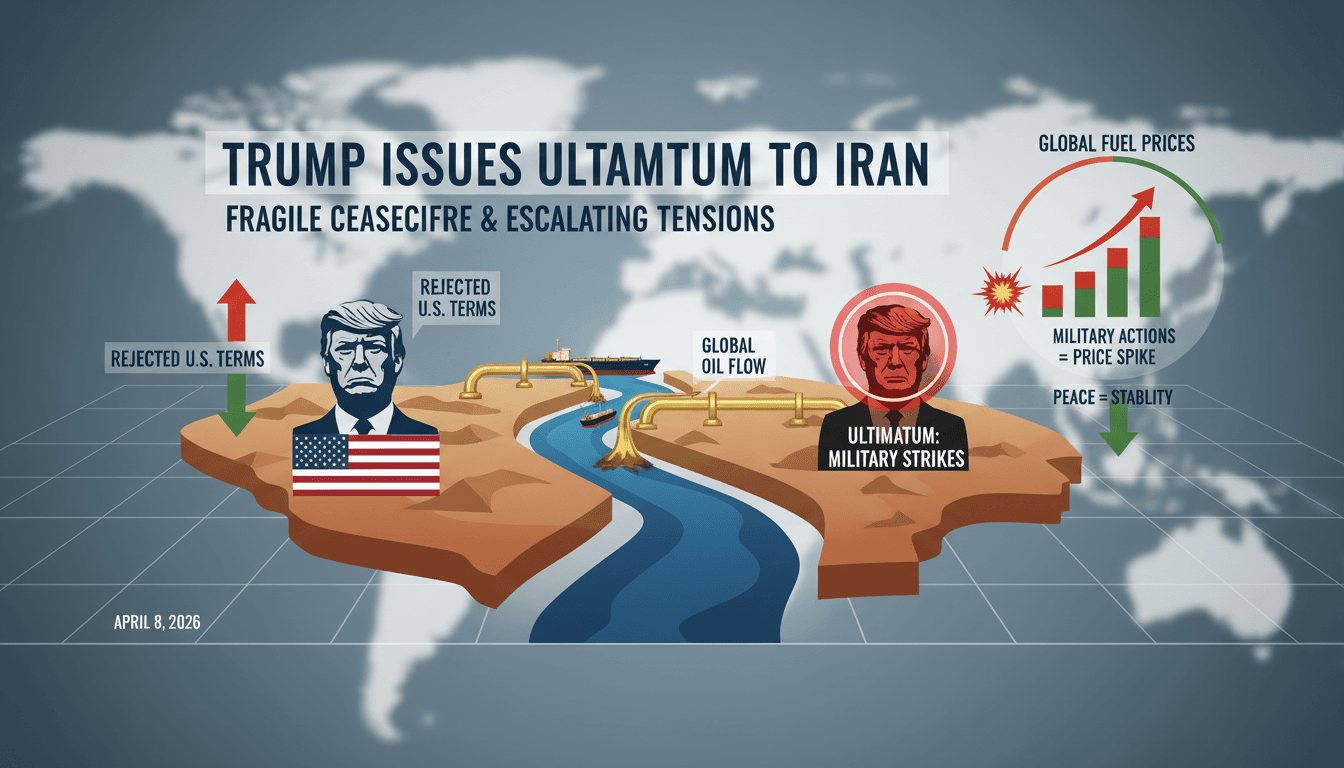
Here's what it means for you.
The escalating tensions in the Middle East could lead to significant economic repercussions, including rising fuel prices and disrupted trade routes.
Why it matters
The fragile ceasefire and the potential for renewed conflict directly impact global oil markets and geopolitical stability.
What happened (in 30 seconds)
- Trump issued a warning that U.S. strikes on Iran would resume if ceasefire terms are not met, emphasizing the need for no Iranian nuclear enrichment and safe passage through the Strait of Hormuz.
- Iran rejected U.S. conditions and proposed its own peace plan, while Israel continued military operations against Hezbollah in Lebanon.
- A fragile ceasefire is in effect, mediated by Pakistan, but tensions remain high with ongoing military actions and threats from both sides.
The context you actually need
- The 2026 Iran War escalated after Iranian attacks on shipping in the Strait of Hormuz, leading to U.S. and Israeli strikes on Iranian infrastructure.
- The closure of the Strait of Hormuz disrupted 20% of global oil shipments, causing a surge in oil prices and economic instability in the region.
- Pakistan's mediation has temporarily halted U.S. strikes, but Israeli actions against Hezbollah continue, complicating the peace process.
What's really happening
The current situation is a culmination of escalating tensions that began with Iran's aggressive actions in the Strait of Hormuz, where it closed the vital shipping lane on March 4, 2026. This closure was a direct response to perceived threats from the U.S. and Israel, who had been conducting airstrikes on Iranian military and nuclear facilities. The U.S. strikes were a reaction to Iran's attacks on over 20 vessels in the Strait, which significantly impacted global oil supply and prices.
As a result, the geopolitical landscape has become increasingly volatile. The U.S. has maintained a military presence in the region, and President Trump's recent ultimatum underscores the administration's hardline stance on Iran's nuclear ambitions. The ultimatum, which was publicly shared on Truth Social, indicates that U.S. forces will remain deployed until Iran agrees to specific terms, including halting nuclear enrichment and ensuring safe passage through the Strait of Hormuz.
Iran's rejection of these terms and its proposal of a 10-point peace plan reflect its unwillingness to concede to U.S. demands. This defiance is compounded by Israel's ongoing military operations against Hezbollah, which are seen as a direct threat to Iranian interests in Lebanon and the broader region. The Israeli strikes on Beirut, which resulted in over 250 casualties, have further escalated tensions and prompted calls for a more inclusive peace process that considers Lebanon's role.
The economic implications of this conflict are significant. The closure of the Strait of Hormuz has already led to a 33% surge in fuel prices in Dubai, affecting trade and tourism. As oil prices rise, the global economy could face increased inflationary pressures, particularly in countries heavily reliant on oil imports. The UAE's advocacy for a military coalition to reopen the Strait highlights the urgency of the situation, as disrupted shipping routes threaten not only regional stability but also global supply chains.
Who feels it first (and how)
- Oil and gas companies: Increased fuel prices and potential supply shortages could impact profitability and operational costs.
- Shipping and logistics firms: Disruptions in trade routes through the Strait of Hormuz may lead to delays and increased shipping costs.
- Tourism and hospitality sectors in the UAE: Rising fuel prices and regional instability could deter tourists, impacting revenue.
- Middle Eastern governments: Countries like the UAE may face economic strain due to increased military spending and the need for diplomatic interventions.
What to watch next
- Peace talks scheduled for April 12, 2026: The outcomes of these discussions in Islamabad will be crucial in determining the future of U.S.-Iran relations and regional stability.
- Oil price fluctuations: Monitor how the market reacts to ongoing military actions and the potential for renewed conflict, as prices are highly sensitive to geopolitical developments.
- Military movements in the region: Keep an eye on U.S. and Israeli military actions, as any escalation could lead to further instability and economic repercussions.
The ceasefire is fragile, and military actions continue despite diplomatic efforts.
Oil prices will remain volatile as tensions persist, impacting global markets.
The long-term effectiveness of the peace talks and whether they will lead to a sustainable resolution.
Frequently Asked Questions
- Why it matters?
- The fragile ceasefire and the potential for renewed conflict directly impact global oil markets and geopolitical stability.
- What happened (in 30 seconds)?
- Trump issued a warning that U.S. strikes on Iran would resume if ceasefire terms are not met, emphasizing the need for no Iranian nuclear enrichment and safe passage through the Strait of Hormuz. Iran rejected U.S. conditions and proposed its own peace plan, while Israel continued military operations against Hezbollah in Lebanon. A fragile ceasefire is in effect, mediated by Pakistan, but tensions remain high with ongoing military actions and threats from both sides.
- What's really happening?
- The current situation is a culmination of escalating tensions that began with Iran's aggressive actions in the Strait of Hormuz, where it closed the vital shipping lane on March 4, 2026. This closure was a direct response to perceived threats from the U.S. and Israel, who had been conducting airstrikes on Iranian military and nuclear facilities. The U.S. strikes were a reaction to Iran's attacks on over 20 vessels in the Strait, which significantly impacted global oil supply and prices. As a r
- Who feels it first (and how)?
- Oil and gas companies: Increased fuel prices and potential supply shortages could impact profitability and operational costs. Shipping and logistics firms: Disruptions in trade routes through the Strait of Hormuz may lead to delays and increased shipping costs. Tourism and hospitality sectors in the UAE: Rising fuel prices and regional instability could deter tourists, impacting revenue. Middle Eastern governments: Countries like the UAE may face economic strain due to increased military s
- What to watch next?
- Peace talks scheduled for April 12, 2026: The outcomes of these discussions in Islamabad will be crucial in determining the future of U.S.-Iran relations and regional stability. Oil price fluctuations: Monitor how the market reacts to ongoing military actions and the potential for renewed conflict, as prices are highly sensitive to geopolitical developments. Military movements in the region: Keep an eye on U.S. and Israeli military actions, as any escalation could lead to further instability
Public radio coverage of American news and issues.
"NPR is an American public media organization known for thoughtful reporting and a slightly left-leaning editorial tone."
— A47 Editor
Israel vows to continue fighting Hezbollah but agrees to talks with Lebanon
Israel's Prime Minister has announced that the government will initiate talks with Lebanon while simultaneously committing to continue military operations against Hezbollah, an Iran-backed militant group, despite a fragile ceasefire involving Iran.
International stories from NPR’s global desk.
"NPR is an American public media organization known for thoughtful reporting and a slightly left-leaning editorial tone."
— A47 Editor
Israel vows to continue fighting Hezbollah but agrees to talks with Lebanon
Israel's Prime Minister has announced that the government will initiate talks with Lebanon while simultaneously committing to continue military operations against Hezbollah, an Iran-backed militant group, despite a fragile ceasefire involving Iran.
Oil, metals, and agriculture: supply/demand headlines, OPEC chatter, inventories, and price action.
"Solid tape for energy and metals traders tracking macro and micro catalysts."
— A47 Editor
Analysis-As Trump claims victory, Iran emerges bruised but powerful with leverage over Hormuz
Following a recent announcement by former President Donald Trump, a two-week conditional ceasefire has been established between the United States and Iran, allowing for the temporary reopening of the strategically vital Strait of Hormuz. This develop...