
US Summons Iraqi Ambassador Following Drone Strike on Diplomatic Facility in Baghdad
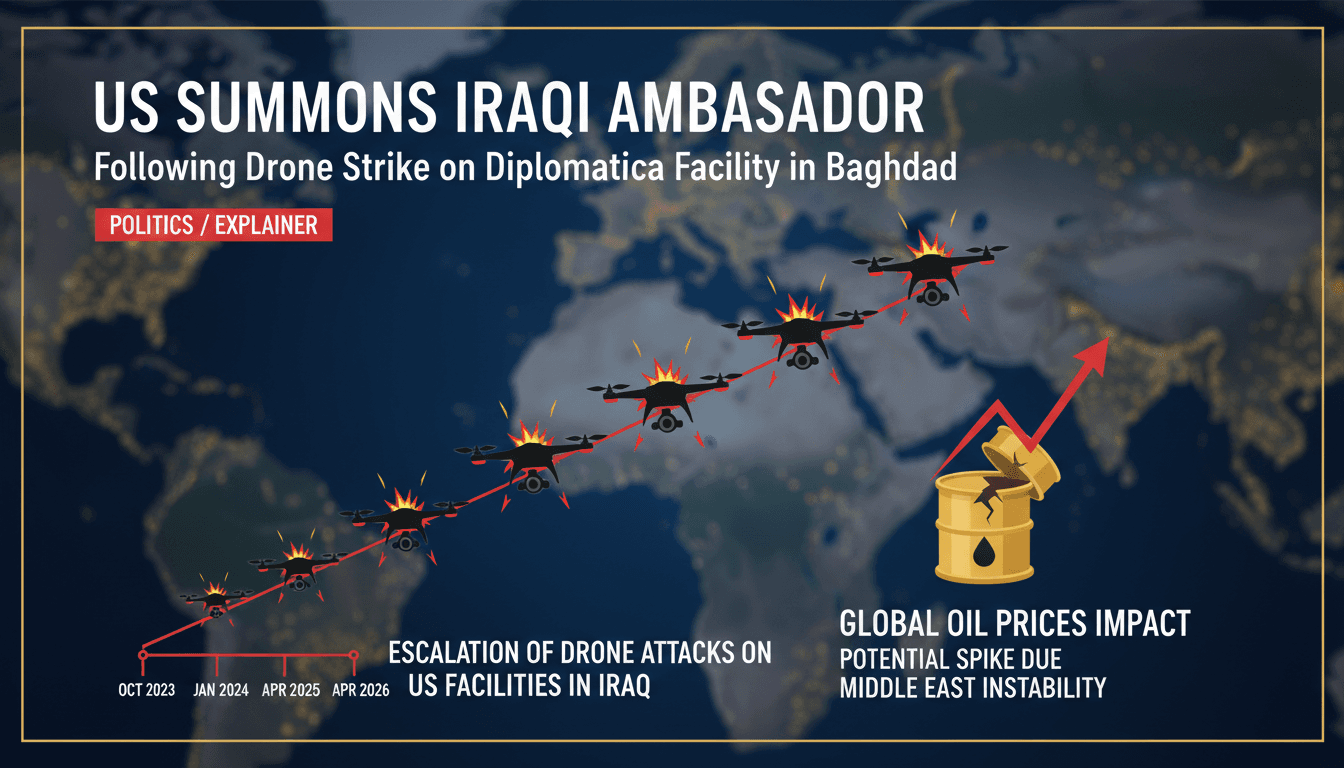
Here's what it means for you.
Increased geopolitical tensions could impact global oil prices and air travel, affecting your business operations and travel plans.
Why it matters
This incident underscores the fragility of U.S.-Iraq relations and the potential for broader regional instability.
What happened (in 30 seconds)
- On April 9, 2026, the U.S. State Department summoned Iraq's ambassador after a drone strike on a U.S. diplomatic facility in Baghdad.
- One drone struck the Baghdad Diplomatic Support Center, attributed to an Iran-aligned Iraqi militia, but no casualties were reported.
- U.S. Deputy Secretary of State Christopher Landau criticized Iraq's failure to prevent such attacks and demanded enhanced security measures.
The context you actually need
- Ongoing drone and rocket attacks by Iran-backed militias on U.S. facilities in Iraq have been a pattern throughout 2026, reflecting rising geopolitical tensions.
- Iraq's security environment is fragile, influenced by pro-Iran factions that complicate the U.S. presence aimed at countering ISIS.
- The U.S. has called for Iraq to dismantle Iran-aligned militias, indicating a push for greater accountability and security in the region.
What's really happening
The drone strike on the U.S. diplomatic facility in Baghdad is not an isolated incident but part of a larger pattern of aggression from Iran-aligned militias. These groups have increasingly targeted U.S. interests in Iraq, reflecting the broader geopolitical tensions in the region, particularly in light of U.S.-Israel strikes on Iran and subsequent retaliatory actions. The attack was executed using multiple drones, with one successfully hitting the Baghdad Diplomatic Support Center, causing damage but fortunately no injuries.
This incident prompted a swift response from the U.S. State Department, highlighting the growing frustration with Iraq's inability to secure its territory against such threats. Deputy Secretary of State Christopher Landau's summoning of the Iraqi ambassador signals a serious diplomatic rebuke, emphasizing the U.S. demand for enhanced security measures to protect American interests abroad. The U.S. is not only concerned about the immediate implications of the drone strike but also about the broader security architecture in Iraq, which has been compromised by the influence of Iran-aligned factions.
The ongoing pattern of attacks raises critical questions about Iraq's sovereignty and its ability to manage internal security threats. The U.S. military presence in Iraq, initially justified by the fight against ISIS, is now increasingly viewed through the lens of protecting U.S. diplomatic and military assets from hostile actions. This shift in focus could lead to a reevaluation of U.S. engagement strategies in the region, potentially increasing military support or pressure on the Iraqi government to take more decisive action against these militias.
Moreover, the implications of this incident extend beyond diplomatic circles. The heightened tensions could lead to fluctuations in oil prices, particularly Brent crude, as regional instability often triggers market reactions. For businesses and individuals reliant on stable oil prices, this could translate into increased costs and economic uncertainty. Additionally, air travel could be affected by potential airspace restrictions or heightened security measures in the region, impacting travel plans and logistics.
Who feels it first (and how)
- U.S. Government Officials: Increased pressure to enhance security measures and diplomatic strategies in Iraq.
- Iraqi Government: Faces scrutiny over its security capabilities and potential backlash from pro-Iran factions.
- Businesses in the Oil Sector: May experience volatility in oil prices, affecting operational costs and profitability.
- Travelers and Airlines: Potential disruptions in air travel due to heightened security and regional instability.
What to watch next
- U.S. Response: Watch for any changes in U.S. military presence or strategy in Iraq, as this could signal a shift in engagement levels.
- Iraqi Security Measures: Monitor Iraq's actions to dismantle Iran-aligned militias and enhance security around U.S. facilities, which will indicate the government's commitment to stability.
- Oil Price Fluctuations: Keep an eye on Brent crude prices, as escalations in Iraq could lead to increased volatility impacting global markets.
The drone strike occurred on April 9, 2026, targeting a U.S. diplomatic facility in Baghdad.
Increased diplomatic tensions between the U.S. and Iraq will continue, potentially affecting U.S. military strategy in the region.
The immediate economic impact on global oil markets and air travel remains uncertain, depending on how the situation evolves.
Frequently Asked Questions
- Why it matters?
- This incident underscores the fragility of U.S.-Iraq relations and the potential for broader regional instability.
- What happened (in 30 seconds)?
- On April 9, 2026, the U.S. State Department summoned Iraq's ambassador after a drone strike on a U.S. diplomatic facility in Baghdad. One drone struck the Baghdad Diplomatic Support Center, attributed to an Iran-aligned Iraqi militia, but no casualties were reported. U.S. Deputy Secretary of State Christopher Landau criticized Iraq's failure to prevent such attacks and demanded enhanced security measures.
- What's really happening?
- The drone strike on the U.S. diplomatic facility in Baghdad is not an isolated incident but part of a larger pattern of aggression from Iran-aligned militias. These groups have increasingly targeted U.S. interests in Iraq, reflecting the broader geopolitical tensions in the region, particularly in light of U.S.-Israel strikes on Iran and subsequent retaliatory actions. The attack was executed using multiple drones, with one successfully hitting the Baghdad Diplomatic Support Center, causing dama
- Who feels it first (and how)?
- U.S. Government Officials: Increased pressure to enhance security measures and diplomatic strategies in Iraq. Iraqi Government: Faces scrutiny over its security capabilities and potential backlash from pro-Iran factions. Businesses in the Oil Sector: May experience volatility in oil prices, affecting operational costs and profitability. Travelers and Airlines: Potential disruptions in air travel due to heightened security and regional instability.
- What to watch next?
- U.S. Response: Watch for any changes in U.S. military presence or strategy in Iraq, as this could signal a shift in engagement levels. Iraqi Security Measures: Monitor Iraq's actions to dismantle Iran-aligned militias and enhance security around U.S. facilities, which will indicate the government's commitment to stability. Oil Price Fluctuations: Keep an eye on Brent crude prices, as escalations in Iraq could lead to increased volatility impacting global markets.
Pan-Arab news coverage spanning politics, business, sports, and regional affairs.
"Asharq Al-Awsat reflects a broad Arab editorial perspective with strong attention to regional geopolitics."
— A47 Editor
الخارجية الأميركية تستدعي سفير العراق بعد هجوم بمسيرة على منشأة دبلوماسية في بغداد
The U.S. Department of State has summoned Iraqi Ambassador Nizar al-Khairallah following a drone attack on a diplomatic facility in Baghdad, as stated by Deputy Secretary of State Christopher Landau. This incident underscores rising tensions in the r...
Regional coverage and analysis focused on politics, diplomacy, and business across the Middle East.
"Al-Monitor is known for analytical reporting on Middle East politics and policy developments."
— A47 Editor
US summons Iraqi ambassador over drone strike on diplomatic facility in Baghdad
U.S. Deputy Secretary of State Christopher Landau summoned the Iraqi ambassador following a drone strike on a major U.S. diplomatic facility in Baghdad. The U.S. Embassy attributed the attack to an Iraqi militia group it claims is aligned with Iran, ...