
Iran Sets Preconditions for Permanent Peace Talks with US Amid Ongoing Military Conflict
Here's what it means for you.
If you rely on global oil markets, the evolving U.S.-Iran dynamics could directly impact your energy costs.
Why it matters
The preconditions set by Iran could reshape geopolitical alliances and energy prices, affecting markets worldwide.
What happened (in 30 seconds)
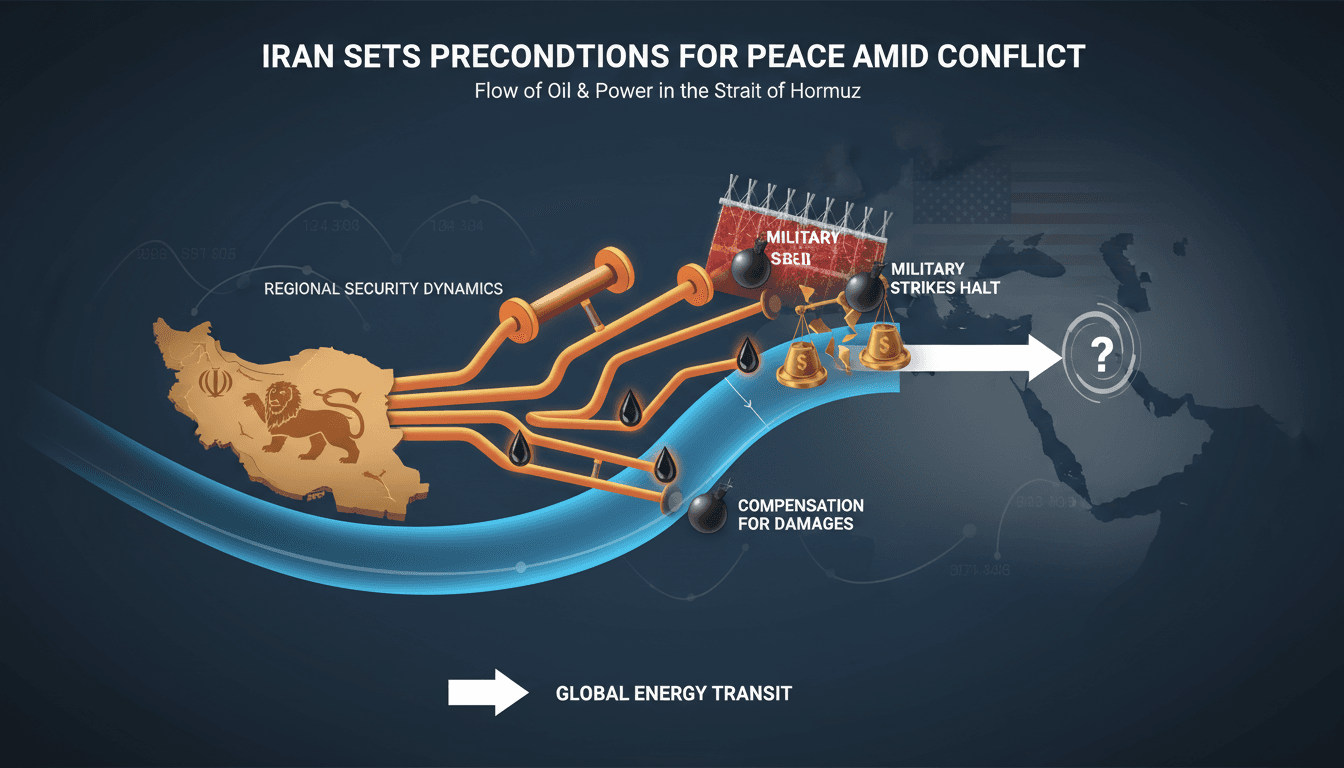
- Iran announced preconditions for permanent peace talks with the U.S., including a halt to military strikes and compensation for damages.
- Tehran rejected temporary ceasefires during ongoing U.S.-Israeli military actions, insisting on more substantial guarantees.
- Oil prices increased following the announcement, reflecting market uncertainty and geopolitical tensions.
The context you actually need
- The conflict escalated in early 2026, with over 10,000 U.S. military strikes targeting Iranian infrastructure, including civilian sites.
- Negotiations have stalled amid U.S. demands for zero uranium enrichment from Iran and failed ceasefire proposals mediated via Pakistan.
- Broader geopolitical tensions involve Iran's missile program and regional proxies, compounded by economic sanctions and military pressure.
What's really happening
The recent announcement from Iran marks a significant pivot in the ongoing conflict with the United States, which has seen a dramatic escalation since early 2026. The U.S. military has conducted over 10,000 strikes against Iranian targets, severely degrading its military capabilities and infrastructure. Amid this backdrop, Iran's conditions for peace negotiations reflect a strategic calculation aimed at restoring its sovereignty and economic stability.
Iran's insistence on halting military strikes and receiving compensation for damages underscores its vulnerability and the need for a credible security guarantee. By demanding fees on ships transiting the Strait of Hormuz, Iran is also asserting its influence over a critical chokepoint for global oil supply, which carries about 20% of the world's oil. This move signals Tehran's willingness to leverage its geographic position to gain economic concessions in any potential agreement.
The rejection of temporary ceasefires indicates Iran's desire for a more permanent resolution rather than short-term fixes that could leave it exposed to future attacks. This stance complicates the U.S. administration's approach, as President Trump has extended deadlines for negotiations while simultaneously threatening further military action against Iranian energy infrastructure. The interplay of military pressure and diplomatic overtures creates a precarious balance that could either lead to a breakthrough or further entrench hostilities.
Moreover, the implications of this conflict extend beyond military and diplomatic circles. For Dubai and the broader Gulf region, the potential for increased oil prices following Iran's announcement could lead to short-term revenue boosts for the UAE. However, it also risks trade disruptions, as any escalation in hostilities could threaten the stability of the Strait of Hormuz. Investors are already reacting to this uncertainty, with Gulf equities showing mixed performance as they await clarity on U.S.-Iran relations.
In summary, Iran's preconditions for peace negotiations reflect a complex interplay of military, economic, and geopolitical factors. The stakes are high, not only for the involved parties but also for global markets and regional stability.
Who feels it first (and how)
- Energy Sector: Companies involved in oil production and distribution will experience immediate impacts on pricing and supply chain stability.
- Investors: Those holding equities in Gulf markets will face volatility as they navigate the uncertainty surrounding U.S.-Iran negotiations.
- Consumers: Individuals relying on oil and gas for transportation and heating may see rising costs as oil prices fluctuate.
- Regional Governments: Countries in the Gulf region will need to reassess their security and economic strategies in light of potential disruptions.
What to watch next
- U.S. military actions: Continued strikes or a shift in strategy could signal the seriousness of U.S. commitment to negotiations.
- Iran's military responses: Any escalation in missile strikes or military provocations could derail peace talks and impact oil prices.
- Market reactions: Watch for fluctuations in oil prices and Gulf equities as investors respond to developments in U.S.-Iran relations.
Iran has set preconditions for peace talks, rejecting temporary ceasefires.
Oil prices will remain volatile as markets react to ongoing military actions and diplomatic efforts.
The timeline for any potential agreement between the U.S. and Iran remains uncertain, as both sides navigate their strategic interests.
Frequently Asked Questions
- Why it matters?
- The preconditions set by Iran could reshape geopolitical alliances and energy prices, affecting markets worldwide.
- What happened (in 30 seconds)?
- Iran announced preconditions for permanent peace talks with the U.S., including a halt to military strikes and compensation for damages. Tehran rejected temporary ceasefires during ongoing U.S.-Israeli military actions, insisting on more substantial guarantees. Oil prices increased following the announcement, reflecting market uncertainty and geopolitical tensions.
- What's really happening?
- The recent announcement from Iran marks a significant pivot in the ongoing conflict with the United States, which has seen a dramatic escalation since early 2026. The U.S. military has conducted over 10,000 strikes against Iranian targets, severely degrading its military capabilities and infrastructure. Amid this backdrop, Iran's conditions for peace negotiations reflect a strategic calculation aimed at restoring its sovereignty and economic stability. Iran's insistence on halting military stri
- Who feels it first (and how)?
- Energy Sector: Companies involved in oil production and distribution will experience immediate impacts on pricing and supply chain stability. Investors: Those holding equities in Gulf markets will face volatility as they navigate the uncertainty surrounding U.S.-Iran negotiations. Consumers: Individuals relying on oil and gas for transportation and heating may see rising costs as oil prices fluctuate. Regional Governments: Countries in the Gulf region will need to reassess their security a
- What to watch next?
- U.S. military actions: Continued strikes or a shift in strategy could signal the seriousness of U.S. commitment to negotiations. Iran's military responses: Any escalation in missile strikes or military provocations could derail peace talks and impact oil prices. Market reactions: Watch for fluctuations in oil prices and Gulf equities as investors respond to developments in U.S.-Iran relations.
Regional coverage and analysis focused on politics, diplomacy, and business across the Middle East.
"Al-Monitor is known for analytical reporting on Middle East politics and policy developments."
— A47 Editor
Iran sets preconditions for talks on lasting peace with U.S., senior official tells Reuters
Iran has established preconditions for engaging in talks with the United States aimed at achieving lasting peace, as stated by a senior official. These conditions include an immediate cessation of strikes, assurances against future attacks, and compe...
Oil, metals, and agriculture: supply/demand headlines, OPEC chatter, inventories, and price action.
"Solid tape for energy and metals traders tracking macro and micro catalysts."
— A47 Editor
Iran sets preconditions for talks on lasting peace with U.S., senior official tells Reuters
Iran has set preconditions for engaging in talks aimed at achieving lasting peace with the United States, as reported by a senior official to Reuters. This announcement comes amid ongoing tensions and military escalations between the two nations, par...