
U.S. Courts Rule AI Chatbot Communications Lack Attorney-Client Privilege
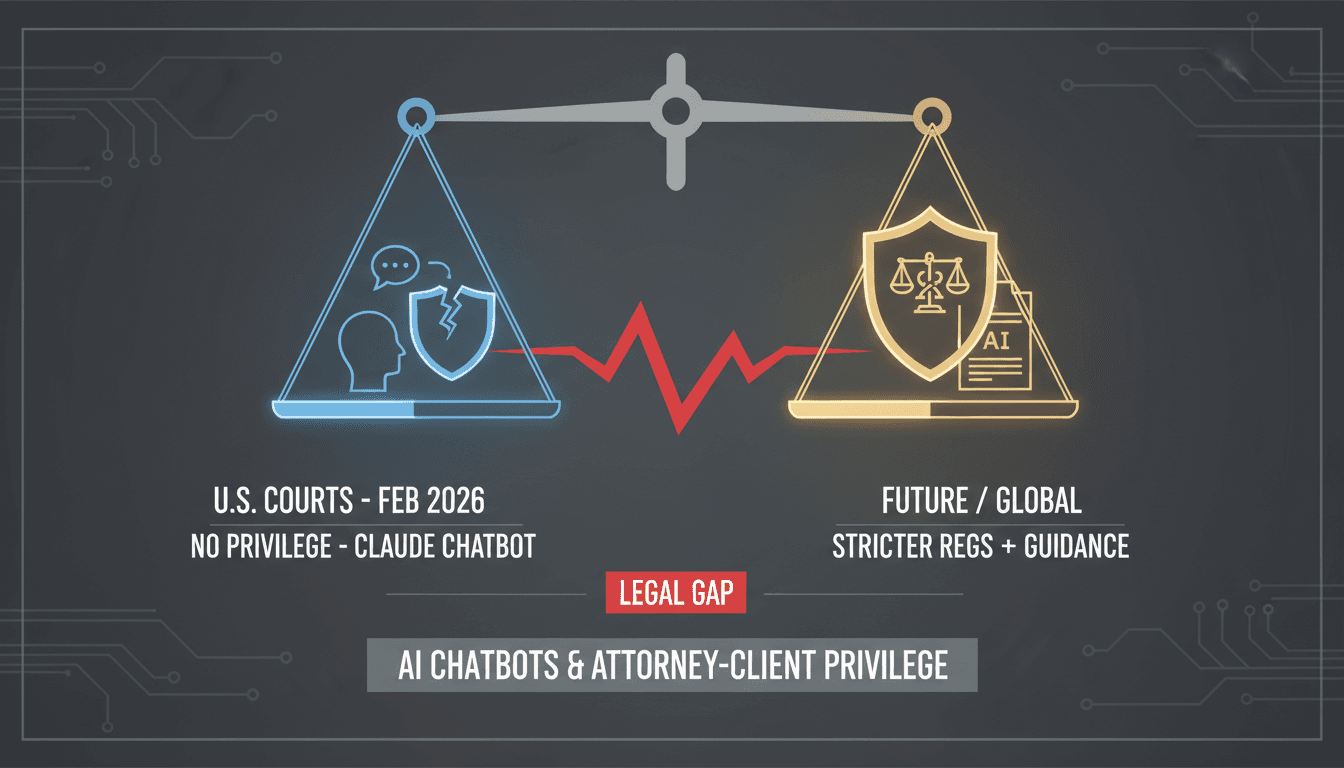
Here's what it means for you.
If you use AI chatbots for legal discussions, your communications may not be protected in court.
Why it matters
This ruling could redefine how legal professionals approach client communications and the use of AI tools.
What happened (in 30 seconds)
- February 10, 2026: U.S. District Judge Jed S. Rakoff ruled that communications with Anthropic's Claude chatbot are not protected by attorney-client privilege in the case of United States v. Heppner.
- Same day: A contrasting ruling in Michigan protected ChatGPT interactions as work product, highlighting a split in judicial interpretation.
- Aftermath: Major law firms issued advisories warning clients about the risks of using public AI tools for legal matters.
The context you actually need
- Growing AI adoption: Legal professionals increasingly use generative AI tools like Claude and ChatGPT for research and document preparation.
- Legal uncertainties: Prior to these rulings, there were concerns about AI "hallucinations" and the privacy terms of AI providers, which often disclaim confidentiality.
- Ongoing cases: The rulings come amid ongoing legal battles, including the securities fraud case against Bradley Heppner, raising questions about the future of AI in legal contexts.
What's really happening
The recent federal rulings on AI chatbot communications have significant implications for the legal landscape. In the case of United States v. Heppner, Judge Rakoff's decision to disclose 31 AI-generated documents to prosecutors underscores a critical shift in how courts view the relationship between clients and AI tools. The ruling indicates that communications with AI platforms do not establish an attorney-client relationship, which could expose sensitive information to legal scrutiny.
This decision reflects a broader trend where courts are grappling with the integration of AI into traditional legal frameworks. As generative AI tools become more prevalent, the legal system faces challenges in defining the boundaries of privilege and confidentiality. The contrasting ruling in Michigan, which protected ChatGPT interactions as work product, highlights the inconsistency in judicial interpretations and the potential for confusion among legal practitioners.
Law firms are responding proactively to these developments. Major firms like Kobre & Kim and Sher Tremonte have issued client alerts, advising caution when using public AI tools for legal discussions. They recommend utilizing closed enterprise AI systems and implementing specific prompt disclaimers to mitigate risks. This shift indicates a growing recognition of the need for clear guidelines and best practices in the use of AI within legal contexts.
The implications extend beyond individual cases. As more legal professionals adopt AI tools, the potential for privilege waivers increases, prompting a reevaluation of how legal information is shared and stored. The legal community must navigate these complexities to protect client interests while embracing technological advancements.
Moreover, the rulings may influence global standards for AI evidence, as jurisdictions around the world look to the U.S. for guidance. While there are currently no verified direct impacts on Dubai residents, the evolving landscape of AI in legal contexts could eventually prompt similar discussions in the UAE, where courts have yet to publicly address privilege issues related to AI.
Who feels it first (and how)
- Legal professionals: Lawyers and firms must adapt their practices to ensure client communications remain protected.
- Clients: Individuals and businesses using AI for legal matters may face increased risks of having their communications disclosed.
- AI developers: Companies creating AI tools must consider the legal implications of their products and how they interact with existing legal frameworks.
What to watch next
- Legal advisories: Monitor updates from law firms regarding best practices for using AI in legal contexts, as these will shape client strategies.
- Judicial consistency: Watch for further rulings that clarify the status of AI communications in different jurisdictions, which could lead to a more unified approach.
- Global implications: Keep an eye on how these U.S. rulings influence international legal standards, particularly in regions like the UAE.
The U.S. federal court has ruled that AI chatbot communications are not protected by attorney-client privilege.
Law firms will continue to issue advisories and develop guidelines for the use of AI tools in legal contexts.
The long-term impact of these rulings on global legal standards and practices remains uncertain.
Frequently Asked Questions
- Why it matters?
- This ruling could redefine how legal professionals approach client communications and the use of AI tools.
- What happened (in 30 seconds)?
- February 10, 2026: U.S. District Judge Jed S. Rakoff ruled that communications with Anthropic's Claude chatbot are not protected by attorney-client privilege in the case of United States v. Heppner. Same day: A contrasting ruling in Michigan protected ChatGPT interactions as work product, highlighting a split in judicial interpretation. Aftermath: Major law firms issued advisories warning clients about the risks of using public AI tools for legal matters.
- What's really happening?
- The recent federal rulings on AI chatbot communications have significant implications for the legal landscape. In the case of United States v. Heppner, Judge Rakoff's decision to disclose 31 AI-generated documents to prosecutors underscores a critical shift in how courts view the relationship between clients and AI tools. The ruling indicates that communications with AI platforms do not establish an attorney-client relationship, which could expose sensitive information to legal scrutiny. This d
- Who feels it first (and how)?
- Legal professionals: Lawyers and firms must adapt their practices to ensure client communications remain protected. Clients: Individuals and businesses using AI for legal matters may face increased risks of having their communications disclosed. AI developers: Companies creating AI tools must consider the legal implications of their products and how they interact with existing legal frameworks.
- What to watch next?
- Legal advisories: Monitor updates from law firms regarding best practices for using AI in legal contexts, as these will shape client strategies. Judicial consistency: Watch for further rulings that clarify the status of AI communications in different jurisdictions, which could lead to a more unified approach. Global implications: Keep an eye on how these U.S. rulings influence international legal standards, particularly in regions like the UAE.
Breaking news, politics, business, and entertainment from the U.S. and around the world.
"The New York Post is a tabloid-format newspaper known for its sensationalist headlines and conservative-leaning editorial tone."
— A47 Editor
AI chatbot conversations can be used against people in court, lawyers warn after federal ruling
Lawyers, including Alexandria Gutiérrez Swette from Kobre & Kim, have raised concerns following a federal ruling that allows AI chatbot conversations to be used as evidence in court. This development has prompted legal professionals to advise clients...
Key macro releases (CPI, jobs, PMIs), surprise indexes, and market implications.
"Great for data-print awareness and instant read-through to rates and risk assets."
— A47 Editor
AI ruling prompts warnings from US lawyers: Your chats could be used against you
A recent ruling regarding artificial intelligence has raised significant concerns among US lawyers, who warn that conversations held in chat platforms could potentially be used against individuals in legal proceedings. This development highlights the...
Tech startup news, programming trends, and discussions shared by the developer community.
"Hacker News is a community-driven source highlighting influential tech discussions, startup launches, and programming insights."
— A47 Editor
AI ruling prompts warnings from US lawyers: Your chats could be used against you
A recent ruling regarding artificial intelligence has raised concerns among US lawyers, who warn that conversations conducted through AI platforms could potentially be used against individuals in legal contexts. This development highlights the growin...