
Israel proposes tripartite division of southern Lebanon amid ongoing military operations
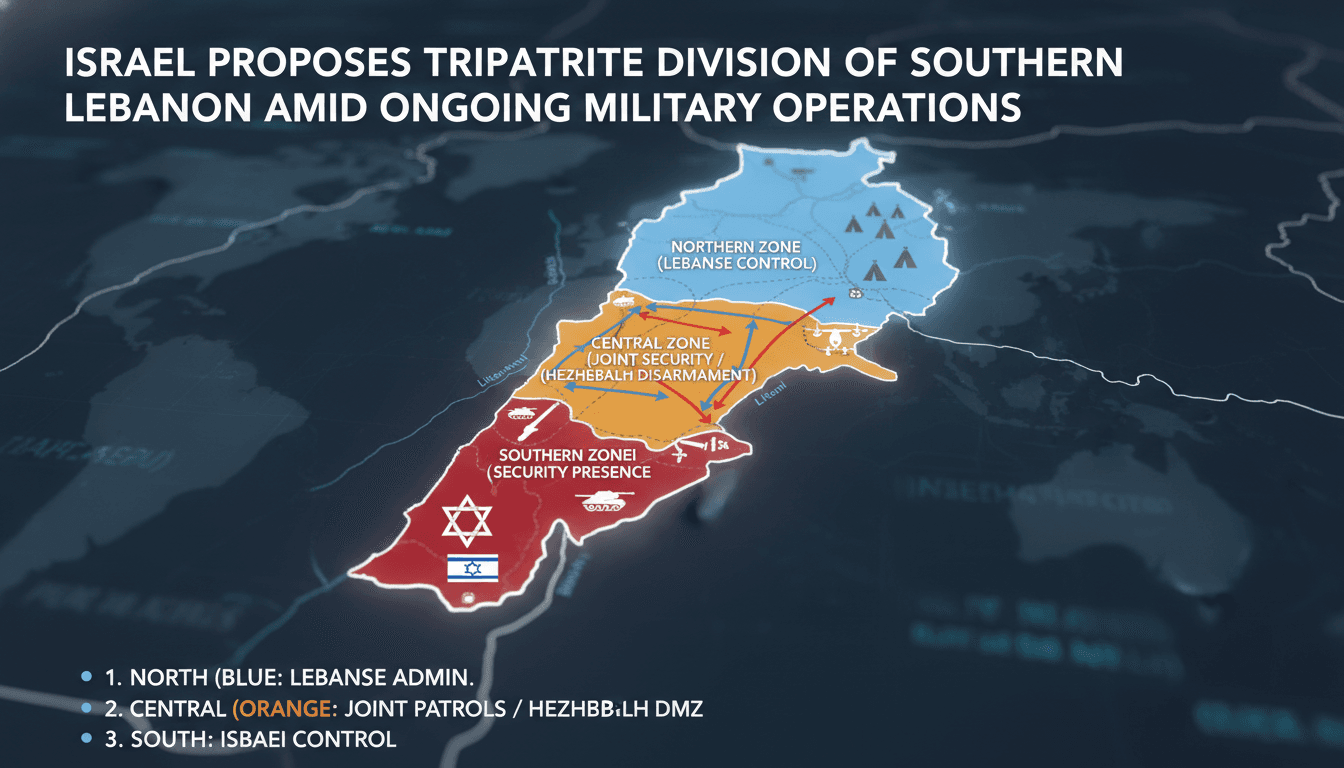
Here's what it means for you.
If you’re involved in international business or travel in the Middle East, this proposal could impact regional stability and economic conditions.
Why it matters
The proposal could reshape security dynamics in southern Lebanon, affecting trade routes and regional diplomatic relations.
What happened (in 30 seconds)
- On April 14, 2026, Israeli official Ron Dermer proposed a plan to divide southern Lebanon into three security zones to facilitate Hezbollah disarmament.
- Israeli military operations have intensified, including airstrikes and ground advances, amid ongoing US-mediated ceasefire talks.
- Over 600,000 residents in southern Lebanon are currently unable to return home due to the establishment of buffer zones.
The context you actually need
- The proposal arises from the ongoing 2026 Lebanon war, which escalated from cross-border exchanges since October 2023 amid the Gaza conflict.
- Israel's military presence in southern Lebanon has been reinforced since its invasion in October 2024, targeting Hezbollah infrastructure and displacing civilians.
- US mediation efforts are focused on enforcing UN Resolution 1701, which calls for Hezbollah's withdrawal north of the Litani River.
What's really happening
The tripartite division proposal by Israel is a strategic maneuver aimed at addressing the persistent threat posed by Hezbollah, a militant group with significant influence in southern Lebanon. The plan envisions a security framework where Israeli forces would maintain a robust presence in a designated border zone extending up to 8 kilometers deep into Lebanon. This would allow Israel to conduct operations up to the Litani River, while placing the responsibility of disarmament on the Lebanese army north of the river.
This proposal is not merely a tactical adjustment; it reflects a broader geopolitical strategy. The ongoing military operations, including airstrikes on key Hezbollah positions, are intended to weaken the group's capabilities and deter future aggression. The Israeli government, under pressure from domestic security concerns, is leveraging military action to create a favorable negotiating environment. By proposing a structured division of southern Lebanon, Israel aims to institutionalize its security interests while compelling the Lebanese government to take a more active role in disarming Hezbollah.
The humanitarian implications are significant. The displacement of over 600,000 residents from southern Lebanon due to the establishment of buffer zones raises urgent questions about civilian safety and humanitarian access. The UN has expressed concern over the severe humanitarian consequences of the ongoing conflict, emphasizing the need for civilian protection amidst military operations.
Moreover, the proposal is occurring against a backdrop of heightened regional tensions, with the UAE and other Arab nations closely monitoring the situation. The UAE's condemnation of Israeli attacks highlights the potential for broader diplomatic fallout, which could affect trade and tourism in the region. As airspace closures and security concerns mount, the economic repercussions could extend beyond Lebanon, impacting countries like the UAE that rely on stable regional dynamics for tourism and trade.
In summary, Israel's proposal is a calculated response to a complex security landscape, aiming to reshape the operational environment in southern Lebanon while navigating the intricate web of regional politics and humanitarian concerns.
Who feels it first (and how)
- Lebanese civilians: Over 600,000 residents displaced and unable to return home.
- Israeli military: Increased operational tempo and potential casualties from ongoing conflicts.
- Regional businesses: Potential disruptions in trade and tourism due to heightened tensions and security concerns.
- International diplomats: Increased pressure to mediate and address humanitarian crises stemming from the conflict.
What to watch next
- US mediation outcomes: The effectiveness of US-led negotiations could determine the feasibility of the proposed security zones and impact regional stability.
- Humanitarian developments: Monitoring the humanitarian situation in southern Lebanon will be crucial, especially regarding civilian access and displacement issues.
- Regional diplomatic responses: Reactions from neighboring countries, particularly the UAE and other Arab states, could influence broader geopolitical dynamics and economic conditions.
Israeli military operations are ongoing, and the proposal for a tripartite division has been made public.
Continued US mediation efforts will shape the discussions around the proposal and its implementation.
The long-term effectiveness of the proposed security zones in achieving disarmament and stabilizing the region remains uncertain.
Frequently Asked Questions
- Why it matters?
- The proposal could reshape security dynamics in southern Lebanon, affecting trade routes and regional diplomatic relations.
- What happened (in 30 seconds)?
- On April 14, 2026, Israeli official Ron Dermer proposed a plan to divide southern Lebanon into three security zones to facilitate Hezbollah disarmament. Israeli military operations have intensified, including airstrikes and ground advances, amid ongoing US-mediated ceasefire talks. Over 600,000 residents in southern Lebanon are currently unable to return home due to the establishment of buffer zones.
- What's really happening?
- The tripartite division proposal by Israel is a strategic maneuver aimed at addressing the persistent threat posed by Hezbollah, a militant group with significant influence in southern Lebanon. The plan envisions a security framework where Israeli forces would maintain a robust presence in a designated border zone extending up to 8 kilometers deep into Lebanon. This would allow Israel to conduct operations up to the Litani River, while placing the responsibility of disarmament on the Lebanese ar
- Who feels it first (and how)?
- Lebanese civilians: Over 600,000 residents displaced and unable to return home. Israeli military: Increased operational tempo and potential casualties from ongoing conflicts. Regional businesses: Potential disruptions in trade and tourism due to heightened tensions and security concerns. International diplomats: Increased pressure to mediate and address humanitarian crises stemming from the conflict.
- What to watch next?
- US mediation outcomes: The effectiveness of US-led negotiations could determine the feasibility of the proposed security zones and impact regional stability. Humanitarian developments: Monitoring the humanitarian situation in southern Lebanon will be crucial, especially regarding civilian access and displacement issues. Regional diplomatic responses: Reactions from neighboring countries, particularly the UAE and other Arab states, could influence broader geopolitical dynamics and economic co
Arabic-language UAE newspaper coverage focused on domestic affairs, public institutions, business, society, and regional developments.
"Al Khaleej coverage generally reflects a mainstream UAE editorial lens with strong attention to public affairs, institutions, and regional developments."
— A47 Editor
إسرائيل لفرض الاحتلال بتقسيم ثلاثي لجنوب لبنان
Israel has escalated its military operations in southern Lebanon, intensifying airstrikes and attempting to expand its ground offensive as of Wednesday. This increase in military activity suggests a strategic move to assert control over the region am...
Pan-Arab news coverage spanning politics, business, sports, and regional affairs.
"Asharq Al-Awsat reflects a broad Arab editorial perspective with strong attention to regional geopolitics."
— A47 Editor
غارات من الجنوب إلى الساحل: لبنان تحت تصعيد متعدد الجبهات
Military escalation in Lebanon has intensified following a direct meeting between Lebanese and Israeli officials, with operations expanding from the southern regions to the coast. This unprecedented increase in military activity raises concerns about...
Pan-Arab news coverage spanning politics, business, sports, and regional affairs.
"Asharq Al-Awsat reflects a broad Arab editorial perspective with strong attention to regional geopolitics."
— A47 Editor
«حزب الله» يواجه تفاوض لبنان مع إسرائيل بتصعيد سياسي وعسكري
Hezbollah has intensified its military operations in southern Lebanon, launching approximately 40 rockets within an hour towards towns in the Galilee region, shortly after the initiation of negotiations between Lebanon and Israel.
Pan-Arab news coverage spanning politics, business, sports, and regional affairs.
"Asharq Al-Awsat reflects a broad Arab editorial perspective with strong attention to regional geopolitics."
— A47 Editor
الجيش الإسرائيلي استهدف عنصراً في «حزب الله»
The Israeli army announced that it conducted an airstrike targeting a member of Hezbollah in southern Lebanon on Tuesday. This operation highlights ongoing tensions in the region, particularly between Israel and Hezbollah, which has been a significan...
Pan-Arab news coverage spanning politics, business, sports, and regional affairs.
"Asharq Al-Awsat reflects a broad Arab editorial perspective with strong attention to regional geopolitics."
— A47 Editor
إسرائيل تكثف تدمير القرى الحدودية اللبنانية استباقاً للمحادثات السياسية
Israel has intensified the destruction of Lebanese border villages ahead of critical political negotiations, marking the first direct talks with Lebanon since the May 17, 1983 agreement. This escalation raises concerns about the stability of the regi...
Pan-Arab news coverage spanning politics, business, sports, and regional affairs.
"Asharq Al-Awsat reflects a broad Arab editorial perspective with strong attention to regional geopolitics."
— A47 Editor
إسرائيل تسابق المفاوضات لتثبيت 15 نقطة حدودية في جنوب لبنان
Military operations are intensifying in southern Lebanon ahead of the anticipated negotiations between Lebanon and Israel in Washington, as Israel seeks to establish 15 border points in the region.