
United States Expands Naval Blockade Against Iran with Third Aircraft Carrier Deployment
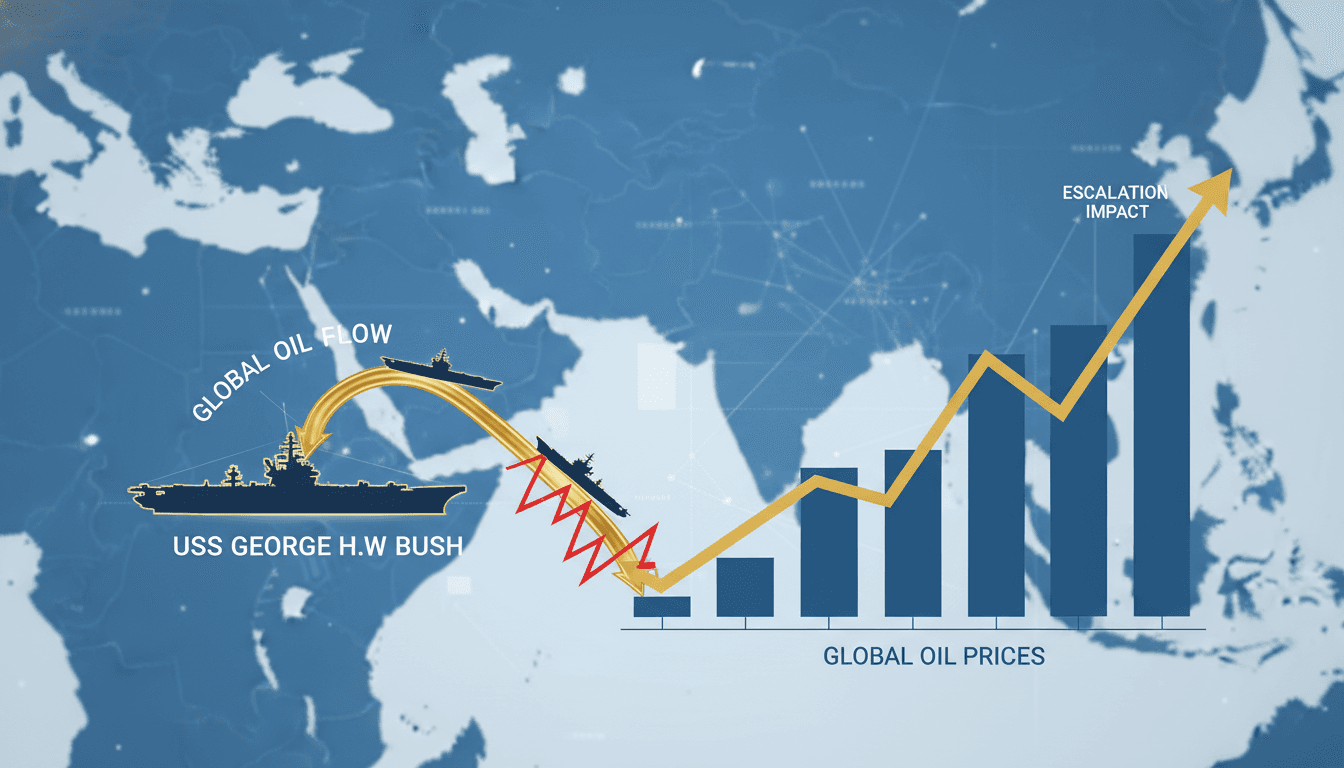
Here's what it means for you.
If you rely on oil or goods imported through the Gulf, expect rising costs and potential delays.
Why it matters
The blockade threatens to disrupt global oil supply chains, impacting prices and availability.
What happened (in 30 seconds)
- On April 13, 2026, the U.S. Navy initiated a naval blockade of Iranian ports, supported by a third aircraft carrier strike group.
- Over 15 U.S. warships are enforcing the blockade, turning back at least 10 vessels in the first 48 hours.
- This move follows failed ceasefire talks and aims to compel Iran to abandon its nuclear ambitions and restore navigation rights in the Strait of Hormuz.
The context you actually need
- The U.S.-Iran conflict escalated in February 2026, leading to a military buildup and disruption of 20% of global oil transit through the Strait of Hormuz.
- A ceasefire was briefly established on April 8, 2026, but collapsed shortly after, prompting the U.S. to announce the blockade.
- Oil prices have already surged past $100 per barrel, reflecting market volatility and fears of supply disruptions.
What's really happening
The U.S. naval blockade of Iranian ports represents a significant escalation in the ongoing U.S.-Iran conflict, which has seen tensions rise sharply since early 2026. The blockade is enforced by a robust naval presence, including the USS George H.W. Bush, marking the third aircraft carrier deployed to the region. This military strategy aims to exert economic pressure on Iran, compelling it to abandon its nuclear ambitions and adhere to international navigation rights.
The blockade comes in the wake of failed ceasefire negotiations mediated by Pakistan, which had briefly halted hostilities. The U.S. Central Command (CENTCOM) announced the blockade on April 12, 2026, just days after the ceasefire took effect. The immediate impact has been significant, with over 15 U.S. warships actively inspecting and interdicting vessels in the region. In the first 48 hours alone, at least 10 vessels, including sanctioned tankers, were turned back, effectively halting all maritime traffic to and from Iranian ports.
This blockade is not merely a military maneuver; it is a calculated economic strategy aimed at crippling Iran's economy, which heavily relies on oil exports. The Strait of Hormuz is a critical chokepoint for global oil transit, and any disruption here can have far-reaching implications for oil prices worldwide. As a result, the blockade has already led to increased oil prices, with Brent crude nearing $100 per barrel, which in turn raises transportation and living costs for consumers, particularly in regions like Dubai.
The blockade's enforcement is likely to lead to heightened tensions in the Gulf region, with Iran threatening to escalate its response. This could involve retaliatory actions against U.S. interests or allies in the region, further destabilizing an already volatile area. The U.S. aims to leverage this blockade to bring Iran back to the negotiating table, but the risks of escalation remain high.
Who feels it first (and how)
- Oil consumers: Higher prices at the pump and increased costs for goods reliant on oil.
- Shipping companies: Potential delays and increased shipping costs due to heightened risks in the Gulf.
- Businesses in Dubai: Elevated fuel prices and potential import delays at Jebel Ali port due to reduced traffic through the Strait of Hormuz.
What to watch next
- Oil price fluctuations: Monitor how prices respond to ongoing developments in the blockade and potential Iranian retaliation.
- Shipping traffic in the Gulf: Watch for changes in shipping routes or delays that could affect global supply chains.
- Diplomatic negotiations: Keep an eye on any renewed talks between the U.S. and Iran, as these could alter the blockade's trajectory.
The U.S. has initiated a naval blockade of Iranian ports.
Oil prices will remain volatile as markets react to the blockade and geopolitical tensions.
The long-term effectiveness of the blockade in achieving U.S. objectives regarding Iran's nuclear program.
Frequently Asked Questions
- Why it matters?
- The blockade threatens to disrupt global oil supply chains, impacting prices and availability.
- What happened (in 30 seconds)?
- On April 13, 2026, the U.S. Navy initiated a naval blockade of Iranian ports, supported by a third aircraft carrier strike group. Over 15 U.S. warships are enforcing the blockade, turning back at least 10 vessels in the first 48 hours. This move follows failed ceasefire talks and aims to compel Iran to abandon its nuclear ambitions and restore navigation rights in the Strait of Hormuz.
- What's really happening?
- The U.S. naval blockade of Iranian ports represents a significant escalation in the ongoing U.S.-Iran conflict, which has seen tensions rise sharply since early 2026. The blockade is enforced by a robust naval presence, including the USS George H.W. Bush, marking the third aircraft carrier deployed to the region. This military strategy aims to exert economic pressure on Iran, compelling it to abandon its nuclear ambitions and adhere to international navigation rights. The blockade comes in the
- Who feels it first (and how)?
- Oil consumers: Higher prices at the pump and increased costs for goods reliant on oil. Shipping companies: Potential delays and increased shipping costs due to heightened risks in the Gulf. Businesses in Dubai: Elevated fuel prices and potential import delays at Jebel Ali port due to reduced traffic through the Strait of Hormuz.
- What to watch next?
- Oil price fluctuations: Monitor how prices respond to ongoing developments in the blockade and potential Iranian retaliation. Shipping traffic in the Gulf: Watch for changes in shipping routes or delays that could affect global supply chains. Diplomatic negotiations: Keep an eye on any renewed talks between the U.S. and Iran, as these could alter the blockade's trajectory.
Pan-Arab news coverage spanning politics, business, sports, and regional affairs.
"Asharq Al-Awsat reflects a broad Arab editorial perspective with strong attention to regional geopolitics."
— A47 Editor
أميركا تُحكم حصار الموانئ الإيرانية بحاملة طائرات ثالثة
The U.S. military has announced the completion of a blockade on Iranian ports at the Strait of Hormuz, coinciding with ongoing diplomatic efforts for a second round of U.S.-Iranian talks. This move includes the deployment of a third aircraft carrier ...
Arabic-language digital news outlet covering UAE, regional, and international developments with broad general-news coverage.
"Al Ain News coverage typically blends UAE-focused reporting with wider Arab regional and international news."
— A47 Editor
«حصار كامل».. الجيش الأمريكي يوقف حركة التجارة من وإلى إيران
The U.S. military has announced a complete blockade of Iranian ports, asserting its dominance in maritime operations in the Middle East. This move halts all trade activities to and from Iran, significantly impacting the country's economic interaction...
Arabic-language UAE newspaper coverage focused on domestic affairs, public institutions, business, society, and regional developments.
"Al Khaleej coverage generally reflects a mainstream UAE editorial lens with strong attention to public affairs, institutions, and regional developments."
— A47 Editor
الجيش الأمريكي: 10 آلاف جندي يشاركون في حصار إيران
The U.S. Central Command announced that 10,000 American soldiers are participating in a maritime blockade against Iran, with no vessels having breached the blockade so far. This operation aims to restrict access to Iranian ports and coastal areas, re...
Arabic-language UAE newspaper coverage focused on domestic affairs, public institutions, business, society, and regional developments.
"Al Khaleej coverage generally reflects a mainstream UAE editorial lens with strong attention to public affairs, institutions, and regional developments."
— A47 Editor
حصار أمريكا لموانئ إيران يدخل حيز التنفيذ
The United States has initiated a blockade of Iranian ports, as announced by the U.S. Central Command (CENTCOM). This move marks a significant escalation in U.S. efforts to exert pressure on Iran amid ongoing tensions in the region.