
US and Israel Launch Strikes on Iranian Infrastructure as Ceasefire is Announced
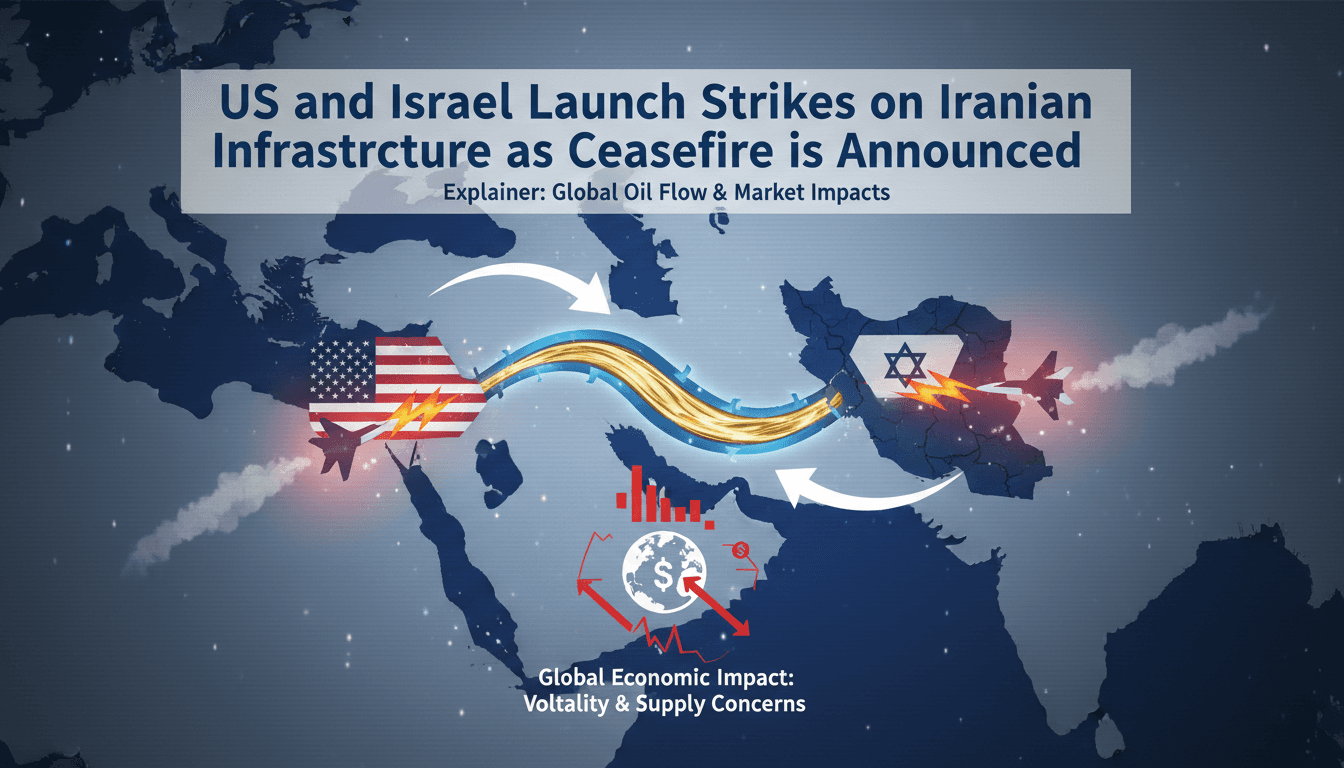
Here's what it means for you.
The ongoing military conflict in the Middle East could significantly impact global oil prices and economic stability, affecting your daily costs.
Why it matters
The conflict threatens to disrupt one of the world's most critical oil supply routes, impacting energy prices and economic conditions globally.
What happened (in 30 seconds)
- A two-week ceasefire was announced on April 7, 2026, just before a deadline set by U.S. President Donald Trump for Iran to reopen the Strait of Hormuz.
- The U.S. and Israel launched extensive strikes against Iranian infrastructure, targeting over 13,000 sites, including military bases and transport links, amid a 39-day conflict.
- Iran responded with missile attacks and halted negotiations, escalating tensions even further despite the ceasefire announcement.
The context you actually need
- Failed nuclear negotiations between the U.S. and Iran have led to increased military actions, with Iran reportedly nearing weapons-grade enrichment.
- The Strait of Hormuz is crucial for global oil transport, accounting for approximately 20% of the world's oil supply; its closure affects prices and availability.
- Regional security dynamics are shifting, with Pakistan stepping in as a mediator and other Gulf nations mobilizing defenses in response to the conflict.
What's really happening
The current military conflict between the U.S., Israel, and Iran is rooted in a complex web of geopolitical tensions, primarily revolving around Iran's nuclear ambitions and its support for proxy groups in the region. The U.S. initiated Operation Epic Fury on February 28, 2026, targeting Iranian military infrastructure in response to Iran's aggressive posturing, including the closure of the Strait of Hormuz. This operation marked a significant escalation, with the U.S. striking over 13,000 targets, including nuclear facilities and Revolutionary Guard bases.
The Iranian government, under increasing pressure, retaliated by launching missiles towards U.S. and Israeli assets and closing the Strait of Hormuz, which is vital for global oil transport. This closure has immediate implications for oil prices, as it disrupts the flow of approximately 20% of the world's oil supply. The conflict has already led to a surge in Brent crude prices, which exceeded $120 per barrel, inflating costs for consumers and businesses alike.
The ceasefire brokered by Pakistan is a temporary measure, and the underlying issues remain unresolved. Iran's leadership has dismissed U.S. claims of achieving their objectives, while Israel continues to focus on pressuring Iran's military capabilities. The fragile nature of the ceasefire is evident as Iran launched missiles at Israel shortly after the announcement, highlighting the ongoing volatility in the region.
This situation is compounded by the broader implications for global markets. As oil prices rise, the costs of living and doing business will likely increase, affecting consumers worldwide. Additionally, the conflict has led to a significant economic downturn in the region, with tourism and aviation sectors suffering from airport closures and regional instability. The potential for further military action looms large, creating an atmosphere of uncertainty that could lead to additional economic repercussions.
Who feels it first (and how)
- Consumers: Higher fuel prices will increase living costs, impacting household budgets.
- Businesses: Companies reliant on oil and transportation will face rising operational costs, potentially leading to price hikes for goods and services.
- Investors: Volatility in oil markets may affect stock prices and investment strategies, particularly in energy sectors.
- Tourism and aviation sectors: Ongoing conflict and airport closures will lead to significant revenue losses and job cuts in these industries.
- Regional governments: Increased military readiness and defense spending will strain national budgets and impact social services.
What to watch next
- Negotiation outcomes: The scheduled talks in Pakistan on April 11, 2026, will be crucial in determining whether the ceasefire holds and if diplomatic solutions can be reached.
- Oil price fluctuations: Monitor Brent crude prices for signs of instability, which could indicate further escalation or resolution in the conflict.
- Military developments: Any new strikes or military movements from either side could signal a breakdown of the ceasefire and lead to renewed conflict.
The U.S. and Israel have conducted extensive military operations against Iranian infrastructure.
The ceasefire will be tested, and further military actions may occur if negotiations fail.
The long-term implications for global oil supply and economic stability remain uncertain as the situation evolves.
Frequently Asked Questions
- Why it matters?
- The conflict threatens to disrupt one of the world's most critical oil supply routes, impacting energy prices and economic conditions globally.
- What happened (in 30 seconds)?
- A two-week ceasefire was announced on April 7, 2026, just before a deadline set by U.S. President Donald Trump for Iran to reopen the Strait of Hormuz. The U.S. and Israel launched extensive strikes against Iranian infrastructure, targeting over 13,000 sites, including military bases and transport links, amid a 39-day conflict. Iran responded with missile attacks and halted negotiations, escalating tensions even further despite the ceasefire announcement.
- What's really happening?
- The current military conflict between the U.S., Israel, and Iran is rooted in a complex web of geopolitical tensions, primarily revolving around Iran's nuclear ambitions and its support for proxy groups in the region. The U.S. initiated Operation Epic Fury on February 28, 2026, targeting Iranian military infrastructure in response to Iran's aggressive posturing, including the closure of the Strait of Hormuz. This operation marked a significant escalation, with the U.S. striking over 13,000 targe
- Who feels it first (and how)?
- Consumers: Higher fuel prices will increase living costs, impacting household budgets. Businesses: Companies reliant on oil and transportation will face rising operational costs, potentially leading to price hikes for goods and services. Investors: Volatility in oil markets may affect stock prices and investment strategies, particularly in energy sectors. Tourism and aviation sectors: Ongoing conflict and airport closures will lead to significant revenue losses and job cuts in these industries.
- What to watch next?
- Negotiation outcomes: The scheduled talks in Pakistan on April 11, 2026, will be crucial in determining whether the ceasefire holds and if diplomatic solutions can be reached. Oil price fluctuations: Monitor Brent crude prices for signs of instability, which could indicate further escalation or resolution in the conflict. Military developments: Any new strikes or military movements from either side could signal a breakdown of the ceasefire and lead to renewed conflict.
Pan-Arab news coverage spanning politics, business, sports, and regional affairs.
"Asharq Al-Awsat reflects a broad Arab editorial perspective with strong attention to regional geopolitics."
— A47 Editor
إيران تحت النار مع قرب انقضاء مهلة ترمب
Iran has experienced an escalation in attacks, particularly targeting bridges and railway networks, coinciding with the nearing deadline set by U.S. President Donald Trump. This surge in military actions highlights the increasing tensions within the ...
Arabic-language digital news outlet covering UAE, regional, and international developments with broad general-news coverage.
"Al Ain News coverage typically blends UAE-focused reporting with wider Arab regional and international news."
— A47 Editor
من قم إلى خرج.. قصف يستهدف جسور إيران وبنيتها التحتية
The United States and Israel conducted extensive strikes across various regions in Iran on Tuesday, just hours before the deadline set by President Donald Trump. These attacks targeted bridges and critical infrastructure, indicating a significant esc...
Arabic-language digital news outlet covering UAE, regional, and international developments with broad general-news coverage.
"Al Ain News coverage typically blends UAE-focused reporting with wider Arab regional and international news."
— A47 Editor
مهلة ترامب في «ساعاتها الحاسمة».. غارات بإيران وتحذير من القطارات
President Donald Trump has issued a critical ultimatum to Iran, demanding that the nation reach a deal regarding the reopening of the strategically vital Strait of Hormuz within 48 hours, amidst escalating military tensions and recent airstrikes in v...