
Israeli Airstrikes Hit Hezbollah Targets in Southern Lebanon Amid Ongoing Conflict
Here's what it means for you.
If you have connections to Lebanon or are involved in regional markets, the ongoing conflict could disrupt your operations and personal ties.
Why it matters
The escalation of conflict in Lebanon has significant implications for regional stability and global energy markets.
What happened (in 30 seconds)
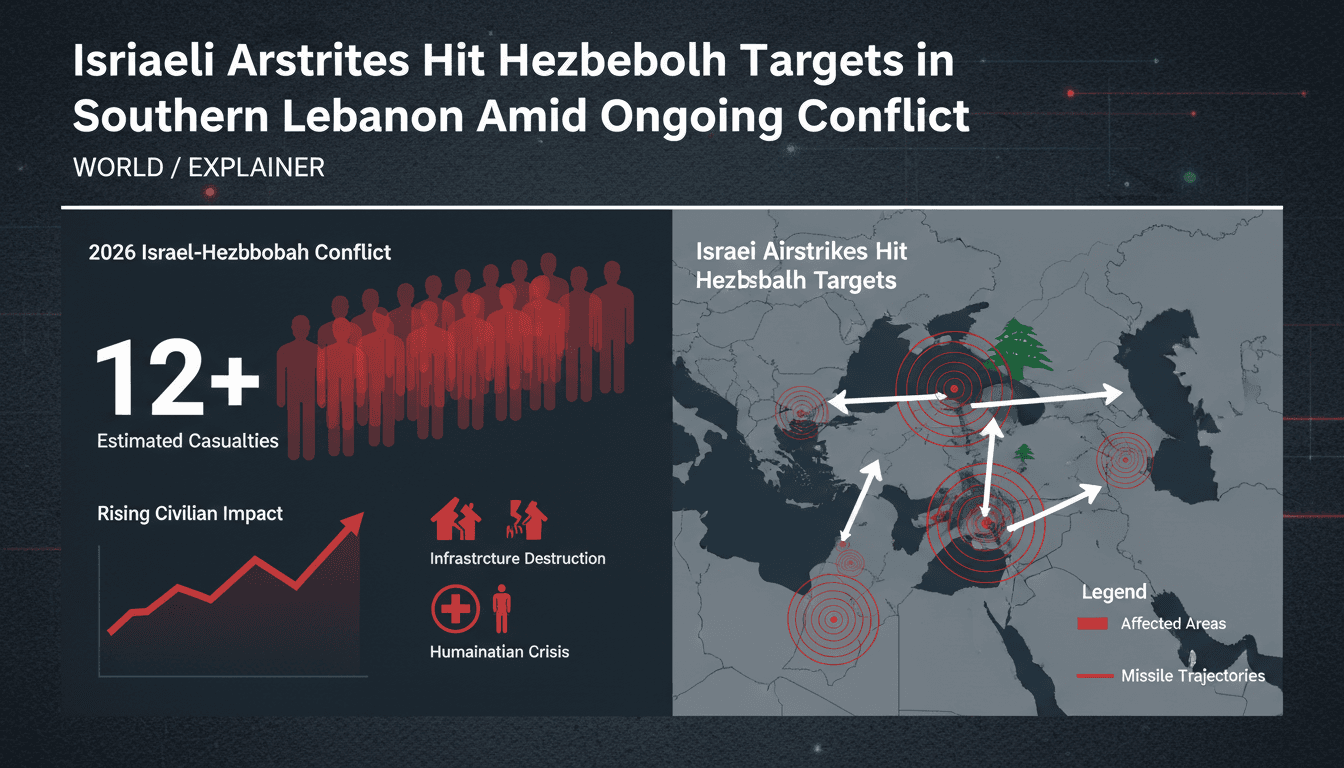
- Israeli airstrikes targeted Hezbollah infrastructure in southern Beirut and southern Lebanon on April 6, 2026, killing at least 12 people.
- Hezbollah retaliated with rocket fire into northern Israel, intensifying the ongoing 2026 Israel-Hezbollah war.
- Humanitarian crisis worsened, with 1,497 reported fatalities in Lebanon since the war began on March 2, 2026.
The context you actually need
- The 2026 Lebanon war was triggered by Hezbollah's support for Iran following the assassination of Supreme Leader Ali Khamenei, leading to Israeli airstrikes and ground operations.
- Evacuations have affected over 40 towns in southern Lebanon, with civilians displaced and infrastructure severely damaged.
- Regional oil prices surged above $100 per barrel due to instability, impacting global markets and supply chains.
What's really happening
The recent Israeli airstrikes on April 6 targeted Hezbollah sites in Beirut's southern suburbs and southern Lebanon, part of a broader military strategy aimed at degrading the militant group's capabilities. This escalation follows a series of events that began with the assassination of Iran's Supreme Leader Ali Khamenei on February 28, 2026, which prompted Hezbollah to increase its military support for Iran and engage in cross-border attacks against Israel.
Israel's military operations are designed to dismantle Hezbollah's rocket infrastructure, which poses a direct threat to Israeli territory. The airstrikes in areas like Jnah and Ain Saadeh resulted in significant casualties, including the death of Lebanese Forces official Pierre Mouawad, indicating the strikes also targeted political figures associated with Hezbollah. The Lebanese Health Ministry has reported a staggering 1,497 fatalities since the conflict began, underscoring the humanitarian toll of the ongoing war.
As the conflict escalates, the Lebanese government faces mounting pressure to respond to Israeli actions while managing a humanitarian crisis that has left many civilians displaced. The destruction of homes and health facilities has been documented, with the World Health Organization verifying 92 attacks on health sites. This has led to a dire situation for civilians, many of whom are now without shelter or access to medical care.
In retaliation, Hezbollah has launched rockets into northern Israel, further complicating the security landscape in the region. The Lebanese army is investigating the incidents, but the ongoing violence raises questions about the future stability of Lebanon and its ability to recover from the current crisis.
The conflict's ramifications extend beyond the immediate region, affecting global oil prices and prompting flight cancellations to and from Beirut. Dubai's large Lebanese diaspora, numbering over 100,000, is particularly impacted, with families stranded and remittances to Lebanon halted amid safety fears. This situation not only affects personal connections but also has broader implications for Lebanon's economy, which relies heavily on remittances.
Who feels it first (and how)
- Lebanese civilians: Displaced and facing humanitarian crises due to airstrikes and retaliatory actions.
- Regional businesses: Companies with ties to Lebanon may experience disruptions in operations and supply chains.
- Airlines: Flight cancellations to Beirut affect travel plans and remittance flows for the Lebanese diaspora.
- Investors in oil markets: Surging oil prices due to regional instability impact global markets and economic forecasts.
What to watch next
- Casualty figures: Monitoring the death toll and humanitarian impact will provide insight into the conflict's escalation and potential for resolution.
- Hezbollah's military response: Observing how Hezbollah retaliates could indicate the conflict's trajectory and implications for regional security.
- Global oil prices: Fluctuations in oil prices will reflect the broader economic impact of the conflict and could influence international markets.
The conflict has resulted in significant casualties and humanitarian crises in Lebanon.
Continued military operations from both Israel and Hezbollah, leading to further destabilization in the region.
The long-term implications for Lebanon's political landscape and its ability to recover economically from the ongoing war.
Frequently Asked Questions
- Why it matters?
- The escalation of conflict in Lebanon has significant implications for regional stability and global energy markets.
- What happened (in 30 seconds)?
- Israeli airstrikes targeted Hezbollah infrastructure in southern Beirut and southern Lebanon on April 6, 2026, killing at least 12 people. Hezbollah retaliated with rocket fire into northern Israel, intensifying the ongoing 2026 Israel-Hezbollah war. Humanitarian crisis worsened, with 1,497 reported fatalities in Lebanon since the war began on March 2, 2026.
- What's really happening?
- The recent Israeli airstrikes on April 6 targeted Hezbollah sites in Beirut's southern suburbs and southern Lebanon, part of a broader military strategy aimed at degrading the militant group's capabilities. This escalation follows a series of events that began with the assassination of Iran's Supreme Leader Ali Khamenei on February 28, 2026, which prompted Hezbollah to increase its military support for Iran and engage in cross-border attacks against Israel. Israel's military operations are desi
- Who feels it first (and how)?
- Lebanese civilians: Displaced and facing humanitarian crises due to airstrikes and retaliatory actions. Regional businesses: Companies with ties to Lebanon may experience disruptions in operations and supply chains. Airlines: Flight cancellations to Beirut affect travel plans and remittance flows for the Lebanese diaspora. Investors in oil markets: Surging oil prices due to regional instability impact global markets and economic forecasts.
- What to watch next?
- Casualty figures: Monitoring the death toll and humanitarian impact will provide insight into the conflict's escalation and potential for resolution. Hezbollah's military response: Observing how Hezbollah retaliates could indicate the conflict's trajectory and implications for regional security. Global oil prices: Fluctuations in oil prices will reflect the broader economic impact of the conflict and could influence international markets.
European coverage of Middle East politics and security issues.
"France 24 offers international reporting with a European editorial perspective."
— A47 Editor
Lebanon says Israeli strikes hit south Beirut, country's south
An Israeli airstrike targeted the southern suburbs of Beirut on April 5, 2026, claiming to strike positions of the Iran-backed militant group Hezbollah. This military action is part of a broader campaign by Israel amidst escalating tensions in the re...
Coverage of current events and conflicts in the Middle East.
"France 24 is viewed as a globally focused outlet with balanced coverage and a European perspective."
— A47 Editor
Lebanon says Israeli strikes hit south Beirut, country's south
An Israeli strike targeted the southern suburbs of Beirut on April 5, 2026, as part of a military campaign against the Iran-backed militant group Hezbollah. This attack coincided with broader Israeli airstrikes across Lebanon, which have resulted in ...
Arabic-language UAE newspaper coverage focused on domestic affairs, public institutions, business, society, and regional developments.
"Al Khaleej coverage generally reflects a mainstream UAE editorial lens with strong attention to public affairs, institutions, and regional developments."
— A47 Editor
إسرائيل تجدّد غاراتها على ضاحية بيروت الجنوبية
An Israeli airstrike targeted the southern suburbs of Beirut on Monday, following warnings for residents to evacuate certain neighborhoods. The Israeli military announced that it struck 'targets' linked to Hezbollah during the operation.
Arabic-language UAE newspaper coverage focused on domestic affairs, public institutions, business, society, and regional developments.
"Al Khaleej coverage generally reflects a mainstream UAE editorial lens with strong attention to public affairs, institutions, and regional developments."
— A47 Editor
غارات إسرائيلية وإنذارات إخلاء في بيروت
Israel launched eight airstrikes on the southern suburbs of Beirut and southern Lebanon on Sunday, escalating tensions in the region. The strikes were accompanied by evacuation warnings, indicating a significant military operation aimed at specific t...