
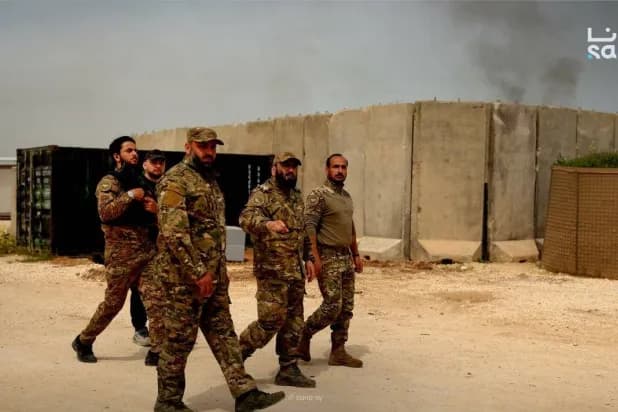
Syrian Army Takes Control of Qasrak Airbase Ending U.S. Military Presence
Here's what it means for you.
The end of U.S. military presence in Syria could reshape regional security dynamics and impact global energy markets.
Why it matters
This shift signifies a potential increase in regional stability, which may influence trade and investment opportunities.
What happened (in 30 seconds)
- On April 16, 2026, the Syrian army assumed control of Qasrak Airbase, marking the end of the U.S. military presence in Syria.
- President Ahmad al-Shara, who led the rebel offensive against Bashar al-Assad, is consolidating power and integrating the Syrian Democratic Forces (SDF).
- The U.S. military's withdrawal follows a series of base closures, with the last convoy departing amid escalating tensions.
The context you actually need
- U.S. forces established a presence in Syria in 2014 to combat ISIS, peaking at around 2,000 personnel by 2024.
- Al-Shara's rise to power in December 2024 marked a significant shift in Syrian governance, leading to efforts for unification amid minority conflicts.
- The U.S. relocation of thousands of ISIS prisoners to Iraq in January 2026 reflects a strategic pivot as the Syrian government asserts its counterterrorism capabilities.
What's really happening
The takeover of Qasrak Airbase by the Syrian army represents a culmination of a series of strategic shifts in the region. Following the ousting of Bashar al-Assad in December 2024 by President Ahmad al-Shara's forces, the Syrian government has been working to consolidate power and establish a unified front against remaining threats, particularly ISIS. The U.S. military's presence in Syria, which began in 2014 as part of the international coalition against ISIS, has been gradually reduced over the past two years, culminating in the recent handover of the last military base.
The U.S. withdrawal was not merely a logistical decision; it reflects a broader geopolitical recalibration. The Syrian government, under al-Shara, has been keen to demonstrate its capability to manage security independently, particularly in counterterrorism. This assertion of autonomy is crucial for al-Shara, as it seeks to legitimize his regime both domestically and internationally. The integration of the Syrian Democratic Forces (SDF) into the national framework is a significant step towards this goal, as it aims to unify various factions within Syria to combat common threats.
The implications of this shift extend beyond Syria's borders. The U.S. military's exit could lead to a power vacuum that may be filled by other regional players, including Iran and Russia, both of whom have vested interests in Syria. Additionally, the UAE's support for al-Shara's government, as evidenced by the meeting in April 2025, indicates a potential for increased Gulf investment in Syria, which could reshape economic ties in the region.
Moreover, the relocation of thousands of ISIS prisoners from Syria to Iraq highlights the ongoing threat posed by the group, which has vowed to continue its insurgency against al-Shara's regime. This ongoing conflict could destabilize the region further, impacting global energy markets and security dynamics.
Who feels it first (and how)
- Local Syrian populations: They may experience shifts in security and governance as the Syrian army consolidates control.
- Regional investors: Businesses in the UAE and surrounding areas may see new opportunities for trade and investment in a more stable Syria.
- International energy markets: Changes in security dynamics could affect oil supply routes and pricing.
What to watch next
- Integration of SDF: Monitor how effectively the SDF is integrated into the Syrian military and its impact on local governance.
- ISIS activity: Watch for any resurgence of ISIS attacks as they declare war on the al-Shara regime, which could destabilize the region.
- International response: Observe how other nations, particularly the U.S. and Gulf states, adjust their foreign policies in response to the new Syrian government dynamics.
The U.S. military has officially ended its presence in Syria.
Increased regional stability may lead to enhanced trade and investment opportunities in Syria.
The long-term effectiveness of the Syrian government in managing security and counterterrorism independently remains uncertain.
Frequently Asked Questions
- Why it matters?
- This shift signifies a potential increase in regional stability, which may influence trade and investment opportunities.
- What happened (in 30 seconds)?
- On April 16, 2026, the Syrian army assumed control of Qasrak Airbase, marking the end of the U.S. military presence in Syria. President Ahmad al-Shara, who led the rebel offensive against Bashar al-Assad, is consolidating power and integrating the Syrian Democratic Forces (SDF). The U.S. military's withdrawal follows a series of base closures, with the last convoy departing amid escalating tensions.
- What's really happening?
- The takeover of Qasrak Airbase by the Syrian army represents a culmination of a series of strategic shifts in the region. Following the ousting of Bashar al-Assad in December 2024 by President Ahmad al-Shara's forces, the Syrian government has been working to consolidate power and establish a unified front against remaining threats, particularly ISIS. The U.S. military's presence in Syria, which began in 2014 as part of the international coalition against ISIS, has been gradually reduced over th
- Who feels it first (and how)?
- Local Syrian populations: They may experience shifts in security and governance as the Syrian army consolidates control. Regional investors: Businesses in the UAE and surrounding areas may see new opportunities for trade and investment in a more stable Syria. International energy markets: Changes in security dynamics could affect oil supply routes and pricing.
- What to watch next?
- Integration of SDF: Monitor how effectively the SDF is integrated into the Syrian military and its impact on local governance. ISIS activity: Watch for any resurgence of ISIS attacks as they declare war on the al-Shara regime, which could destabilize the region. International response: Observe how other nations, particularly the U.S. and Gulf states, adjust their foreign policies in response to the new Syrian government dynamics.
Comprehensive coverage of Middle Eastern and global issues.
"Al Jazeera is a prominent voice from the Global South, especially the Middle East, with an emphasis on underreported stories."
— A47 Editor
Syria takes control of all bases where US forces were deployed
Syria has taken control of all military bases previously occupied by US forces, marking a significant shift in the region's military landscape. The final convoy of US soldiers and equipment departed from the Qasrak air base located in the northeaster...
Regional and international reporting focused on Middle Eastern politics, diplomacy, and economics.
"Asharq Al-Awsat is a Saudi-owned international newspaper reflecting mainstream Gulf political perspectives."
— A47 Editor
Syria Says Has Taken Control of All Bases Previously Operated by US Forces
Syria has announced that it has taken control of all military bases previously operated by US forces, marking a significant shift in the country's military landscape following the withdrawal of American troops. This development comes after a decade o...
UAE-based English-language newspaper covering regional politics, economics, and global affairs.
"The National reflects Emirati policy perspectives while maintaining international editorial standards."
— A47 Editor
Syrian army takes control of last US base in country as Al Shara tightens grip
The Syrian army has taken control of the last remaining US military base in the country, marking a significant shift in the power dynamics within the region as Al Shara consolidates its influence. This development underscores the diminishing presence...
Arabic-language coverage of political affairs and current events.
"Okaz political coverage typically follows mainstream Saudi framing on national and regional affairs."
— A47 Editor
بعد انسحاب «التحالف الدولي».. الجيش السوري يتسلم قاعدة «قسرك»
The Syrian Ministry of Defense announced the handover of the Qasrk airbase in the Hasakah countryside on Thursday, following the withdrawal of U.S.-led coalition forces. This transfer marks a significant step in the military reorganization in the reg...
Pan-Arab news coverage spanning politics, business, sports, and regional affairs.
"Asharq Al-Awsat reflects a broad Arab editorial perspective with strong attention to regional geopolitics."
— A47 Editor
دمشق تؤكد تسلّمها كل القواعد التي شغلها الجيش الأميركي في سوريا
The Syrian government confirmed on Thursday that it has taken control of all military bases previously occupied by U.S. forces, which had been deployed in the country for several years as part of the international coalition against ISIS. This develop...