
Air India CEO Campbell Wilson Resigns Amid Record Losses and Geopolitical Challenges
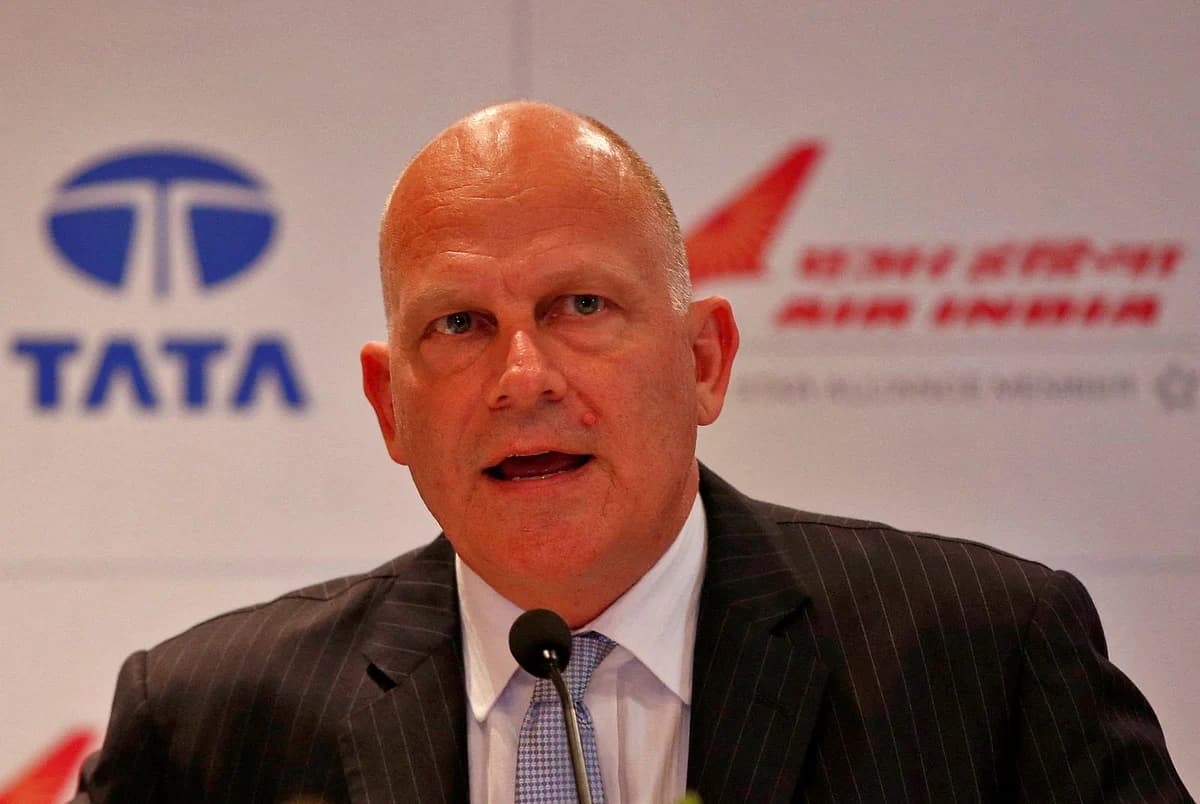
Here's what it means for you.
If you rely on Air India for travel, expect higher fares and potential disruptions as the airline navigates leadership changes amid ongoing challenges.
Why it matters
This resignation signals deeper issues within Air India and the aviation sector, impacting ticket prices and operational reliability.
What happened (in 30 seconds)
- Campbell Wilson resigned as CEO of Air India on April 7, 2026, amid escalating financial losses.
- Projected losses for FY26 are expected to double to Rs 200 billion due to geopolitical tensions and operational setbacks.
- A successor search committee has been formed, while Wilson remains in his role until a replacement is appointed.
The context you actually need
- Air India has faced significant challenges since its reacquisition by the Tata Group in 2022, including a tragic crash and geopolitical disruptions affecting flight paths.
- Wilson's leadership included merging four airlines and expanding the fleet, but these efforts have been overshadowed by mounting losses and external pressures.
- The airline industry is currently volatile, with rising fuel costs and geopolitical tensions, particularly the US-Israel-Iran war, complicating operations and profitability.
What's really happening
Campbell Wilson's resignation as CEO of Air India is a pivotal moment for the airline, reflecting both internal and external pressures that have plagued the company since its privatization under the Tata Group. Wilson, who took the helm in July 2022, was tasked with revitalizing Air India after its reacquisition from the Indian government. His tenure saw significant operational changes, including the merger of four airlines, fleet expansion by 100 aircraft, and modernization of systems. However, these achievements have been overshadowed by a series of unfortunate events, including a catastrophic Boeing 787 crash in June 2025 that resulted in 241 fatalities and a series of geopolitical disruptions that have severely impacted flight operations.
The ongoing US-Israel-Iran conflict has forced airlines, including Air India, to reroute flights over Africa, increasing operational costs and complicating logistics. Additionally, the closure of Pakistan's airspace has further constrained available flight paths, leading to delays and increased fuel consumption. As a result, Air India is projected to face losses of Rs 200 billion for FY26, a doubling of previous estimates. This financial strain has prompted the board to initiate a search for a successor to Wilson, who had indicated his intention to resign as early as 2024.
Wilson's departure comes at a critical juncture for Air India, as the airline grapples with the fallout from the crash and the ongoing geopolitical turmoil. The board's decision to form a successor committee reflects a recognition of the need for stable leadership during this tumultuous period. However, the search for a new CEO raises concerns about potential leadership vacuums and the continuity of strategic initiatives that Wilson had set in motion.
The implications of Wilson's resignation extend beyond Air India itself. For travelers, particularly those in the Middle East who frequently use Air India for flights to India, this transition could lead to increased fares and potential service disruptions. The rising cost of aviation turbine fuel (ATF) and the airline's operational challenges are likely to be passed on to consumers, resulting in higher ticket prices. As Air India navigates this leadership transition, the broader aviation market will also be watching closely to see how the airline adapts to its ongoing challenges and whether it can stabilize its operations in the face of adversity.
Who feels it first (and how)
- Travelers: Expect higher fares and potential service disruptions as the airline adjusts to leadership changes.
- Airline employees: May experience uncertainty regarding job security and operational changes.
- Investors: Concerned about the airline's financial health and future profitability amid rising losses.
- Aviation industry analysts: Monitoring the impact of leadership changes on Air India's strategic direction and market position.
What to watch next
- Leadership transition: The appointment of a new CEO will be crucial in determining Air India's strategic direction and ability to recover from losses.
- Fuel price fluctuations: Rising jet fuel costs will continue to impact ticket prices and operational viability for Air India and the broader airline industry.
- Geopolitical developments: Ongoing conflicts and airspace restrictions will influence operational routes and costs, affecting overall airline performance.
Air India is facing significant financial losses projected at Rs 200 billion for FY26.
Ticket prices will increase due to rising fuel costs and operational challenges.
The timeline and effectiveness of the leadership transition and its impact on Air India's recovery.
Frequently Asked Questions
- Why it matters?
- This resignation signals deeper issues within Air India and the aviation sector, impacting ticket prices and operational reliability.
- What happened (in 30 seconds)?
- Campbell Wilson resigned as CEO of Air India on April 7, 2026, amid escalating financial losses. Projected losses for FY26 are expected to double to Rs 200 billion due to geopolitical tensions and operational setbacks. A successor search committee has been formed, while Wilson remains in his role until a replacement is appointed.
- What's really happening?
- Campbell Wilson's resignation as CEO of Air India is a pivotal moment for the airline, reflecting both internal and external pressures that have plagued the company since its privatization under the Tata Group. Wilson, who took the helm in July 2022, was tasked with revitalizing Air India after its reacquisition from the Indian government. His tenure saw significant operational changes, including the merger of four airlines, fleet expansion by 100 aircraft, and modernization of systems. However,
- Who feels it first (and how)?
- Travelers: Expect higher fares and potential service disruptions as the airline adjusts to leadership changes. Airline employees: May experience uncertainty regarding job security and operational changes. Investors: Concerned about the airline's financial health and future profitability amid rising losses. Aviation industry analysts: Monitoring the impact of leadership changes on Air India's strategic direction and market position.
- What to watch next?
- Leadership transition: The appointment of a new CEO will be crucial in determining Air India's strategic direction and ability to recover from losses. Fuel price fluctuations: Rising jet fuel costs will continue to impact ticket prices and operational viability for Air India and the broader airline industry. Geopolitical developments: Ongoing conflicts and airspace restrictions will influence operational routes and costs, affecting overall airline performance.
U.S. business news, corporate developments, and economy.
"The Wall Street Journal is respected for deep financial and economic reporting with a center-right editorial perspective."
— A47 Editor
Air India CEO Resigns Amid Industry Headwinds
Campbell Wilson has resigned as CEO of Air India, a decision that comes earlier than expected as his term was originally set to conclude in 2027. This resignation follows a series of operational challenges and significant financial losses that have p...
Corporate news, economic trends, and markets with UK and global scope.
"BBC News is widely regarded as reputable and impartial, with a public service mandate."
— A47 Editor
Air India CEO steps down early as losses mount
Campbell Wilson has stepped down as CEO of Air India earlier than expected, with his term originally set to conclude in 2027. His resignation comes amid the airline's mounting financial losses and operational challenges, which have significantly impa...
Breaking news and analysis from the UAE and Gulf region.
"Khaleej Times is a long-running UAE publication with broad regional coverage."
— A47 Editor
Air India CEO Campbell Wilson resigns amid mounting losses; successor to be named
Campbell Wilson has resigned as the CEO of Air India amid increasing financial losses, marking a significant leadership change for the airline as it seeks to improve its operations and services.
Global markets, investing, and macroeconomics from a premier financial newsroom.
"Bloomberg is respected for in-depth financial reporting and data-driven analysis."
— A47 Editor
Air India CEO Campbell Wilson to Step Down Amid Mounting Losses
Campbell Wilson has resigned as CEO of Air India, a decision influenced by the airline's record losses and operational challenges, according to sources familiar with the situation. The Tata Group-owned carrier is facing significant financial difficul...
Business, markets, economy, and corporate news with strong UAE and regional relevance.
"Emirates 24|7 business coverage tends to center UAE markets, property, regulation, and regional economic developments."
— A47 Editor
Air India CEO Campbell Wilson resigns amid losses and regulatory scrutiny, source says Air India CEO Campbell Wilson resigns amid losses and regulatory scrutiny, source says
Air India CEO Campbell Wilson has resigned amid ongoing financial losses and increased regulatory scrutiny following a tragic crash last year that resulted in 260 fatalities. His departure comes shortly after IndiGo appointed Willie Walsh as its new ...
UAE-based newspaper covering Gulf politics, society, and international developments.
"Gulf News is one of the UAE’s most prominent English-language publications."
— A47 Editor
Air India CEO Campbell Wilson resigns: reports
Campbell Wilson has resigned as the CEO of Air India, according to reports. His departure marks a significant change in leadership for the airline, which has been undergoing transformations to enhance its operations and services.