
Israeli Airstrike Targets Key Hezbollah Figures in Beirut
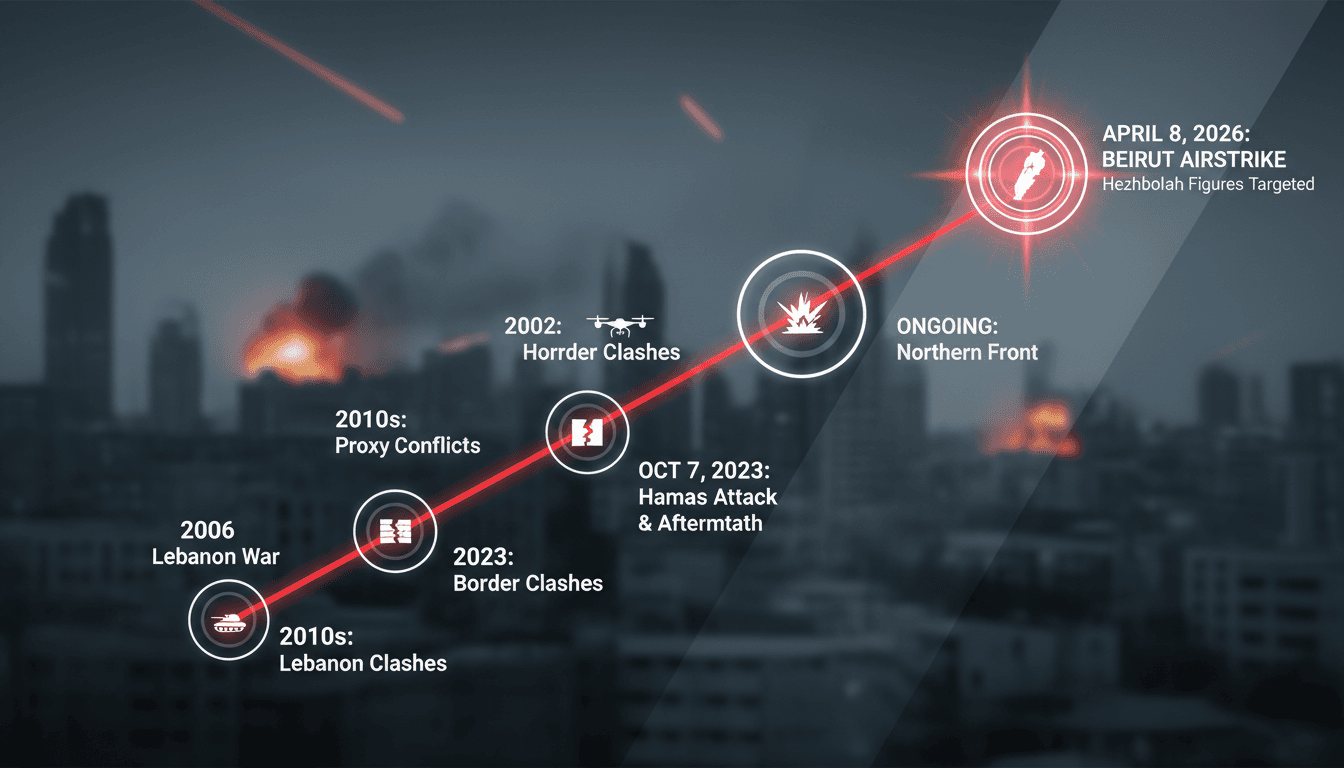
Here's what it means for you.
The ongoing conflict in Lebanon could impact energy markets and regional security, affecting your investments and travel plans.
Why it matters
This airstrike is part of Israel's broader strategy to weaken Hezbollah, which could escalate tensions in the Middle East and influence global energy prices.
What happened (in 30 seconds)
- On April 8, 2026, Israeli media reported an airstrike in Beirut targeting Hezbollah Secretary-General Naim Qassem's nephew and personal secretary.
- The operation is part of Israel's ongoing military campaign against Hezbollah, aimed at degrading its command structure amid the 2026 Lebanon war.
- Casualties remain unconfirmed, with no official responses from Hezbollah or Lebanese authorities at the time of reporting.
The context you actually need
- The 2026 Lebanon war escalated from border clashes between Israel and Hezbollah that began in 2024, following significant regional tensions.
- Israel has systematically targeted high-ranking Hezbollah affiliates to disrupt their operational capabilities and deter future aggression.
- Iran-backed groups are involved in the conflict, complicating the geopolitical landscape and increasing the risk of broader regional instability.
What's really happening
The airstrike on April 8, 2026, targeting the nephew and personal secretary of Naim Qassem, is a calculated move within Israel's ongoing military operations against Hezbollah. This incident underscores the strategic importance of leadership targets in asymmetric warfare, where disrupting command structures can significantly impact an organization's operational effectiveness.
Hezbollah, a powerful militant group based in Lebanon, has been a key player in the region, often acting as a proxy for Iranian interests. The group has been involved in various conflicts and has a reputation for resilience and retaliation. By targeting high-value individuals within Hezbollah, Israel aims to send a clear message: that it will not tolerate threats to its security and will act decisively against perceived aggressors.
The broader context of this airstrike is the ongoing Lebanon war, which has seen increased hostilities since 2024. Following the October 7 attacks, Israel has intensified its military efforts to degrade Hezbollah's capabilities. This has included precision strikes aimed at leadership figures, which are seen as essential to disrupting Hezbollah's command and control. The airstrike reflects a tactical approach that prioritizes high-value targets, which can lead to a cascading effect on the group's operational capacity.
The implications of this airstrike extend beyond immediate military objectives. It raises the stakes in an already volatile region, where retaliatory actions from Hezbollah could provoke further Israeli responses. The potential for escalation is significant, as Hezbollah may feel compelled to retaliate to maintain its credibility and deter future attacks. This cycle of violence can destabilize Lebanon further, impacting civilian life and regional security.
Moreover, the airstrike's timing and execution suggest a calculated risk by Israel, weighing the potential for backlash against the strategic benefits of eliminating key figures within Hezbollah. The absence of immediate confirmation or denial from Hezbollah about the strike's success indicates a level of uncertainty that could influence their next moves.
As the situation unfolds, the international community will be closely monitoring developments, particularly regarding how Iran and other regional actors respond to this escalation. The dynamics of power in the Middle East are complex, and actions taken by one party can have far-reaching consequences for others, including shifts in alliances and increased military posturing.
Who feels it first (and how)
- Investors in energy markets: Increased tensions may lead to fluctuations in oil and gas prices.
- Travelers to the Middle East: Heightened security risks could affect travel plans and insurance costs.
- Regional governments: Increased military readiness and potential shifts in diplomatic relations may arise.
What to watch next
- Hezbollah's response: Any retaliatory action could escalate the conflict further, impacting regional stability and security.
- Israeli military operations: Continued strikes against Hezbollah leadership may indicate a sustained campaign, affecting the broader geopolitical landscape.
- International diplomatic reactions: Watch for statements from key players like the U.S. and Iran, as their involvement could shift the dynamics of the conflict.
The airstrike targeted high-value Hezbollah affiliates.
Hezbollah will respond in some capacity, which could escalate tensions.
The long-term impact on regional stability and energy markets remains to be seen.
Frequently Asked Questions
- Why it matters?
- This airstrike is part of Israel's broader strategy to weaken Hezbollah, which could escalate tensions in the Middle East and influence global energy prices.
- What happened (in 30 seconds)?
- On April 8, 2026, Israeli media reported an airstrike in Beirut targeting Hezbollah Secretary-General Naim Qassem's nephew and personal secretary. The operation is part of Israel's ongoing military campaign against Hezbollah, aimed at degrading its command structure amid the 2026 Lebanon war. Casualties remain unconfirmed, with no official responses from Hezbollah or Lebanese authorities at the time of reporting.
- What's really happening?
- The airstrike on April 8, 2026, targeting the nephew and personal secretary of Naim Qassem, is a calculated move within Israel's ongoing military operations against Hezbollah. This incident underscores the strategic importance of leadership targets in asymmetric warfare, where disrupting command structures can significantly impact an organization's operational effectiveness. Hezbollah, a powerful militant group based in Lebanon, has been a key player in the region, often acting as a proxy for
- Who feels it first (and how)?
- Investors in energy markets: Increased tensions may lead to fluctuations in oil and gas prices. Travelers to the Middle East: Heightened security risks could affect travel plans and insurance costs. Regional governments: Increased military readiness and potential shifts in diplomatic relations may arise.
- What to watch next?
- Hezbollah's response: Any retaliatory action could escalate the conflict further, impacting regional stability and security. Israeli military operations: Continued strikes against Hezbollah leadership may indicate a sustained campaign, affecting the broader geopolitical landscape. International diplomatic reactions: Watch for statements from key players like the U.S. and Iran, as their involvement could shift the dynamics of the conflict.
Arabic-language digital news outlet covering UAE, regional, and international developments with broad general-news coverage.
"Al Ain News coverage typically blends UAE-focused reporting with wider Arab regional and international news."
— A47 Editor
لبنان.. أنباء عن استهداف ابن شقيق نعيم قاسم في ضربة إسرائيلية
Israeli sources report that an Israeli strike targeted the personal secretary and nephew of Hezbollah's Secretary-General, Naeem Qassem, in Beirut. This incident highlights ongoing tensions in the region and the potential for escalation in hostilitie...
Arabic-language coverage of political affairs and current events.
"Okaz political coverage typically follows mainstream Saudi framing on national and regional affairs."
— A47 Editor
ارتفاع ضحايا المجزرة الإسرائيلية في لبنان.. أنباء عن اغتيال سكرتير أمين «حزب الله»
The number of casualties from Israeli airstrikes in Lebanon has risen to 254 dead and 1,165 injured, as reported by the Lebanese Civil Defense. Israeli Channel 12 stated that the military targeted the personal secretary and nephew of Hezbollah's depu...