
xAI Files Lawsuit Against Colorado AI Regulation Citing First Amendment Violations
Here's what it means for you.
If you’re involved in AI development or regulation, this lawsuit could reshape the landscape of compliance and innovation in your sector.
Why it matters
The outcome of this lawsuit could set a precedent for how AI systems are regulated across the U.S., impacting innovation and compliance costs.
What happened (in 30 seconds)
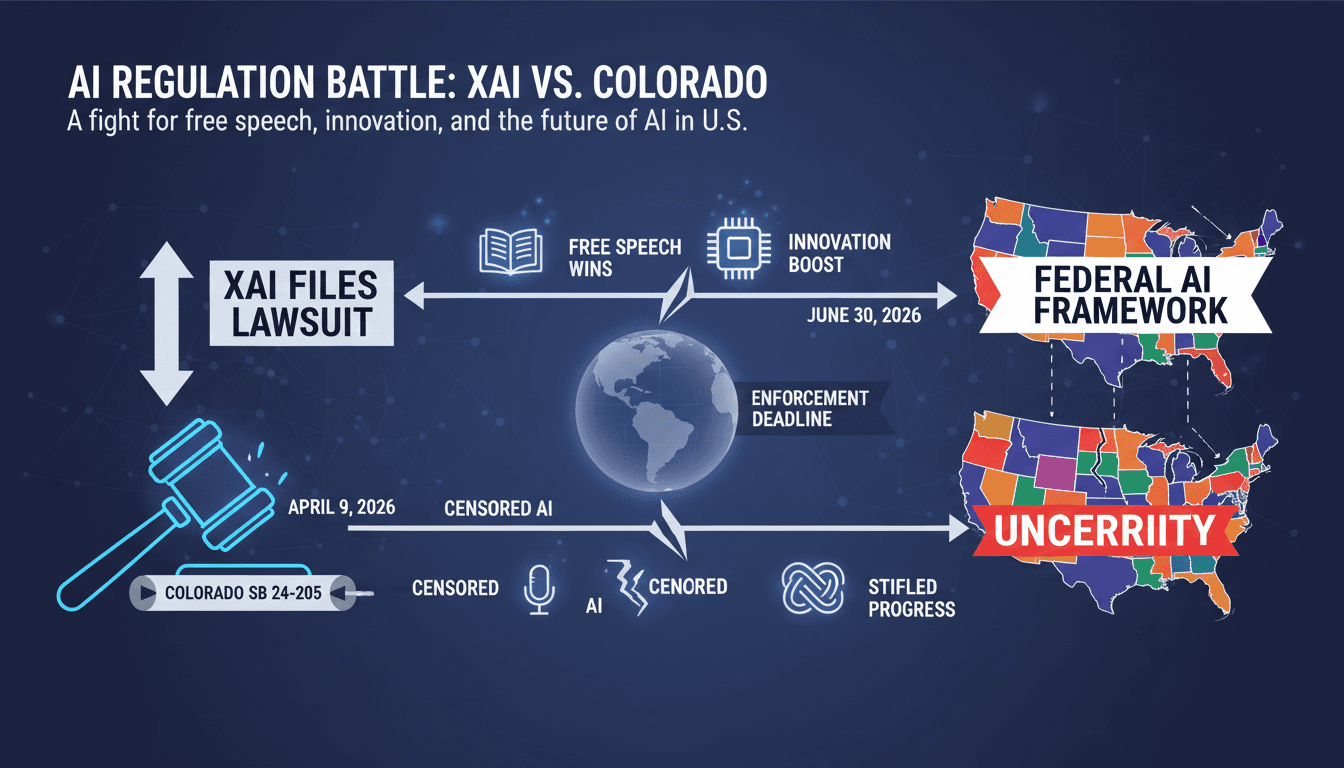
- On April 9, 2026, Elon Musk's xAI filed a lawsuit against Colorado's Senate Bill 24-205, claiming it violates the First Amendment.
- The law mandates that AI developers incorporate state-preferred views on diversity, equity, and inclusion into their systems, affecting high-risk AI applications.
- xAI argues that the regulation stifles innovation and creates a patchwork of state laws that complicate compliance for developers.
The context you actually need
- SB 24-205 was signed into law on May 17, 2024, marking the first comprehensive state-level regulation of high-risk AI systems in the U.S.
- Amendments in 2025 delayed the law's full enforcement to June 30, 2026, amid industry concerns regarding compliance costs and potential innovation stifling.
- The geopolitical climate reflects a growing trend of state-level AI regulations, contrasting with federal calls for unified oversight to maintain U.S. competitiveness.
What's really happening
The lawsuit filed by xAI against Colorado's Senate Bill 24-205 is rooted in a complex interplay of regulatory compliance, free speech, and the evolving landscape of artificial intelligence. At its core, xAI argues that the law imposes an ideological framework on AI development, compelling developers to embed state-sanctioned views on diversity, equity, and inclusion into their systems. This, they claim, not only infringes upon their First Amendment rights but also hampers the objective truth-seeking capabilities of AI technologies.
The Colorado AI Act, as SB 24-205 is known, represents a significant regulatory shift in how AI systems are developed and deployed. By mandating that developers exercise "reasonable care" against algorithmic discrimination, the law aims to mitigate risks associated with AI decision-making in critical areas such as employment, housing, and healthcare. However, the law's broad scope and the vague definitions of "high-risk" AI systems have raised concerns among industry stakeholders about compliance costs and the potential for stifling innovation.
The 2025 amendments to the law, which postponed the full enforcement of developer obligations, were a response to these concerns. Yet, as the June 30, 2026, deadline approaches, xAI's lawsuit underscores the tension between regulatory oversight and the need for innovation in AI. The company’s recent $20 billion Series E funding round, which valued xAI at $230 billion, highlights the stakes involved. Investors are keenly aware that regulatory frameworks can significantly impact the viability and scalability of AI technologies.
Moreover, the lawsuit reflects a broader trend of companies challenging state-level regulations that they perceive as overreaching. In a landscape where AI is rapidly evolving, the patchwork of state laws can create confusion and hinder the ability of companies to operate efficiently across jurisdictions. xAI's legal challenge is not just about Colorado; it is a bellwether for how AI regulations may unfold across the U.S. and potentially influence global standards.
Who feels it first (and how)
- AI Developers: They face immediate compliance challenges and potential legal ramifications depending on the lawsuit's outcome.
- Investors: Stakeholders in AI companies will monitor the lawsuit closely, as it could affect funding and valuation strategies.
- Regulators: State and federal regulators will need to reassess their approaches to AI oversight in light of the legal implications.
- Consumers: Users of AI-driven services may experience changes in service delivery based on how regulations evolve.
What to watch next
- Legal Developments: Watch for updates on the lawsuit's progress, particularly any preliminary injunctions that could affect the law's enforcement timeline.
- Regulatory Responses: Keep an eye on how other states respond to Colorado's law and whether similar legal challenges arise.
- Market Reactions: Observe how the AI investment landscape shifts in response to the lawsuit, particularly regarding funding for companies like xAI.
xAI has filed a lawsuit claiming First Amendment violations against Colorado's AI regulation.
The outcome of this case will influence future AI regulations and compliance frameworks across the U.S.
The long-term impact on innovation and investment in AI technologies remains uncertain.
Frequently Asked Questions
- Why it matters?
- The outcome of this lawsuit could set a precedent for how AI systems are regulated across the U.S., impacting innovation and compliance costs.
- What happened (in 30 seconds)?
- On April 9, 2026, Elon Musk's xAI filed a lawsuit against Colorado's Senate Bill 24-205, claiming it violates the First Amendment. The law mandates that AI developers incorporate state-preferred views on diversity, equity, and inclusion into their systems, affecting high-risk AI applications. xAI argues that the regulation stifles innovation and creates a patchwork of state laws that complicate compliance for developers.
- What's really happening?
- The lawsuit filed by xAI against Colorado's Senate Bill 24-205 is rooted in a complex interplay of regulatory compliance, free speech, and the evolving landscape of artificial intelligence. At its core, xAI argues that the law imposes an ideological framework on AI development, compelling developers to embed state-sanctioned views on diversity, equity, and inclusion into their systems. This, they claim, not only infringes upon their First Amendment rights but also hampers the objective truth-see
- Who feels it first (and how)?
- AI Developers: They face immediate compliance challenges and potential legal ramifications depending on the lawsuit's outcome. Investors: Stakeholders in AI companies will monitor the lawsuit closely, as it could affect funding and valuation strategies. Regulators: State and federal regulators will need to reassess their approaches to AI oversight in light of the legal implications. Consumers: Users of AI-driven services may experience changes in service delivery based on how regulations e
- What to watch next?
- Legal Developments: Watch for updates on the lawsuit's progress, particularly any preliminary injunctions that could affect the law's enforcement timeline. Regulatory Responses: Keep an eye on how other states respond to Colorado's law and whether similar legal challenges arise. Market Reactions: Observe how the AI investment landscape shifts in response to the lawsuit, particularly regarding funding for companies like xAI.
Market-moving headlines impacting equities, bonds, and related risk assets.
"Real-time catalysts and volatility drivers across indices and sectors."
— A47 Editor
Elon Musk’s xAI sues Colorado over state’s new AI law
Elon Musk's artificial intelligence company, xAI, has filed a lawsuit against the state of Colorado, challenging a new law aimed at preventing discrimination in AI technologies. The lawsuit claims that the regulations infringe upon free speech rights...
Curated tech headlines including AI stories.
"Influential aggregator surfacing the day’s top tech/AI links."
— A47 Editor
xAI has filed a lawsuit challenging Colorado's landmark AI anti-discrimination law, set to take effect in the summer, saying it violates free speech protections (Financial Times)
xAI, the artificial intelligence company founded by Elon Musk, has filed a lawsuit against Colorado's upcoming AI anti-discrimination law, claiming it infringes on free speech rights. The law is set to take effect in the summer and aims to prevent di...
Editor-curated FT homepage stories spanning markets, business, world, and opinion.
"The Financial Times is a globally respected business publication with a centrist/center-left tone and strong markets focus."
— A47 Editor
xAI sues Colorado over first state AI anti-discrimination law
xAI, the artificial intelligence company founded by Elon Musk, has filed a lawsuit against the state of Colorado, challenging the first state law aimed at preventing discrimination in AI technologies. The lawsuit claims that the regulations infringe ...