
Canada Proposes Bill C-25 to Ban Cryptocurrency Donations in Federal Elections
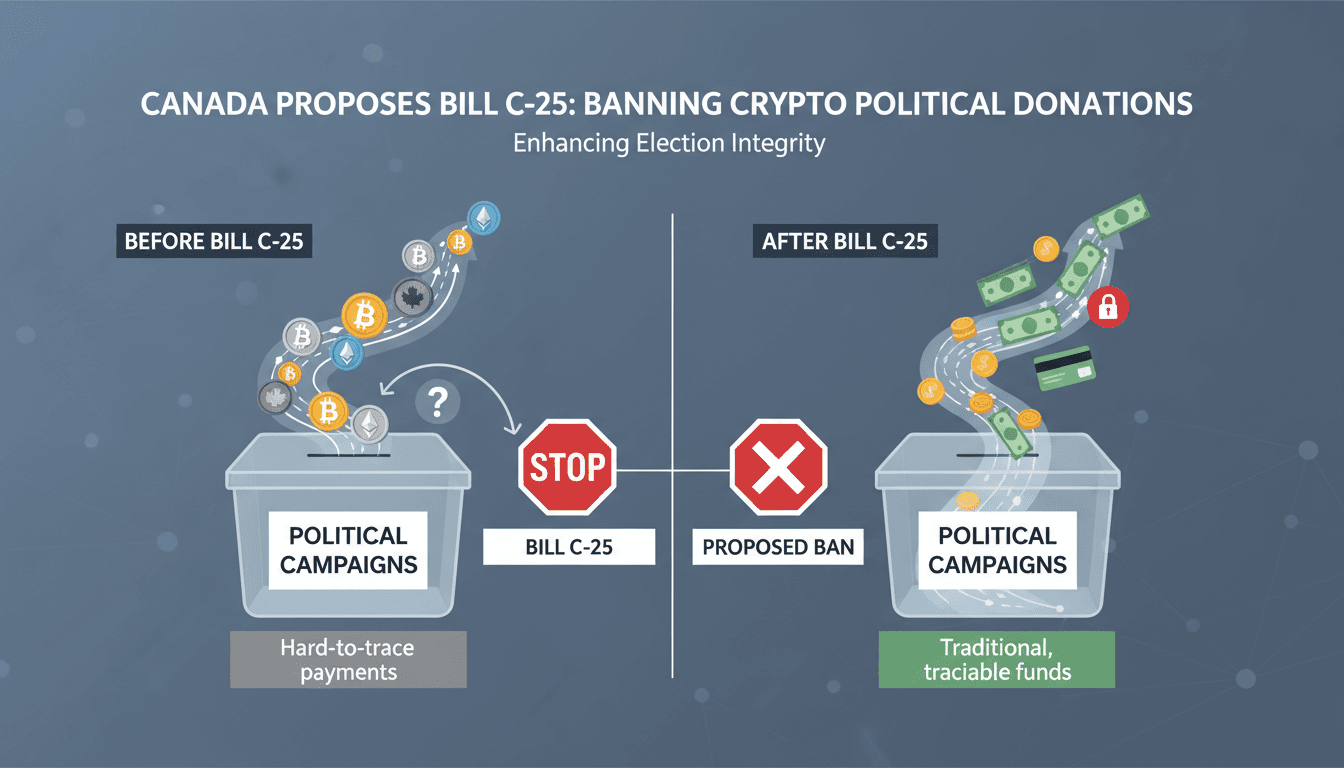
Here's what it means for you.
If you’re involved in political financing or cryptocurrency, this legislation could reshape your operational landscape.
Why it matters
This bill reflects a growing trend among governments to regulate digital currencies in the context of election integrity.
What happened (in 30 seconds)
- On March 26, 2026, the Government of Canada introduced Bill C-25, aiming to ban cryptocurrency donations in federal elections.
- The legislation targets hard-to-trace payment methods to prevent foreign interference and enhance transparency in political financing.
- The bill is currently at its first reading in the House of Commons, awaiting further parliamentary discussions.
The context you actually need
- Cryptocurrency donations have been allowed in Canada since 2019, treated as non-monetary property contributions.
- In 2024, Chief Electoral Officer Stéphane Perrault recommended prohibiting crypto donations due to identity verification challenges.
- The proposal responds to broader concerns about foreign interference in elections, especially in light of evolving threats like deepfakes and foreign funding.
What's really happening
The introduction of Bill C-25 marks a significant shift in Canada’s approach to political financing, particularly regarding cryptocurrency. The bill aims to amend the Canada Elections Act by prohibiting cryptocurrency, money orders, and prepaid cards as acceptable forms of political contributions. This legislative move is rooted in recommendations from Chief Electoral Officer Stéphane Perrault, who highlighted the difficulties in verifying contributor identities when using cryptocurrencies compared to traditional financial methods.
Since 2019, cryptocurrencies have been treated as non-monetary property contributions, allowing political entities to accept them without stringent oversight. However, as the digital landscape evolves, so do the risks associated with these contributions. The 2024 report by Perrault underscored the potential for foreign interference, prompting the government to take action. The prior attempt to introduce a similar bill in 2024 stalled after its second reading, indicating the complexities surrounding this issue.
The current bill not only targets cryptocurrency but also addresses other hard-to-trace payment methods, reinforcing the government's commitment to election integrity. By enhancing enforcement penalties and strengthening responses to foreign threats, the legislation aims to create a more transparent electoral process. The maximum administrative monetary penalty for organizations violating these rules is set at $100,000, signaling a serious approach to compliance.
As of March 30, 2026, the bill awaits further readings in Parliament, with no recorded votes yet. The response from the crypto community has been mixed, with concerns about the implications for traceability and the broader trend of restricting permissionless money. Crypto news outlets have drawn parallels with similar legislative efforts in the UK, indicating a potential global shift in how governments regulate cryptocurrency in political contexts.
This legislative proposal reflects a broader trend among governments worldwide to tighten regulations around digital currencies, particularly in sensitive areas like political financing. As concerns about foreign interference and election integrity grow, similar measures may emerge in other jurisdictions, potentially impacting the global cryptocurrency landscape.
Who feels it first (and how)
- Political parties: They will need to adapt their fundraising strategies to comply with the new regulations.
- Cryptocurrency platforms: These platforms may see a decline in engagement from political entities seeking donations.
- Voters and constituents: They may experience changes in how political campaigns are funded and the transparency of those funds.
What to watch next
- Parliamentary discussions: Keep an eye on the progress of Bill C-25 through the House of Commons, as debates may reveal additional insights into government priorities.
- Responses from the crypto community: Monitor how cryptocurrency advocates and organizations react to the bill, which could influence future legislative efforts.
- International trends: Watch for similar regulatory movements in other countries, particularly those with rising concerns about election integrity and foreign interference.
Bill C-25 aims to prohibit cryptocurrency donations in Canadian federal elections.
Other countries may follow Canada’s lead in tightening regulations around cryptocurrency and political financing.
The long-term impact of this legislation on political fundraising and cryptocurrency adoption in Canada remains to be seen.
Frequently Asked Questions
- Why it matters?
- This bill reflects a growing trend among governments to regulate digital currencies in the context of election integrity.
- What happened (in 30 seconds)?
- On March 26, 2026, the Government of Canada introduced Bill C-25, aiming to ban cryptocurrency donations in federal elections. The legislation targets hard-to-trace payment methods to prevent foreign interference and enhance transparency in political financing. The bill is currently at its first reading in the House of Commons, awaiting further parliamentary discussions.
- What's really happening?
- The introduction of Bill C-25 marks a significant shift in Canada’s approach to political financing, particularly regarding cryptocurrency. The bill aims to amend the Canada Elections Act by prohibiting cryptocurrency, money orders, and prepaid cards as acceptable forms of political contributions. This legislative move is rooted in recommendations from Chief Electoral Officer Stéphane Perrault, who highlighted the difficulties in verifying contributor identities when using cryptocurrencies compa
- Who feels it first (and how)?
- Political parties: They will need to adapt their fundraising strategies to comply with the new regulations. Cryptocurrency platforms: These platforms may see a decline in engagement from political entities seeking donations. Voters and constituents: They may experience changes in how political campaigns are funded and the transparency of those funds.
- What to watch next?
- Parliamentary discussions: Keep an eye on the progress of Bill C-25 through the House of Commons, as debates may reveal additional insights into government priorities. Responses from the crypto community: Monitor how cryptocurrency advocates and organizations react to the bill, which could influence future legislative efforts. International trends: Watch for similar regulatory movements in other countries, particularly those with rising concerns about election integrity and foreign interfere
News and analysis on Bitcoin, altcoins, and blockchain innovation.
"Bitcoinist delivers news and analysis on Bitcoin, altcoins, and blockchain innovation with a focus on market trends and industry updates."
— A47 Editor
Crypto Donations Face Ban As Canada Steps Up Election Security Measures
The Canadian federal government has introduced the Strong and Free Elections Act, which prohibits political parties and third-party election groups from accepting cryptocurrency, money orders, and prepaid cards as donations. This legislation aims to ...
Covers Bitcoin plus altcoin news, market updates, and educational resources.
"Bitcoin.com provides news, market data, and guides focused on Bitcoin and the wider crypto industry."
— A47 Editor
Strong and Free Elections Act Proposal Tightens Rules on Crypto Donations in Canada
The Government of Canada has proposed the Strong and Free Elections Act, which aims to tighten regulations on cryptocurrency donations during elections. This proposal is part of an effort to enhance transparency and accountability in the electoral pr...
Real-time updates, analysis, and reports on the blockchain and cryptocurrency sectors.
"Crypto News delivers real-time updates, analysis, and reports on the blockchain and cryptocurrency sectors."
— A47 Editor
New Canada bill seeks full ban on crypto campaign donations
The Canadian government has introduced a new election bill that seeks to ban cryptocurrency donations to political parties and third-party election groups, citing concerns over tracing and potential foreign interference during elections. This legisla...
Covers blockchain, cryptocurrency news, project analysis, and market insights.
"Cointelegraph is a leading crypto-focused media outlet known for timely news, analysis, and educational content related to blockchain and digital assets."
— A47 Editor
Canada proposes crypto political donation ban over foreign interference fears
Canada has proposed a ban on cryptocurrency donations for political campaigns, citing concerns over foreign interference. This legislative move follows a previous attempt in 2024 that did not progress beyond the House of Commons. The new proposal aim...
Covers blockchain, cryptocurrency news, project analysis, and market insights.
"CoinDesk is a well-established cryptocurrency and blockchain news provider, offering comprehensive insights, market data, and industry research."
— A47 Editor
Canada moves to ban crypto donations for election campaigns following UK
Canada has introduced Bill C-25, which aims to ban cryptocurrency donations for election campaigns, following similar actions taken by the UK. This legislative move comes after years of warnings from Canada's Chief Electoral Officer regarding the pot...