
Candidates for UN Secretary-General Position Engage in Interactive Dialogues Amid Institutional Challenges
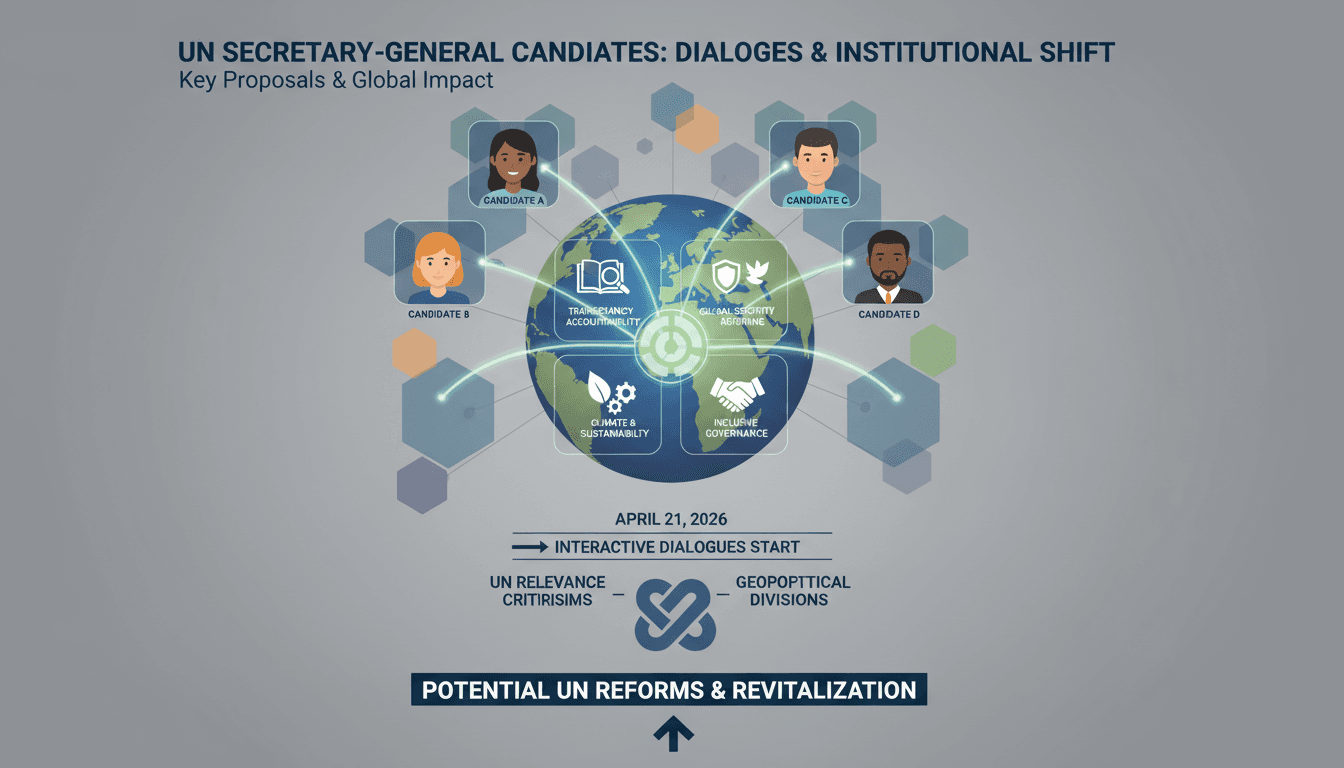
Here's what it means for you.
The outcome of the UN Secretary-General selection could reshape global governance and international relations, impacting various sectors worldwide.
Why it matters
The selection process reflects broader geopolitical tensions and the UN's evolving role in addressing global challenges.
What happened (in 30 seconds)
- Interactive dialogues for four candidates began on April 21, 2026, at UN Headquarters in New York.
- Candidates include Michelle Bachelet (Chile), Rafael Grossi (Argentina), Rebeca Grynspan (Costa Rica), and Macky Sall (Senegal).
- Criticism of the UN's relevance and effectiveness has intensified, prompting calls for reform and revitalization.
The context you actually need
- António Guterres' term as UN Secretary-General ends on December 31, 2026, necessitating a transparent selection process.
- Only four candidates are vying for the position, a stark contrast to the 13 candidates in 2016, highlighting geopolitical polarization.
- Regional representation traditions favor candidates from Latin America and the Caribbean, sidelining permanent Security Council members despite their influence.
What's really happening
The selection process for the next UN Secretary-General is unfolding against a backdrop of significant institutional challenges. António Guterres' tenure has been marked by increasing scrutiny regarding the UN's effectiveness in addressing global crises, from geopolitical conflicts to humanitarian disasters. As his second term approaches its end, the General Assembly has initiated a transparent selection process under resolution 79/327, emphasizing public dialogues and candidate disclosures.
The four candidates—Bachelet, Grossi, Grynspan, and Sall—are engaging in interactive dialogues designed to assess their visions for revitalizing the UN. Each candidate faces three hours of questioning from member states and civil society representatives, a format aimed at fostering accountability and transparency. This approach is a departure from previous selection processes, reflecting a growing demand for reform within the UN system.
The candidates have issued vision statements that underscore their commitment to multilateralism and institutional reform. Grossi has highlighted the need for the UN to adapt to a divided global landscape, while Grynspan has called for equal treatment among member states. Sall advocates for a reinvented multilateralism that can effectively address contemporary challenges. However, the process is not without controversy; the U.S. has expressed concerns regarding Bachelet's suitability, with significant opposition from Republican lawmakers.
The current geopolitical climate, characterized by divisions over conflicts such as Ukraine and Gaza, complicates the selection process. The UN's perceived diminished relevance has led to calls for cost reductions and a renewed focus on peacemaking. The limited number of candidates reflects these tensions, as the geopolitical landscape has shifted significantly since the last selection process in 2016.
Moreover, the absence of women in the role of Secretary-General throughout the UN's 80-year history raises questions about gender representation and inclusivity in global leadership. The UAE has previously expressed support for a diverse candidate pool, including women, indicating a potential shift in how leadership roles are perceived within international organizations.
As the dialogues continue, the implications of this selection process extend beyond the candidates themselves. The outcome will influence the UN's ability to navigate complex global issues and restore its relevance in a rapidly changing world.
Who feels it first (and how)
- Global leaders: They will need to adapt their diplomatic strategies based on the new Secretary-General's policies.
- Civil society organizations: They may experience shifts in funding and support depending on the new leadership's priorities.
- International businesses: Companies engaged in global markets may face changes in regulatory environments influenced by the UN's direction.
What to watch next
- Candidate performance: Monitor how each candidate addresses pressing global issues during the dialogues, as this will indicate their potential effectiveness.
- Geopolitical reactions: Watch for responses from major powers, particularly the U.S. and China, as their support or opposition could shape the selection outcome.
- Public engagement: Increased civil society involvement in the selection process may signal a shift towards greater accountability in international governance.
The interactive dialogues are ongoing, with candidates presenting their visions.
The selection process will continue to face scrutiny and calls for reform from various stakeholders.
The final outcome of the selection process and its impact on the UN's future effectiveness remain uncertain.
Frequently Asked Questions
- Why it matters?
- The selection process reflects broader geopolitical tensions and the UN's evolving role in addressing global challenges.
- What happened (in 30 seconds)?
- Interactive dialogues for four candidates began on April 21, 2026, at UN Headquarters in New York. Candidates include Michelle Bachelet (Chile), Rafael Grossi (Argentina), Rebeca Grynspan (Costa Rica), and Macky Sall (Senegal). Criticism of the UN's relevance and effectiveness has intensified, prompting calls for reform and revitalization.
- What's really happening?
- The selection process for the next UN Secretary-General is unfolding against a backdrop of significant institutional challenges. António Guterres' tenure has been marked by increasing scrutiny regarding the UN's effectiveness in addressing global crises, from geopolitical conflicts to humanitarian disasters. As his second term approaches its end, the General Assembly has initiated a transparent selection process under resolution 79/327, emphasizing public dialogues and candidate disclosures. Th
- Who feels it first (and how)?
- Global leaders: They will need to adapt their diplomatic strategies based on the new Secretary-General's policies. Civil society organizations: They may experience shifts in funding and support depending on the new leadership's priorities. International businesses: Companies engaged in global markets may face changes in regulatory environments influenced by the UN's direction.
- What to watch next?
- Candidate performance: Monitor how each candidate addresses pressing global issues during the dialogues, as this will indicate their potential effectiveness. Geopolitical reactions: Watch for responses from major powers, particularly the U.S. and China, as their support or opposition could shape the selection outcome. Public engagement: Increased civil society involvement in the selection process may signal a shift towards greater accountability in international governance.
Market-moving headlines impacting equities, bonds, and related risk assets.
"Real-time catalysts and volatility drivers across indices and sectors."
— A47 Editor
Contenders to head crisis-wracked UN face live grillings
Contenders for leadership positions at the United Nations are currently undergoing intense scrutiny through live questioning sessions, reflecting the organization's ongoing challenges and the critical need for effective governance. This process highl...
Regional and international reporting focused on Middle Eastern politics, diplomacy, and economics.
"Asharq Al-Awsat is a Saudi-owned international newspaper reflecting mainstream Gulf political perspectives."
— A47 Editor
Contenders to Head Crisis-Wracked UN Face Live Grillings
The United Nations is currently facing a significant leadership challenge as four candidates prepare for live interviews to compete for the position of Secretary-General. This contest arises amid escalating crises in the Middle East, particularly the...
Regional coverage and analysis focused on politics, diplomacy, and business across the Middle East.
"Al-Monitor is known for analytical reporting on Middle East politics and policy developments."
— A47 Editor
Contenders to head crisis-wracked UN face live grillings
Four candidates, Michelle Bachelet from Chile, Rafael Grossi from Argentina, Rebeca Grynspan from Costa Rica, and Macky Sall from Senegal, are set to undergo live hearings on April 21 and 22 as they vie for the position of the next United Nations sec...