
Global Progressive Mobilisation Summit in Barcelona Addresses Far-Right Threats
Here's what it means for you.
As global political dynamics shift, your economic landscape and social policies may be influenced by the outcomes of progressive alliances formed at this summit.
Why it matters
The summit represents a strategic response to the rising influence of far-right movements, which could reshape international cooperation and economic policies.
What happened (in 30 seconds)
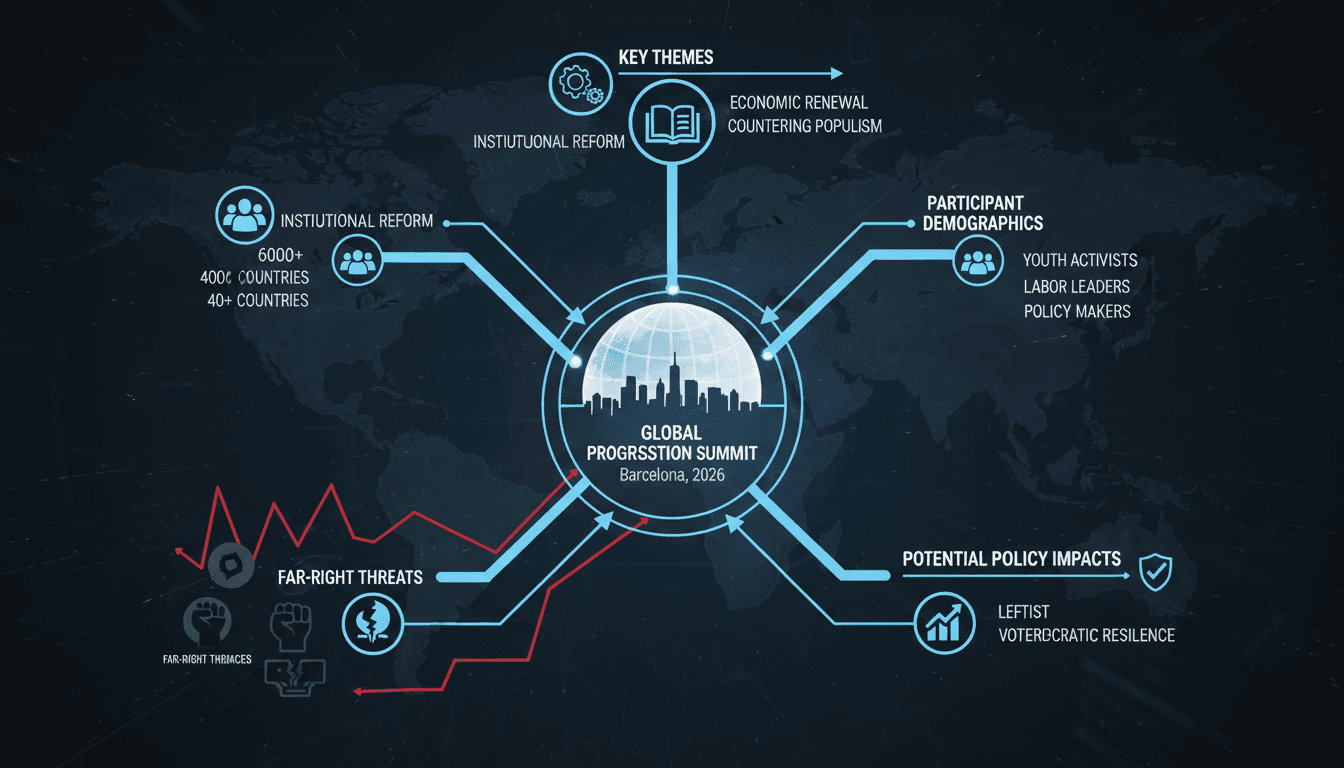
- Over 6,000 participants from more than 40 countries gathered in Barcelona on April 18, 2026, to strategize against far-right advances.
- Key leaders including Pedro Sánchez and Luiz Inácio Lula da Silva emphasized institutional reforms and economic renewal to reclaim disillusioned voters.
- Progressive alliances were formed to address pressing issues like cost-of-living crises and the need for taxing billionaires.
The context you actually need
- A decade-long trend of far-right gains has been documented, driven by voter concerns over immigration and economic pressures.
- Spain's political landscape is challenged by the far-right Vox party, prompting the Socialist Party to host this summit amid rising authoritarianism globally.
- International shifts include declining support for far-right leaders in countries like Hungary and France, indicating a potential turning tide.
What's really happening
The Global Progressive Mobilisation Summit in Barcelona is a direct response to a decade of increasing far-right and authoritarian movements worldwide. This summit, led by prominent leftist leaders, aims to counteract these trends through strategic alliances and institutional reforms. The gathering of over 6,000 participants from more than 40 countries underscores a collective urgency to address the challenges posed by rising nationalism and economic inequality.
At the heart of the summit's agenda is the call for reforming international institutions, particularly the UN Security Council, to ensure they reflect contemporary global realities. This reform is seen as essential for fostering multilateralism that benefits all nations, rather than a select few. Brazilian President Lula da Silva's advocacy for a more inclusive approach highlights the need for international cooperation in addressing shared challenges, such as climate change and economic disparity.
The summit also focused on economic renewal, particularly the pressing issue of cost-of-living crises affecting many citizens. By prioritizing tangible issues like rising food prices over abstract democratic ideals, progressive leaders aim to reconnect with disillusioned voters who may feel neglected by traditional political narratives. This approach is crucial for regaining trust and support from the electorate, especially in regions where far-right parties have gained traction by exploiting economic grievances.
Moreover, the summit's emphasis on taxing billionaires reflects a growing consensus among progressive leaders that wealth redistribution is necessary to address systemic inequalities. This strategy not only aims to alleviate economic pressures on the middle and lower classes but also seeks to challenge the concentration of power and influence held by the ultra-wealthy.
The presence of influential figures, including video messages from Bernie Sanders and Hillary Clinton, reinforces the notion of global solidarity among leftist movements. The display of red flags and anti-fascist symbols during the event signifies a unified front against far-right ideologies, aiming to inspire similar movements in other regions.
As these progressive alliances take shape, the implications for global politics and economics could be significant. The summit's outcomes may influence policy decisions in various countries, potentially leading to a resurgence of leftist ideologies and a reevaluation of economic priorities on a global scale.
Who feels it first (and how)
- Progressive politicians: They will leverage the summit's momentum to push for reforms in their respective countries.
- Middle and lower-income citizens: They may benefit from proposed economic policies aimed at alleviating cost-of-living pressures.
- International organizations: Institutions like the UN may undergo changes in structure and function as calls for reform gain traction.
What to watch next
- Policy proposals: Monitor the introduction of new economic policies aimed at taxing the wealthy and addressing cost-of-living issues, as these could reshape fiscal landscapes.
- International alliances: Watch for the formation of new coalitions among progressive leaders that may influence global governance and economic strategies.
- Far-right responses: Keep an eye on how far-right parties react to this summit, as their strategies could evolve in response to the mobilization of progressive forces.
The summit successfully gathered over 6,000 participants and highlighted the need for progressive reform.
Progressive alliances will form and influence policy discussions in various countries.
The immediate impact on far-right movements and their strategies remains to be seen.
Frequently Asked Questions
- Why it matters?
- The summit represents a strategic response to the rising influence of far-right movements, which could reshape international cooperation and economic policies.
- What happened (in 30 seconds)?
- Over 6,000 participants from more than 40 countries gathered in Barcelona on April 18, 2026, to strategize against far-right advances. Key leaders including Pedro Sánchez and Luiz Inácio Lula da Silva emphasized institutional reforms and economic renewal to reclaim disillusioned voters. Progressive alliances were formed to address pressing issues like cost-of-living crises and the need for taxing billionaires.
- What's really happening?
- The Global Progressive Mobilisation Summit in Barcelona is a direct response to a decade of increasing far-right and authoritarian movements worldwide. This summit, led by prominent leftist leaders, aims to counteract these trends through strategic alliances and institutional reforms. The gathering of over 6,000 participants from more than 40 countries underscores a collective urgency to address the challenges posed by rising nationalism and economic inequality. At the heart of the summit's age
- Who feels it first (and how)?
- Progressive politicians: They will leverage the summit's momentum to push for reforms in their respective countries. Middle and lower-income citizens: They may benefit from proposed economic policies aimed at alleviating cost-of-living pressures. International organizations: Institutions like the UN may undergo changes in structure and function as calls for reform gain traction.
- What to watch next?
- Policy proposals: Monitor the introduction of new economic policies aimed at taxing the wealthy and addressing cost-of-living issues, as these could reshape fiscal landscapes. International alliances: Watch for the formation of new coalitions among progressive leaders that may influence global governance and economic strategies. Far-right responses: Keep an eye on how far-right parties react to this summit, as their strategies could evolve in response to the mobilization of progressive forces.
English-language news from Qatar covering domestic and regional affairs.
"Gulf Times reflects Qatari perspectives on regional developments."
— A47 Editor
Global leftists rally in Spain hoping to spark resurgence against far-right
Thousands of leftists gathered in Barcelona, Spain, over the weekend to discuss strategies aimed at countering the rise of authoritarianism and regaining voter support. The rally included proposals for reforming the UN Security Council and implementi...
Comprehensive coverage of Middle Eastern and global issues.
"Al Jazeera is a prominent voice from the Global South, especially the Middle East, with an emphasis on underreported stories."
— A47 Editor
Who will shape the global agenda, the left or far right?
Left-wing leaders convened in Barcelona to discuss strategies for promoting democracy and countering the rise of far-right movements, while far-right protesters gathered in Milan to voice their opposition to immigration and EU regulations. This juxta...