
US Naval Blockade in Strait of Hormuz Continues Amid Ongoing Iran Negotiations
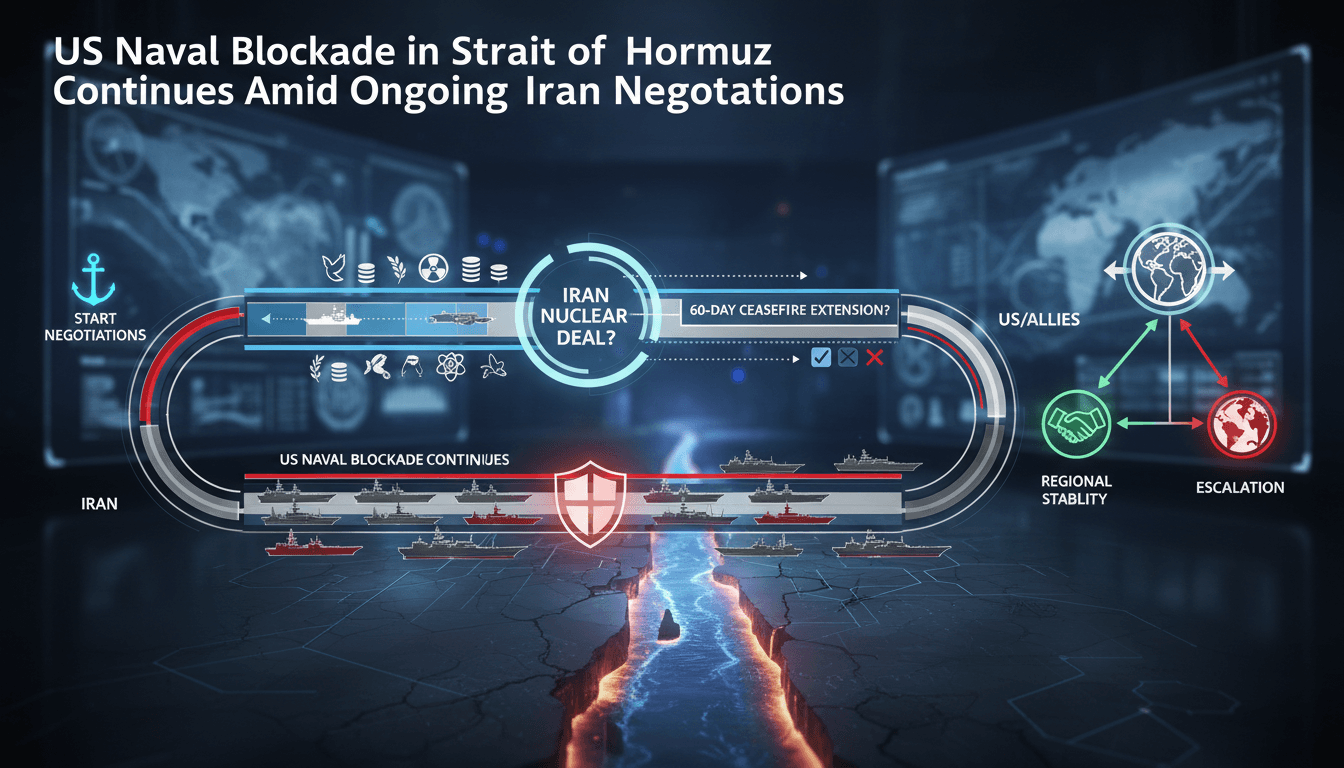
Here's what it means for you.
The ongoing naval blockade in the Strait of Hormuz underscores the heightened tensions between the U.S. and Iran, which could have significant implications for global energy markets and regional stability. As negotiations for a potential ceasefire and nuclear deal unfold, stakeholders must remain vigilant about the potential for military escalation. The outcome of these discussions will likely influence U.S. foreign policy and its approach to Iran's nuclear ambitions.
What happened
The U.S. has confirmed that its naval blockade in the Strait of Hormuz remains active while negotiations with Iran continue. Defense Secretary Pete Hegseth stated that the blockade is a critical component of U.S. strategy as President Trump considers extending a ceasefire for an additional 60 days. This extension is contingent upon Iran's commitment to halt its nuclear weapons development, a key point of contention in the ongoing discussions.
The U.S. has indicated its readiness to resume military action if a satisfactory deal is not reached. As the negotiations progress, both sides are grappling with significant challenges, particularly regarding Iran's nuclear program and mutual distrust. The situation remains fluid, with the potential for rapid changes in military readiness and diplomatic efforts.
The Context
The U.S. has warned that it is capable of resuming military operations against Iran if necessary, reflecting the seriousness of the situation. Negotiations have faced hurdles, especially concerning Iran's nuclear capabilities, which have raised alarms in Washington. Iran has expressed skepticism about U.S. intentions, complicating the path toward a successful agreement.
The Strait of Hormuz is a vital maritime corridor for global oil shipments, making the stability of this region crucial for international energy security. The ongoing negotiations began several weeks ago, with a tentative framework for extending the ceasefire by 60 days already established. The stakes are high, as the outcome will significantly impact U.S.-Iran relations and broader regional dynamics.
Takeaway
The coming days will be pivotal as the U.S. and Iran navigate their complex relationship. Observers should watch for potential announcements from President Trump regarding the ceasefire deal, which could either pave the way for a diplomatic resolution or escalate military tensions. Further developments in U.S.-Iran negotiations will be critical in determining the future of regional stability.
As both sides continue to engage in dialogue, the implications of their decisions will resonate beyond the immediate context, affecting global markets and international relations. The situation remains delicate, and the outcome of these negotiations will be closely monitored by stakeholders worldwide.
English-language reporting on Saudi politics, policy, and society.
"Saudi Gazette reflects mainstream Saudi institutional perspectives."
— A47 Editor
US says it is capable to resume war with Iran as peace deal remains elusive
The United States has indicated its readiness to resume military action against Iran if necessary, as negotiations for a peace deal remain unresolved. U.S. Defense Secretary Pete Hegseth stated that the U.S. military is well-prepared, while President...
Capitol Hill news, legislation, and policy insight.
"The Hill specializes in U.S. politics and policy, with a focus on Capitol Hill developments and a reputation for insider reporting."
— A47 Editor
Hegseth says Iran blockade 'very much still in place' as Trump mulls deal
Defense Secretary Pete Hegseth confirmed that the U.S. naval blockade in the Strait of Hormuz remains in effect, as President Trump considers extending a ceasefire with Iran that could potentially reopen this critical energy corridor. Hegseth's remar...
Arabic-language coverage of political affairs and current events.
"Okaz political coverage typically follows mainstream Saudi framing on national and regional affairs."
— A47 Editor
عُمان تشتبه بـ«لغم» في «هرمز».. واشنطن: المحادثات مع إيران «مثمرة»
U.S. Defense Secretary Pete Hegseth described the discussions between Washington and Tehran as 'fruitful', indicating they are progressing in a direction favorable to the U.S. He emphasized that the maritime blockade on Iran remains largely in place ...
Breaking news, politics, business, and entertainment from the U.S. and around the world.
"The New York Post is a tabloid-format newspaper known for its sensationalist headlines and conservative-leaning editorial tone."
— A47 Editor
Pete Hegseth says US is ready to restart strikes on Iran if no deal is reached
Pete Hegseth, during his visit to Singapore, stated that the United States is prepared to resume military strikes on Iran if a diplomatic agreement is not reached. He emphasized the U.S. capability to act if necessary, highlighting the ongoing tensio...
International coverage from The Guardian's global desks.
"The Guardian is known for its progressive editorial stance and in-depth analysis."
— A47 Editor
US ‘more than capable’ of resuming war against Iran, Pete Hegseth says
The United States has asserted its readiness to resume military action against Iran, as stated by Pentagon chief Pete Hegseth during a defense summit in Singapore. This comes in the context of ongoing negotiations led by President Donald Trump, who e...