
UN Investigation Links Deaths of Indonesian Peacekeepers to Israeli and Hezbollah Actions
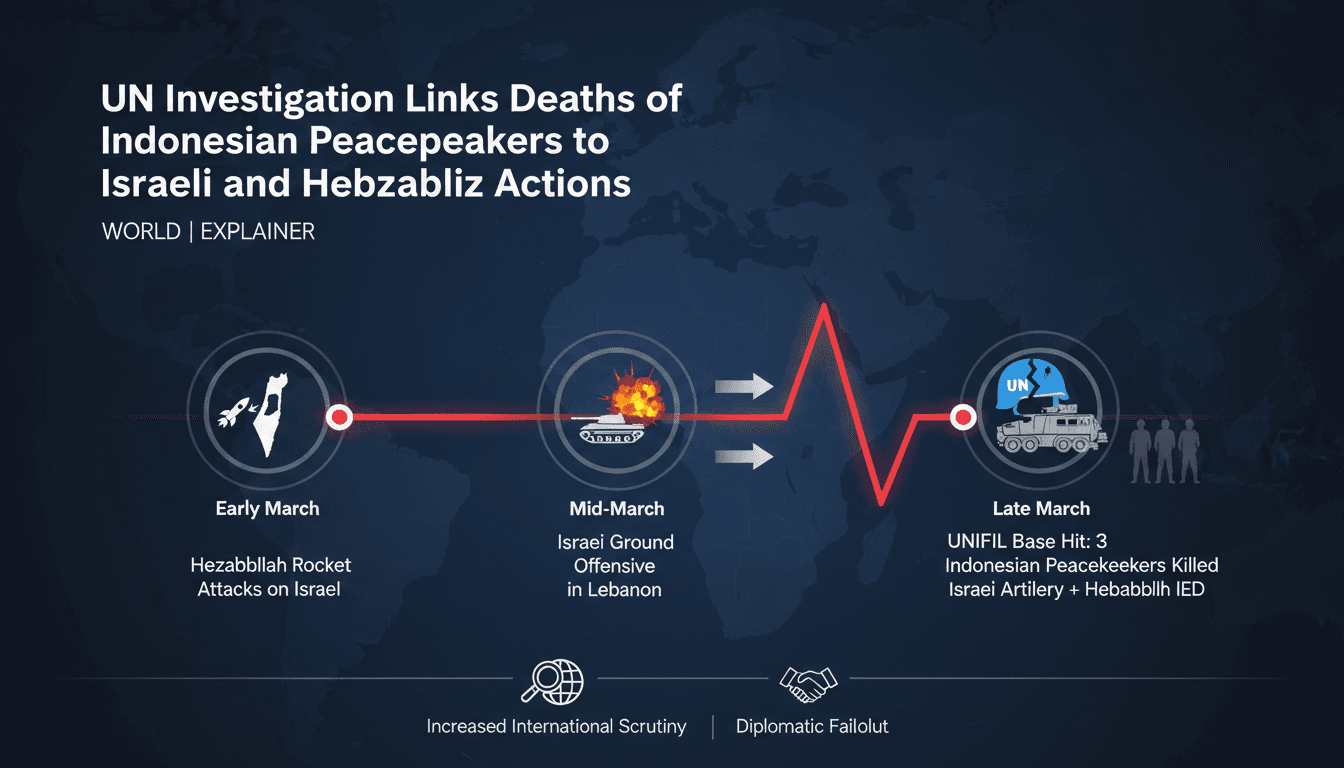
Here's what it means for you.
The deaths of UN peacekeepers in Lebanon could escalate regional instability, impacting global markets and security dynamics.
Why it matters
The incident highlights the fragility of peacekeeping efforts in conflict zones and the potential for broader geopolitical ramifications.
What happened (in 30 seconds)
- Three Indonesian peacekeepers were killed in southern Lebanon on March 29–30, 2026, due to Israeli artillery and a Hezbollah IED.
- UN Secretary-General António Guterres condemned the attacks, labeling them potential war crimes and emphasizing the need for peacekeeper protection.
- The incidents occurred amid escalating conflict between Israel and Hezbollah, following Hezbollah's rocket attacks in support of Iran.
The context you actually need
- Tensions escalated on March 2, 2026, when Hezbollah fired rockets into Israel, prompting an Israeli ground offensive in southern Lebanon.
- UNIFIL, deployed since 1978, has faced increasing risks, with over 300 peacekeepers historically killed in the region.
- The March incidents marked the first combat deaths of UN peacekeepers since the recent outbreak of hostilities, with over 1,240 Lebanese fatalities reported from Israeli strikes.
What's really happening
The recent deaths of three Indonesian peacekeepers serving with the United Nations Interim Force in Lebanon (UNIFIL) have drawn significant international attention and condemnation. This incident occurred against the backdrop of escalating tensions in the region, particularly following Hezbollah's rocket attacks on Israel in early March 2026. The UN investigation, released on April 7, confirmed that one peacekeeper was killed by Israeli artillery fire while two others died from a Hezbollah-planted improvised explosive device (IED).
This escalation is part of a broader conflict that began when the U.S. and Israel launched strikes against Iranian targets, prompting Hezbollah to retaliate. The UNIFIL mission, established to monitor the Blue Line demarcation between Israel and Lebanon, has increasingly found itself in the crossfire of these hostilities. The recent deaths underscore the risks faced by peacekeepers in volatile regions, where they are often caught between warring factions.
Israel's acknowledgment of the artillery strike indicates a recognition of the potential consequences of military operations in proximity to UN forces. However, Israel has placed the blame for the IED on Hezbollah, suggesting that the group is using tactics that endanger both civilians and peacekeepers. This situation raises serious concerns about the safety of UN personnel and the effectiveness of international peacekeeping missions in conflict zones.
The UN Secretary-General's condemnation of the attacks as potential war crimes reflects the gravity of the situation and the need for accountability. Countries like Indonesia have called for greater protection for peacekeepers, highlighting the international community's responsibility to ensure their safety. The ongoing investigations by involved parties may lead to further diplomatic tensions, particularly if findings implicate one side more than the other.
As the conflict continues, the implications extend beyond the immediate region. The deaths of peacekeepers can lead to increased scrutiny of international military engagements and peacekeeping operations, potentially affecting future missions. Additionally, the broader geopolitical landscape may shift as nations reassess their involvement and strategies in the Middle East, particularly in light of rising tensions between Iran, Israel, and their respective allies.
Who feels it first (and how)
- Peacekeeping forces: Increased operational risks and scrutiny on safety protocols.
- Regional governments: Heightened tensions may lead to diplomatic fallout and military escalations.
- Investors and markets: Volatility in oil prices and stock markets due to geopolitical instability and conflict-related uncertainties.
- Tourism sectors: Declines in travel to conflict-affected areas, impacting local economies.
What to watch next
- International investigations: The outcomes of ongoing investigations into the deaths could influence diplomatic relations and military strategies in the region.
- Market reactions: Watch for fluctuations in oil prices and stock markets as tensions evolve, impacting global economic stability.
- UN peacekeeping policies: Potential changes in UN peacekeeping mandates or operations in response to increased risks and casualties.
Three Indonesian peacekeepers were killed by Israeli artillery and a Hezbollah IED.
Increased international scrutiny on military operations in conflict zones and potential changes in peacekeeping strategies.
The long-term geopolitical ramifications of these incidents on regional stability and international relations.
Frequently Asked Questions
- Why it matters?
- The incident highlights the fragility of peacekeeping efforts in conflict zones and the potential for broader geopolitical ramifications.
- What happened (in 30 seconds)?
- Three Indonesian peacekeepers were killed in southern Lebanon on March 29–30, 2026, due to Israeli artillery and a Hezbollah IED. UN Secretary-General António Guterres condemned the attacks, labeling them potential war crimes and emphasizing the need for peacekeeper protection. The incidents occurred amid escalating conflict between Israel and Hezbollah, following Hezbollah's rocket attacks in support of Iran.
- What's really happening?
- The recent deaths of three Indonesian peacekeepers serving with the United Nations Interim Force in Lebanon (UNIFIL) have drawn significant international attention and condemnation. This incident occurred against the backdrop of escalating tensions in the region, particularly following Hezbollah's rocket attacks on Israel in early March 2026. The UN investigation, released on April 7, confirmed that one peacekeeper was killed by Israeli artillery fire while two others died from a Hezbollah-plant
- Who feels it first (and how)?
- Peacekeeping forces: Increased operational risks and scrutiny on safety protocols. Regional governments: Heightened tensions may lead to diplomatic fallout and military escalations. Investors and markets: Volatility in oil prices and stock markets due to geopolitical instability and conflict-related uncertainties. Tourism sectors: Declines in travel to conflict-affected areas, impacting local economies.
- What to watch next?
- International investigations: The outcomes of ongoing investigations into the deaths could influence diplomatic relations and military strategies in the region. Market reactions: Watch for fluctuations in oil prices and stock markets as tensions evolve, impacting global economic stability. UN peacekeeping policies: Potential changes in UN peacekeeping mandates or operations in response to increased risks and casualties.
Pan-Arab news coverage spanning politics, business, sports, and regional affairs.
"Asharq Al-Awsat reflects a broad Arab editorial perspective with strong attention to regional geopolitics."
— A47 Editor
الأمم المتحدة: جنود اليونيفيل في جنوب لبنان قُتلوا بنيران إسرائيلية وعبوة لـ«حزب الله»
Initial findings from a United Nations investigation indicate that three Indonesian peacekeepers from the UN Interim Force in Lebanon (UNIFIL) were killed by Israeli gunfire and an explosive device linked to Hezbollah. This incident highlights the on...
Arabic-language UAE newspaper coverage focused on domestic affairs, public institutions, business, society, and regional developments.
"Al Khaleej coverage generally reflects a mainstream UAE editorial lens with strong attention to public affairs, institutions, and regional developments."
— A47 Editor
تحقيق أممي: جنود «اليونيفيل» قُتلوا بنيران إسرائيلية وعبوة لـ «حزب الله»
An initial United Nations investigation has revealed that three Indonesian members of the United Nations Interim Force in Lebanon (UNIFIL) were killed by Israeli fire and an explosive device attributed to Hezbollah. This incident raises serious conce...