
Nvidia CEO Warns DeepSeek AI on Huawei Chips Threatens US AI Dominance
Here's what it means for you.
If you're in tech or finance, the shift of AI development to Huawei hardware could reshape competitive dynamics in the global AI landscape.
Why it matters
This development signals a potential erosion of U.S. technological dominance, impacting global standards and market competition.
What happened (in 30 seconds)
- Jensen Huang, CEO of Nvidia, warned that DeepSeek's use of Huawei chips for its AI models represents a "horrible outcome" for the U.S.
- DeepSeek is set to deploy its V4 multimodal model on Huawei's Ascend 950PR processor, marking a significant pivot from Nvidia's technology.
- U.S. export controls on advanced semiconductors have pushed Chinese firms to develop alternatives, enabling this shift.
The context you actually need
- U.S. export controls on advanced semiconductors began in 2022 and intensified in 2023, limiting Nvidia's sales to China and prompting local firms to seek alternatives.
- DeepSeek's V3 model was initially trained on Nvidia's H800 GPUs, but the upcoming V4 model has rewritten its core code to operate on Huawei's CANN framework.
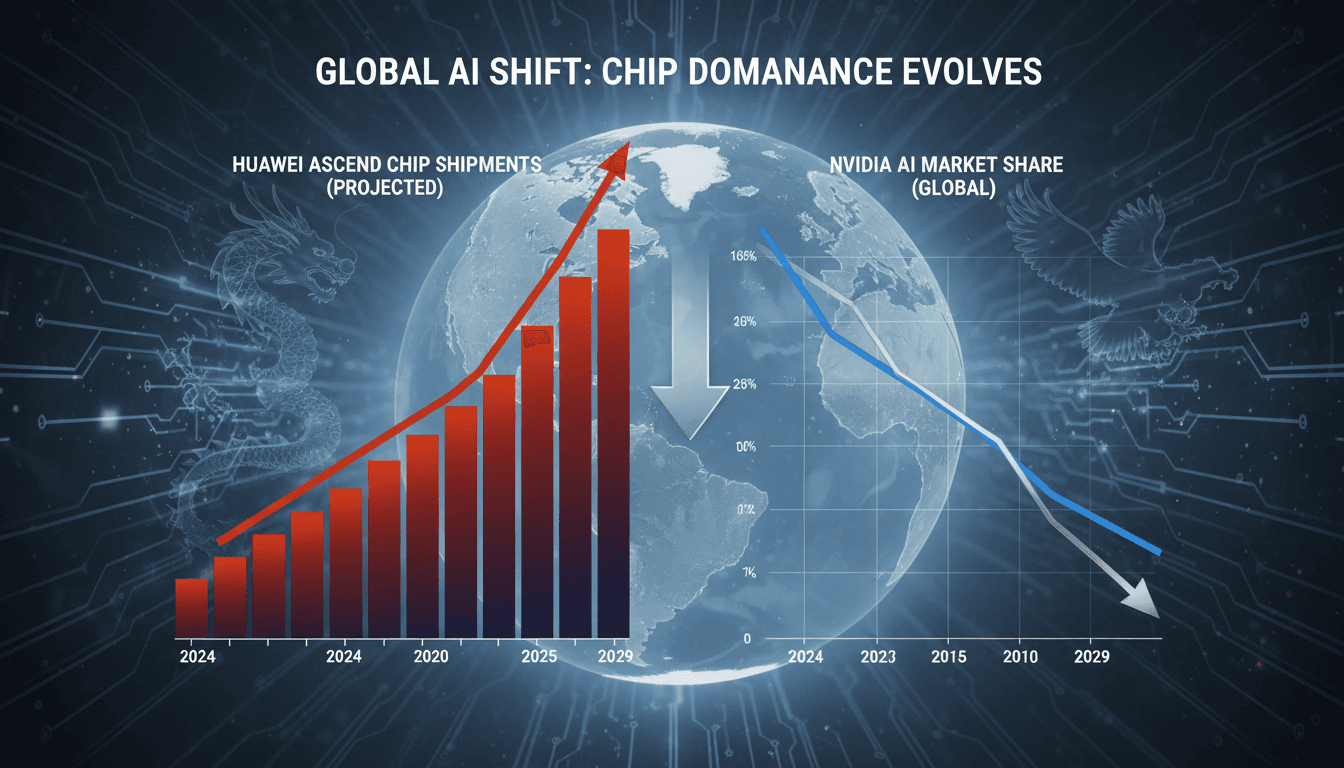
- Huawei's projected AI chip shipments for 2026 are estimated at 750,000, indicating a significant ramp-up in their AI hardware capabilities.
What's really happening
The geopolitical landscape surrounding AI technology is rapidly evolving, driven by U.S. export controls that have restricted access to advanced semiconductors for Chinese companies. Since 2022, these controls have forced firms like DeepSeek to pivot away from reliance on U.S. technology, specifically Nvidia's high-end GPUs. This shift is not merely a technical adjustment; it represents a broader strategic maneuver in the global AI arms race.
DeepSeek's transition to Huawei's Ascend 950PR processor for its V4 multimodal model is emblematic of a larger trend where Chinese firms are increasingly developing their own technological ecosystems. The rewrite of DeepSeek's core code to align with Huawei's CANN framework signifies a critical juncture where Chinese technology standards could gain traction globally. This is particularly concerning for U.S. interests, as Huang articulated, because it could lead to the propagation of Chinese standards in AI technology, undermining U.S. leadership in the sector.
The implications of this shift are profound. As Huawei ramps up its AI chip production, projected to reach 750,000 units in 2026, it could establish itself as a formidable competitor in the global AI market. This not only threatens Nvidia's dominance but also raises questions about the future of AI development standards. If DeepSeek's models become widely adopted, they could set a precedent for other companies to follow suit, further entrenching Chinese technology in the global marketplace.
Moreover, the lack of immediate U.S. governmental response to Huang's warning suggests a potential gap in strategic oversight regarding the implications of these technological shifts. While there have been calls from U.S. lawmakers to add DeepSeek to military-linked entity lists, the absence of decisive action could allow the trend to continue unchecked. Analysts have noted that Huang's comments validate concerns raised by critics of export controls, highlighting the risks associated with isolating U.S. technology from global markets.
In summary, the shift of DeepSeek to Huawei hardware is not just a technical decision; it is a strategic pivot that could redefine the competitive landscape of AI technology, with significant implications for U.S. interests and global standards.
Who feels it first (and how)
- Tech companies: Firms relying on U.S. technology may face increased competition from Chinese alternatives.
- Investors: Those invested in Nvidia or U.S. tech stocks may see volatility as market dynamics shift.
- AI developers: Developers may need to adapt to new standards and frameworks emerging from Chinese technology.
- Geopolitical analysts: Professionals monitoring U.S.-China relations will need to reassess the implications of this technological shift.
What to watch next
- DeepSeek's V4 deployment: Monitor the performance and adoption of DeepSeek's V4 model on Huawei hardware, as it could influence market trends.
- U.S. governmental response: Watch for any legislative or regulatory actions from the U.S. government in response to Huang's warning and the ongoing shift in AI technology.
- Huawei's market penetration: Keep an eye on Huawei's AI chip shipments and market share growth, which could signal a broader acceptance of Chinese technology standards.
DeepSeek is deploying its V4 model on Huawei chips.
The shift will accelerate the adoption of Chinese technology standards globally.
How the U.S. government will respond to these developments in the short term.
Frequently Asked Questions
- Why it matters?
- This development signals a potential erosion of U.S. technological dominance, impacting global standards and market competition.
- What happened (in 30 seconds)?
- Jensen Huang, CEO of Nvidia, warned that DeepSeek's use of Huawei chips for its AI models represents a "horrible outcome" for the U.S. DeepSeek is set to deploy its V4 multimodal model on Huawei's Ascend 950PR processor, marking a significant pivot from Nvidia's technology. U.S. export controls on advanced semiconductors have pushed Chinese firms to develop alternatives, enabling this shift.
- What's really happening?
- The geopolitical landscape surrounding AI technology is rapidly evolving, driven by U.S. export controls that have restricted access to advanced semiconductors for Chinese companies. Since 2022, these controls have forced firms like DeepSeek to pivot away from reliance on U.S. technology, specifically Nvidia's high-end GPUs. This shift is not merely a technical adjustment; it represents a broader strategic maneuver in the global AI arms race. DeepSeek's transition to Huawei's Ascend 950PR proce
- Who feels it first (and how)?
- Tech companies: Firms relying on U.S. technology may face increased competition from Chinese alternatives. Investors: Those invested in Nvidia or U.S. tech stocks may see volatility as market dynamics shift. AI developers: Developers may need to adapt to new standards and frameworks emerging from Chinese technology. Geopolitical analysts: Professionals monitoring U.S.-China relations will need to reassess the implications of this technological shift.
- What to watch next?
- DeepSeek's V4 deployment: Monitor the performance and adoption of DeepSeek's V4 model on Huawei hardware, as it could influence market trends. U.S. governmental response: Watch for any legislative or regulatory actions from the U.S. government in response to Huang's warning and the ongoing shift in AI technology. Huawei's market penetration: Keep an eye on Huawei's AI chip shipments and market share growth, which could signal a broader acceptance of Chinese technology standards.
Opinionated AI coverage for general audiences.
"TNW’s AI vertical covering tools, ethics, and trends."
— A47 Editor
Nvidia’s Huang warns DeepSeek running on Huawei chips would be ‘horrible’ for the US
Nvidia CEO Jensen Huang expressed concerns on the Dwarkesh Podcast regarding the potential optimization of DeepSeek's AI models for Huawei's Ascend chips, labeling it a 'horrible outcome' for the United States as the Chinese AI lab prepares to launch...
Stock market news, investing ideas, and trading analysis.
"TheStreet provides market news and retail-investor-focused analysis."
— A47 Editor
Nvidia CEO makes surprising admission on OpenAI and Anthropic
Nvidia CEO Jensen Huang admitted on the Dwarkesh Podcast that the company missed early investment opportunities in OpenAI and Anthropic, two key players in the AI sector. This admission highlights Nvidia's strategic oversight in a rapidly evolving ma...
Consumer tech news, reviews, and buying guides for gadgets and electronics.
"TechRadar is known for comprehensive buying advice, hardware reviews, and consumer tech news targeted at mainstream audiences."
— A47 Editor
'They have ghost cities, they have ghost data centers too': Nvidia CEO Jensen Huang warns of "enormous" China compute capacity - but says 'we want the United States to win'
Nvidia CEO Jensen Huang has raised concerns about China's substantial computing capacity, likening it to 'ghost cities' and 'ghost data centers,' while emphasizing the need for collaboration to ensure equitable access to computing resources. He also ...