
Israeli Airstrikes Intensify Against Hezbollah in Southern Lebanon
Here's what it means for you.
Rising tensions in the Middle East are impacting global oil prices and travel costs, affecting your wallet directly.
Why it matters
The ongoing conflict is destabilizing the region, leading to increased oil prices and potential disruptions in global supply chains.
What happened (in 30 seconds)
- On April 6, 2026, Israeli airstrikes targeted Hezbollah infrastructure in south Beirut and southern Lebanon, resulting in civilian casualties.
- At least four deaths were reported in a vehicle raid near Nabatiyeh, alongside significant damage to homes in Burj Rahal.
- The strikes are part of the 2026 Lebanon war, which began after Hezbollah launched projectiles into northern Israel in early March.
The context you actually need
- The 2026 Lebanon war erupted on March 2, following Hezbollah's retaliation against U.S.-Israeli strikes on Iran, escalating regional tensions.
- Israel's military response includes airstrikes and ground operations aimed at dismantling Hezbollah's military capabilities and financial networks.
- Civilian casualties are rising, with Lebanon's Health Ministry reporting 1,497 fatalities since the conflict began, including health workers and children.
What's really happening
The Israeli airstrikes on April 6 are part of a broader military campaign aimed at neutralizing Hezbollah's military infrastructure and financial networks in Lebanon. This escalation follows Hezbollah's initial projectile attacks on Israel, which were a response to perceived threats from U.S.-Israeli actions against Iran. The conflict has violated a 2024 ceasefire agreement, leading to a rapid deterioration of the security situation in the region.
Israel's strategy involves not only airstrikes but also ground operations, which began on March 16, 2026, to establish a buffer zone south of the Litani River. This is intended to prevent further Hezbollah attacks and to dismantle their capabilities. The airstrikes have targeted civilian areas, raising concerns about humanitarian impacts, as evidenced by the reported civilian casualties and damage to homes. The Lebanese Health Ministry has reported that 57 health workers have been killed, highlighting the conflict's toll on essential services.
The international community is closely monitoring the situation, as the conflict has significant implications for regional stability. The ongoing violence has led to over 1 million displaced individuals in Lebanon, exacerbating an already dire humanitarian crisis. The World Health Organization has condemned attacks on health facilities, emphasizing the need for protection of civilians and medical personnel in conflict zones.
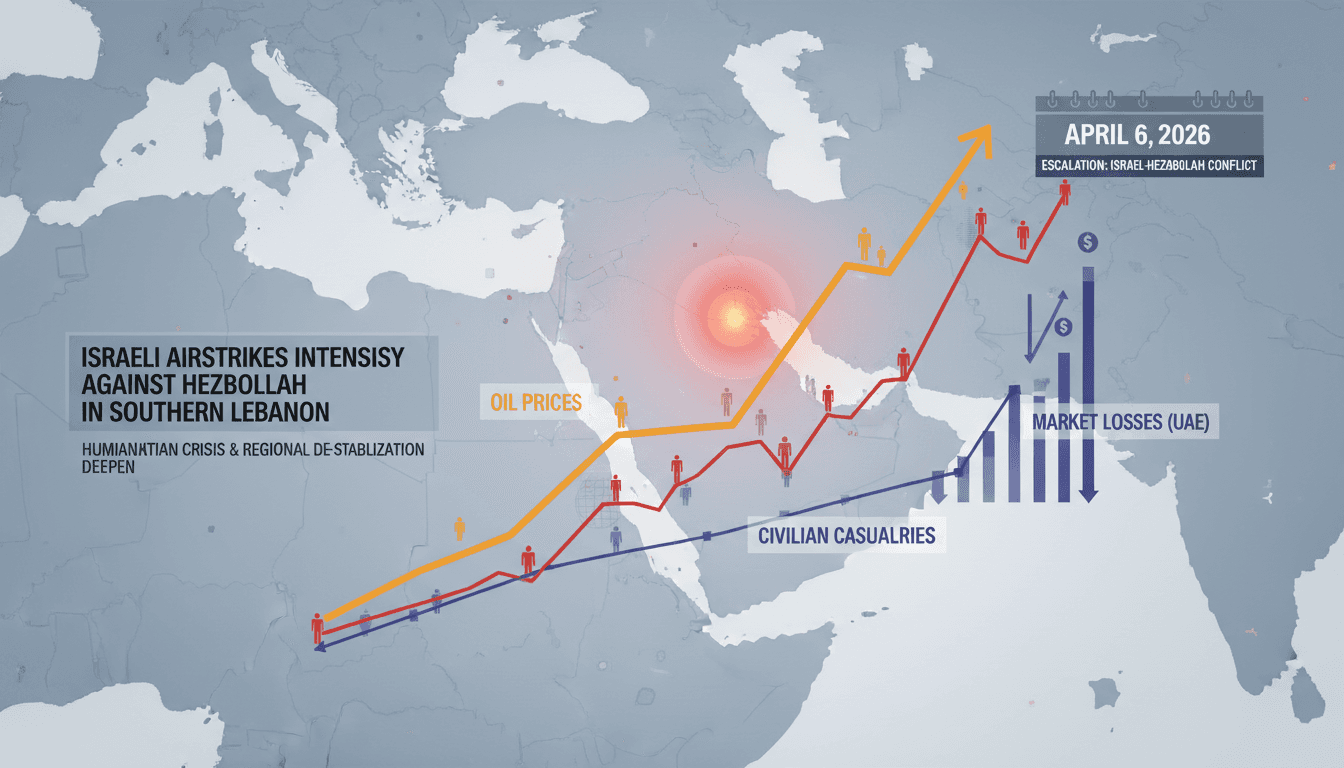
Furthermore, the conflict has triggered a surge in oil prices, which have risen above $110 per barrel due to fears of supply disruptions. This increase affects global markets, including the UAE, where air defenses have been activated, and flights through Dubai airspace have been disrupted. The economic ramifications are substantial, with estimated market losses exceeding $120 billion in Abu Dhabi and Dubai, leading to higher fuel and travel costs for residents.
As the situation evolves, the potential for further escalation remains high, with both sides showing no signs of backing down. The Israeli Defense Forces have pledged intensified operations, while Hezbollah continues to rebuild its arsenal, supported by Iran. This cycle of violence poses risks not only to those directly involved but also to global economic stability, affecting you through rising costs and potential disruptions in supply chains.
Who feels it first (and how)
- Residents of Lebanon: Facing direct threats to safety and loss of homes.
- Health workers: Increasing casualties and risks to their safety while providing care.
- Global consumers: Experiencing rising oil prices and travel costs due to market instability.
- Investors in the UAE: Facing significant market losses and economic uncertainty.
What to watch next
- Oil price fluctuations: Continued conflict could drive prices higher, impacting global markets and consumer costs.
- Humanitarian response efforts: Watch for international aid initiatives aimed at addressing the crisis in Lebanon and supporting displaced individuals.
- Military developments: Monitor Israeli and Hezbollah military actions, as further escalations could lead to broader regional instability.
Civilian casualties are rising, with significant impacts on health services and infrastructure.
Oil prices will continue to rise if the conflict escalates further, affecting global markets.
The duration of the conflict and its long-term implications for regional stability remain uncertain.
Frequently Asked Questions
- Why it matters?
- The ongoing conflict is destabilizing the region, leading to increased oil prices and potential disruptions in global supply chains.
- What happened (in 30 seconds)?
- On April 6, 2026, Israeli airstrikes targeted Hezbollah infrastructure in south Beirut and southern Lebanon, resulting in civilian casualties. At least four deaths were reported in a vehicle raid near Nabatiyeh, alongside significant damage to homes in Burj Rahal. The strikes are part of the 2026 Lebanon war, which began after Hezbollah launched projectiles into northern Israel in early March.
- What's really happening?
- The Israeli airstrikes on April 6 are part of a broader military campaign aimed at neutralizing Hezbollah's military infrastructure and financial networks in Lebanon. This escalation follows Hezbollah's initial projectile attacks on Israel, which were a response to perceived threats from U.S.-Israeli actions against Iran. The conflict has violated a 2024 ceasefire agreement, leading to a rapid deterioration of the security situation in the region. Israel's strategy involves not only airstrikes
- Who feels it first (and how)?
- Residents of Lebanon: Facing direct threats to safety and loss of homes. Health workers: Increasing casualties and risks to their safety while providing care. Global consumers: Experiencing rising oil prices and travel costs due to market instability. Investors in the UAE: Facing significant market losses and economic uncertainty.
- What to watch next?
- Oil price fluctuations: Continued conflict could drive prices higher, impacting global markets and consumer costs. Humanitarian response efforts: Watch for international aid initiatives aimed at addressing the crisis in Lebanon and supporting displaced individuals. Military developments: Monitor Israeli and Hezbollah military actions, as further escalations could lead to broader regional instability.
Regional coverage and analysis focused on politics, diplomacy, and business across the Middle East.
"Al-Monitor is known for analytical reporting on Middle East politics and policy developments."
— A47 Editor
Lebanon says Israeli strikes hit south Beirut, country's south
An Israeli airstrike targeted Beirut's southern suburbs on April 5, 2026, claiming to strike Hezbollah positions, amidst escalating tensions in the region. The attack resulted in at least 15 fatalities and numerous injuries, with the Lebanese governm...
Arabic-language UAE newspaper coverage focused on domestic affairs, public institutions, business, society, and regional developments.
"Al Khaleej coverage generally reflects a mainstream UAE editorial lens with strong attention to public affairs, institutions, and regional developments."
— A47 Editor
إسرائيل تجدّد غاراتها على ضاحية بيروت الجنوبية
An Israeli airstrike targeted the southern suburbs of Beirut on Monday, following warnings for residents to evacuate certain neighborhoods. The Israeli military announced that it struck 'targets' linked to Hezbollah during the operation.
Regional and international reporting focused on Middle Eastern politics, diplomacy, and economics.
"Asharq Al-Awsat is a Saudi-owned international newspaper reflecting mainstream Gulf political perspectives."
— A47 Editor
Raid Hits Beirut’s Southern Suburbs as Israel Says Striking Hezbollah
Israeli airstrikes targeted the southern suburbs of Beirut, claiming to strike positions of the Iran-backed militant group Hezbollah. This military action occurred amidst escalating tensions in the region and follows a series of previous strikes that...