
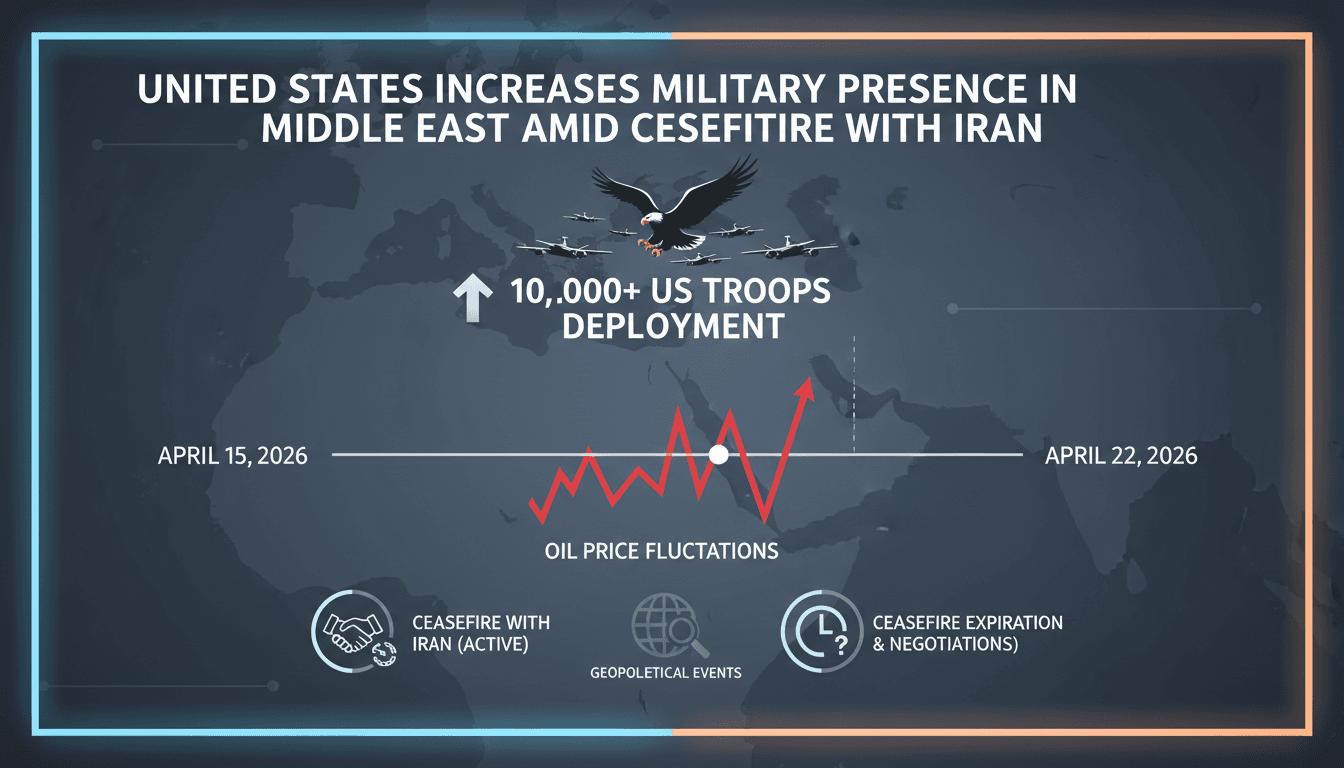
United States Increases Military Presence in Middle East with 10,000 Troops Amid Ceasefire with Iran
Here's what it means for you.
If you rely on stable oil prices or are involved in Middle Eastern trade, this military escalation could directly impact your costs and operations.
Why it matters
The deployment of additional US troops in the Middle East heightens geopolitical tensions, affecting global oil markets and regional security dynamics.
What happened (in 30 seconds)
- On April 15, 2026, the United States deployed over 10,000 additional troops to the Middle East amid an active ceasefire with Iran.
- This deployment includes approximately 6,000 personnel aboard the USS George H.W. Bush carrier strike group and 4,200 Marines from the Boxer Amphibious Ready Group.
- The move aims to bolster pressure on Iran during ongoing negotiations, coinciding with a naval blockade of the Strait of Hormuz.
The context you actually need
- The conflict began on February 28, 2026, with US-Israeli airstrikes on Iranian military targets, escalating regional tensions significantly.
- A two-week ceasefire was declared on April 8, 2026, but negotiations have been fragile, with a naval blockade initiated shortly thereafter.
- Oil prices surged over 8% to above $100 per barrel following the blockade, reflecting market volatility tied to geopolitical events.
What's really happening
The recent deployment of over 10,000 US troops to the Middle East is a strategic maneuver aimed at reinforcing US military presence and exerting pressure on Iran during a critical negotiation phase. This escalation comes in the wake of a two-week ceasefire that was established after intense military actions, including US-Israeli airstrikes on Iranian facilities. The US military's presence in the region has now surpassed 50,000 personnel, indicating a significant commitment to maintaining a strong deterrent against Iranian aggression.
The US has initiated a naval blockade of the Strait of Hormuz, a vital maritime route for global oil shipments, which has already begun to disrupt trade and elevate oil prices. This blockade is not merely a tactical decision; it serves as a signal to Iran and other regional actors that the US is prepared to escalate its military posture if necessary. The blockade's enforcement has turned back several ships, demonstrating the US's willingness to assert control over critical shipping lanes.
The underlying incentive for the US is to ensure that Iran does not exploit the ceasefire to regroup or strengthen its military capabilities. By deploying additional troops, the US aims to create a credible threat that could influence Iran's decision-making during negotiations. This military buildup is also a response to the broader regional dynamics, where US allies, particularly in the Gulf Cooperation Council, are closely monitoring Iran's actions and the potential for further destabilization.
As the ceasefire nears its expiration on April 22, 2026, the situation remains precarious. The US's military strategy appears to be focused on maintaining pressure on Iran while simultaneously preparing for potential escalations. This dual approach reflects a complex balancing act: deterring Iranian aggression while seeking a diplomatic resolution to the ongoing conflict.
Who feels it first (and how)
- Oil traders: Increased volatility in oil prices directly affects trading strategies and profit margins.
- Logistics companies: Disruptions in maritime trade routes lead to delays and increased shipping costs.
- Tourism and real estate sectors in Dubai: Regional instability may deter tourists and investors, impacting local economies.
- Military contractors: Increased US military presence may lead to more contracts and opportunities in defense sectors.
What to watch next
- Ceasefire expiration on April 22: This date will be crucial in determining whether hostilities will resume or if negotiations will yield a more permanent resolution.
- Oil price fluctuations: Watch for changes in oil prices as they can signal market reactions to geopolitical developments.
- US-Iran negotiations: Any announcements regarding diplomatic talks or agreements could significantly alter the current military posture and economic conditions in the region.
The US has deployed over 10,000 additional troops to the Middle East.
Oil prices will remain volatile as geopolitical tensions fluctuate.
The long-term impact of the US military presence on regional stability and Iran's response to ongoing negotiations.
Frequently Asked Questions
- Why it matters?
- The deployment of additional US troops in the Middle East heightens geopolitical tensions, affecting global oil markets and regional security dynamics.
- What happened (in 30 seconds)?
- On April 15, 2026, the United States deployed over 10,000 additional troops to the Middle East amid an active ceasefire with Iran. This deployment includes approximately 6,000 personnel aboard the USS George H.W. Bush carrier strike group and 4,200 Marines from the Boxer Amphibious Ready Group. The move aims to bolster pressure on Iran during ongoing negotiations, coinciding with a naval blockade of the Strait of Hormuz.
- What's really happening?
- The recent deployment of over 10,000 US troops to the Middle East is a strategic maneuver aimed at reinforcing US military presence and exerting pressure on Iran during a critical negotiation phase. This escalation comes in the wake of a two-week ceasefire that was established after intense military actions, including US-Israeli airstrikes on Iranian facilities. The US military's presence in the region has now surpassed 50,000 personnel, indicating a significant commitment to maintaining a stron
- Who feels it first (and how)?
- Oil traders: Increased volatility in oil prices directly affects trading strategies and profit margins. Logistics companies: Disruptions in maritime trade routes lead to delays and increased shipping costs. Tourism and real estate sectors in Dubai: Regional instability may deter tourists and investors, impacting local economies. Military contractors: Increased US military presence may lead to more contracts and opportunities in defense sectors.
- What to watch next?
- Ceasefire expiration on April 22: This date will be crucial in determining whether hostilities will resume or if negotiations will yield a more permanent resolution. Oil price fluctuations: Watch for changes in oil prices as they can signal market reactions to geopolitical developments. US-Iran negotiations: Any announcements regarding diplomatic talks or agreements could significantly alter the current military posture and economic conditions in the region.
Global news coverage with extensive reporting on Middle Eastern conflicts and geopolitics.
"Al Jazeera is a Qatar-based broadcaster known for wide regional coverage and alternative perspectives."
— A47 Editor
US sending 10,000 more troops to Middle East despite Iran ceasefire
The United States is deploying an additional 10,000 troops to the Middle East this month, as reported by The Washington Post, despite a ceasefire agreement with Iran. This move indicates a significant escalation in military presence in the region ami...
Comprehensive coverage of Middle Eastern and global issues.
"Al Jazeera is a prominent voice from the Global South, especially the Middle East, with an emphasis on underreported stories."
— A47 Editor
US sending 10,000 more troops to Middle East despite Iran ceasefire
The United States is deploying an additional 10,000 troops to the Middle East this month, as reported by The Washington Post, despite a ceasefire agreement with Iran. This move indicates a significant escalation in military presence in the region ami...
Pan-Arab news coverage spanning politics, business, sports, and regional affairs.
"Asharq Al-Awsat reflects a broad Arab editorial perspective with strong attention to regional geopolitics."
— A47 Editor
تقرير: أميركا سترسل آلاف القوات الإضافية إلى الشرق الأوسط
The Washington Post reported that the United States plans to deploy thousands of additional troops to the Middle East, according to informed American officials. This decision reflects ongoing military commitments and strategic interests in the region...
Arabic-language UAE newspaper coverage focused on domestic affairs, public institutions, business, society, and regional developments.
"Al Khaleej coverage generally reflects a mainstream UAE editorial lens with strong attention to public affairs, institutions, and regional developments."
— A47 Editor
رويترز: أمريكا ترسل آلاف القوات الإضافية للشرق الأوسط مع سعي ترامب للضغط على إيران
The Washington Post reported that the U.S. Department of Defense is preparing to deploy thousands of additional troops to the Middle East in the coming days, as part of efforts by President Trump to exert pressure on Iran.