
International Maritime Organization Initiates Security Measures for Strait of Hormuz Following US-Iran Ceasefire
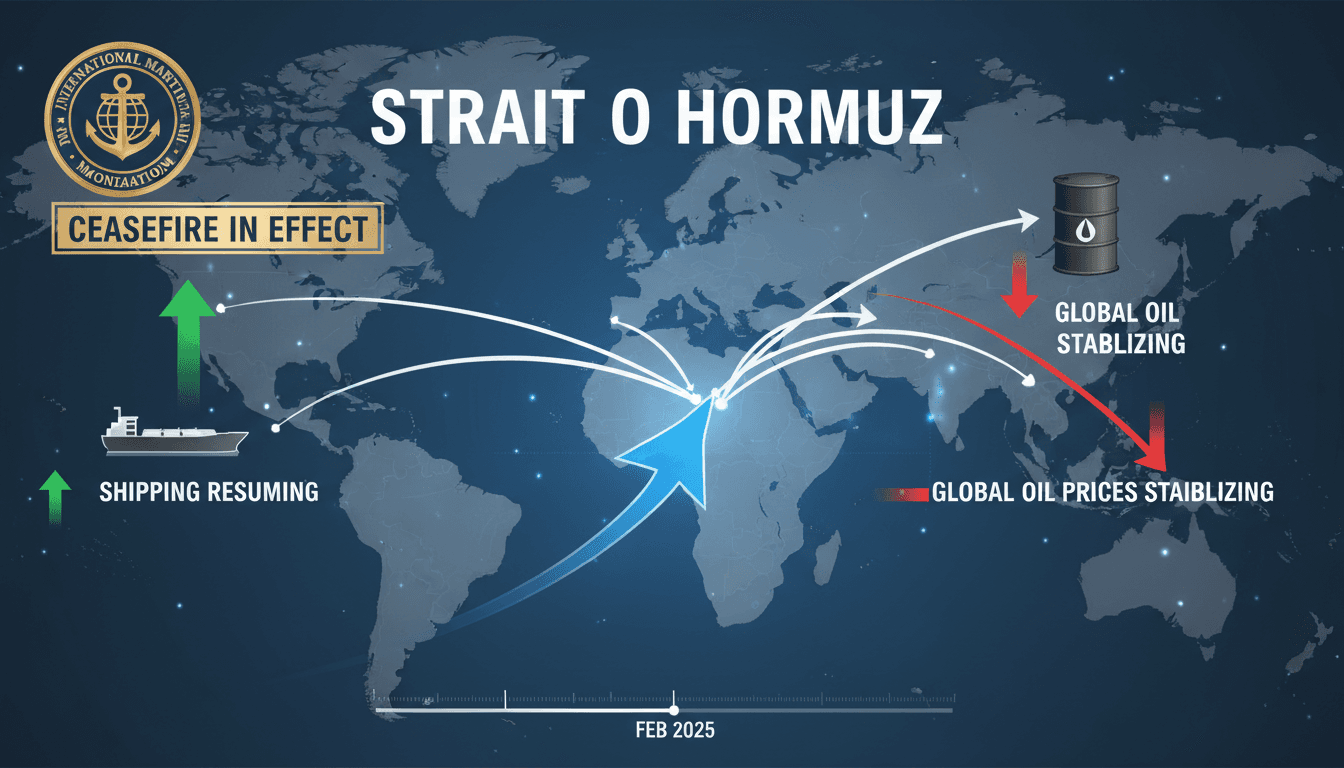
Here's what it means for you.
If you rely on global oil supplies or maritime logistics, the recent developments in the Strait of Hormuz could significantly affect your costs and supply chain stability.
Why it matters
The Strait of Hormuz is a critical maritime chokepoint, with nearly 20% of the world's oil supplies passing through, making its security vital for global energy markets.
What happened (in 30 seconds)
- On April 8, 2026, the International Maritime Organization (IMO) announced efforts to ensure secure ship passage through the Strait of Hormuz amid a US-Iran ceasefire.
- This ceasefire, lasting two weeks, follows a prolonged conflict that began on February 28, 2025, which led to significant disruptions in maritime traffic and oil supply chains.
- The IMO's coordination aims to establish mechanisms for safe navigation, addressing the fallout from 21 confirmed attacks on merchant vessels during the conflict.
The context you actually need
- The Strait of Hormuz is a vital route for global oil transport, with approximately 20% of all oil supplies transiting through it, making its stability crucial for energy prices worldwide.
- The Middle East conflict that erupted in February 2025 caused severe disruptions, including a blockade that affected merchant shipping and led to rising oil prices, peaking at $166 per barrel in Dubai.
- The IMO's initiative comes after an extraordinary council meeting in March 2026, where they condemned attacks on vessels and proposed frameworks for safe passage under UNSC Resolution 2817.
What's really happening
The recent announcement by the International Maritime Organization (IMO) to coordinate mechanisms for secure ship passage through the Strait of Hormuz is a direct response to the escalating tensions and disruptions caused by the ongoing Middle East conflict. Since the war erupted on February 28, 2025, the strait has been a focal point of maritime insecurity, with 21 confirmed attacks on merchant vessels leading to significant casualties and a near-total blockade of the area. This situation has not only threatened the safety of seafarers but also caused substantial fluctuations in global oil prices.
The IMO's Secretary-General, Arsenio Dominguez, is spearheading efforts to establish a framework that guarantees safe navigation for vessels, particularly during the two-week ceasefire announced by US President Donald Trump. This ceasefire is conditional upon the reopening of the Strait of Hormuz, which has been a critical chokepoint for nearly 20% of global oil supplies. The coordination efforts involve key stakeholders, including the United States, Iran, and the United Arab Emirates, all of whom have vested interests in maintaining the flow of oil and ensuring maritime security.
The implications of this initiative are profound. For one, it signals a potential easing of tensions in the region, which could lead to a stabilization of oil prices that have seen significant spikes due to the conflict. Following the ceasefire announcement, global oil benchmarks experienced a sharp decline of 10-13%, providing immediate relief to markets and boosting Gulf stock indices. This reflects a collective optimism among investors and stakeholders in the energy sector about the possibility of a more stable maritime environment.
Moreover, the IMO's focus on the welfare of the approximately 20,000 seafarers affected by the conflict highlights the human element of this crisis. The organization is prioritizing the facilitation of supplies and evacuation for those stranded due to the blockade. Iran's conditional allowance for 'non-hostile' vessels to transit the strait under military oversight and with transit fees further complicates the situation, as it introduces a new layer of regulation and potential costs for shipping companies.
As the situation evolves, the interplay between geopolitical negotiations and maritime security will be crucial in determining the future landscape of oil transportation and global energy markets. The IMO's initiative is not merely a response to immediate threats; it represents a strategic move to restore confidence in one of the world's most critical maritime routes.
Who feels it first (and how)
- Shipping companies: They will need to navigate new regulations and potential fees for passage through the Strait of Hormuz.
- Oil traders and investors: Fluctuations in oil prices will directly impact their trading strategies and profit margins.
- Seafarers: Approximately 20,000 individuals are affected, facing risks and uncertainties in their working conditions.
- Consumers in Dubai: Heightened oil prices and supply chain disruptions have already impacted fuel and grocery costs, which may stabilize post-ceasefire.
What to watch next
- Oil price trends: Monitor how global oil benchmarks respond to the ceasefire and the IMO's security measures, as this will directly affect energy costs.
- Shipping traffic volumes: Watch for changes in the number of vessels transiting the Strait of Hormuz as security measures are implemented, indicating market confidence.
- Geopolitical negotiations: Keep an eye on US-Iran relations and any developments in maritime security agreements that could further impact the region's stability.
The Strait of Hormuz is crucial for global oil supplies, with 20% of the world's oil transiting through it.
Oil prices will stabilize if the ceasefire holds and maritime security measures are effectively implemented.
The long-term impact of Iran's military oversight and transit fees on shipping operations and costs remains to be seen.
Frequently Asked Questions
- Why it matters?
- The Strait of Hormuz is a critical maritime chokepoint, with nearly 20% of the world's oil supplies passing through, making its security vital for global energy markets.
- What happened (in 30 seconds)?
- On April 8, 2026, the International Maritime Organization (IMO) announced efforts to ensure secure ship passage through the Strait of Hormuz amid a US-Iran ceasefire. This ceasefire, lasting two weeks, follows a prolonged conflict that began on February 28, 2025, which led to significant disruptions in maritime traffic and oil supply chains. The IMO's coordination aims to establish mechanisms for safe navigation, addressing the fallout from 21 confirmed attacks on merchant vessels during the
- What's really happening?
- The recent announcement by the International Maritime Organization (IMO) to coordinate mechanisms for secure ship passage through the Strait of Hormuz is a direct response to the escalating tensions and disruptions caused by the ongoing Middle East conflict. Since the war erupted on February 28, 2025, the strait has been a focal point of maritime insecurity, with 21 confirmed attacks on merchant vessels leading to significant casualties and a near-total blockade of the area. This situation has n
- Who feels it first (and how)?
- Shipping companies: They will need to navigate new regulations and potential fees for passage through the Strait of Hormuz. Oil traders and investors: Fluctuations in oil prices will directly impact their trading strategies and profit margins. Seafarers: Approximately 20,000 individuals are affected, facing risks and uncertainties in their working conditions. Consumers in Dubai: Heightened oil prices and supply chain disruptions have already impacted fuel and grocery costs, which may stabi
- What to watch next?
- Oil price trends: Monitor how global oil benchmarks respond to the ceasefire and the IMO's security measures, as this will directly affect energy costs. Shipping traffic volumes: Watch for changes in the number of vessels transiting the Strait of Hormuz as security measures are implemented, indicating market confidence. Geopolitical negotiations: Keep an eye on US-Iran relations and any developments in maritime security agreements that could further impact the region's stability.
Pan-Arab news coverage spanning politics, business, sports, and regional affairs.
"Asharq Al-Awsat reflects a broad Arab editorial perspective with strong attention to regional geopolitics."
— A47 Editor
المنظمة البحرية الدولية تعمل على ضمان «أمن العبور» في مضيق هرمز
The International Maritime Organization (IMO), a United Nations agency, announced on Wednesday that it is working to ensure the 'security of passage' for ships through the Strait of Hormuz, following the announcement of a ceasefire.
Arabic-language UAE newspaper coverage focused on domestic affairs, public institutions, business, society, and regional developments.
"Al Khaleej coverage generally reflects a mainstream UAE editorial lens with strong attention to public affairs, institutions, and regional developments."
— A47 Editor
«البحرية الدولية»: نجهز آلية لضمان العبور الآمن في مضيق هرمز
The International Maritime Organization, a United Nations agency responsible for maritime security, has announced that it is developing a mechanism to ensure safe passage through the Strait of Hormuz, which has been nearly closed since the outbreak o...