
Iran and US Agree to Two-Week Ceasefire Amid Ongoing Conflict
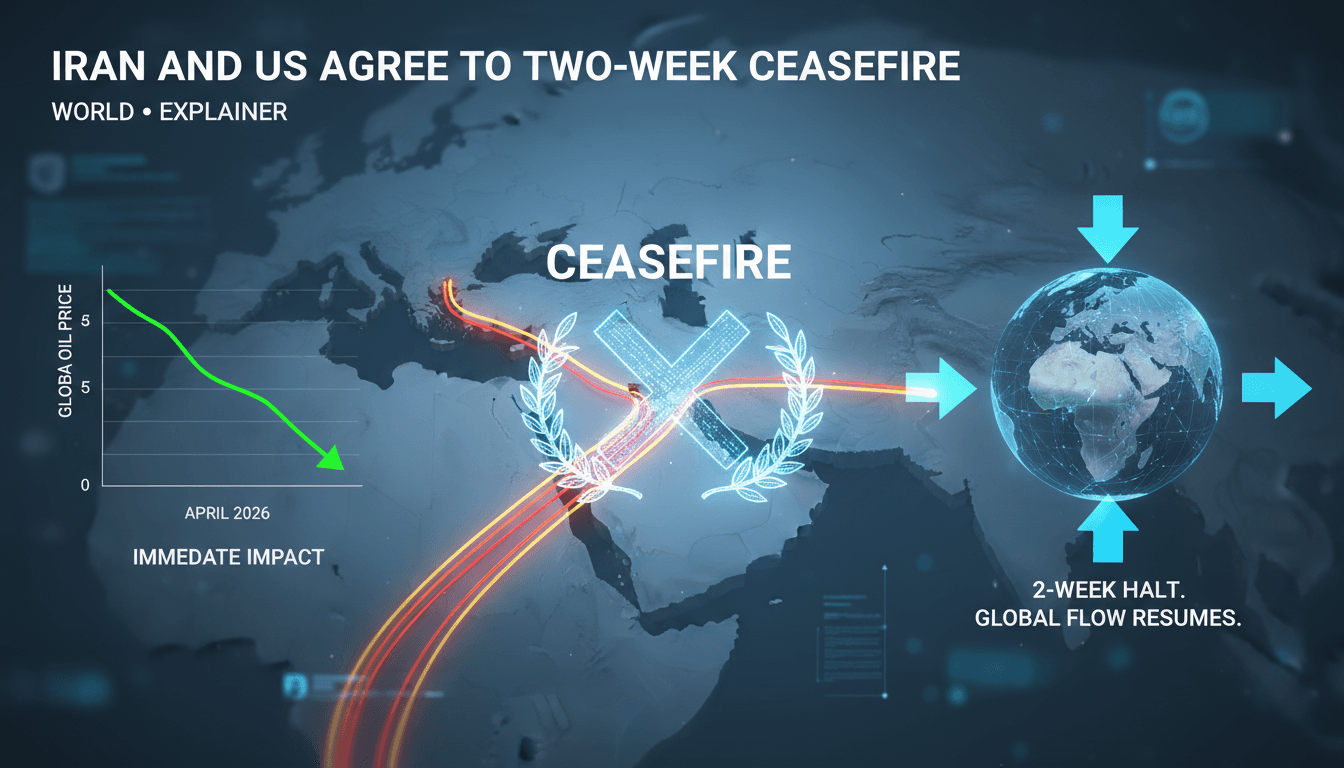
Here's what it means for you.
The recent ceasefire could stabilize energy prices and improve geopolitical relations, impacting global markets and consumer costs.
Why it matters
This ceasefire directly influences global energy supply chains and regional security dynamics, which can affect everything from fuel prices to international trade.
What happened (in 30 seconds)
- Ceasefire announced: On April 7, 2026, U.S. President Donald Trump declared a two-week ceasefire between the U.S., Israel, and Iran amid ongoing hostilities.
- Strait of Hormuz reopened: The agreement allows Iran to supervise safe passage through the Strait of Hormuz, crucial for global oil transport.
- Negotiations initiated: The ceasefire enables discussions on Iran's 10-point peace proposal addressing nuclear enrichment and sanctions.
The context you actually need
- Escalation of conflict: The ceasefire follows a six-week war that began in February 2026, triggered by Iran's closure of the Strait of Hormuz, through which 20% of the world's oil passes.
- Economic impact: Oil prices surged to nearly $144 per barrel due to the conflict, prompting a global energy crisis.
- International mediation: The ceasefire was facilitated by Pakistani Prime Minister Shehbaz Sharif, highlighting the role of third-party mediation in resolving complex geopolitical conflicts.
What's really happening
The ceasefire agreement represents a critical juncture in U.S.-Iran relations, shaped by a series of escalating threats and retaliatory actions. The conflict began with Iran's closure of the Strait of Hormuz, a strategic chokepoint for global oil shipments, which sent oil prices soaring and disrupted supply chains worldwide. With prices peaking at $144 per barrel, the urgency for a resolution became apparent, not just for the nations involved but for global markets reliant on stable energy supplies.
Trump's ultimatum to Iran to reopen the strait or face military action created a high-stakes environment. The Pakistani mediation introduced a pathway for negotiation, allowing Iran to present a 10-point peace proposal that included guarantees against aggression, control over the Strait, and recognition of its nuclear rights. The proposal was seen as a potential framework for a more permanent resolution, shifting the focus from military confrontation to diplomatic engagement.
The ceasefire's immediate effects were felt in oil markets, where Brent crude prices dropped by 16% to $91.70 per barrel, marking the largest single-day decline in nearly six years. This price drop alleviated some pressure on global economies and provided relief to consumers facing rising fuel costs. Additionally, stock markets in the UAE surged, reflecting investor optimism about reduced geopolitical tensions.
However, the ceasefire is not without its complexities. Israel's continued military operations in Lebanon and Iran's insistence on U.S. acceptance of its proposals suggest that the path to lasting peace remains fraught with challenges. The ceasefire is currently active for two weeks but is extendable, indicating that while a temporary halt in hostilities has been achieved, the underlying issues remain unresolved.
The implications of this ceasefire extend beyond immediate military concerns. It signals a potential shift in how international conflicts may be managed, emphasizing the importance of mediation and negotiation over unilateral military action. As global leaders react positively to the truce, the focus will likely shift to how effectively the involved parties can navigate the complexities of their demands and the broader geopolitical landscape.
Who feels it first (and how)
- Energy consumers: Individuals and businesses relying on stable fuel prices will benefit from reduced volatility in oil markets.
- Investors: Stock markets, particularly in oil-dependent economies like the UAE, will see immediate impacts from changing investor sentiment.
- Geopolitical analysts: Experts monitoring Middle Eastern relations will need to reassess risk factors and potential future conflicts based on this ceasefire's outcomes.
What to watch next
- Negotiation outcomes: Watch for developments in the discussions surrounding Iran's 10-point proposal, as successful negotiations could lead to a more stable Middle East.
- Oil price fluctuations: Monitor Brent crude prices for signs of volatility as markets react to the ceasefire and any subsequent geopolitical developments.
- Regional military actions: Keep an eye on Israel's operations in Lebanon and Iran's military posture, as these could influence the ceasefire's longevity and effectiveness.
The ceasefire is currently active and has been welcomed by global leaders.
Negotiations will continue, with varying degrees of success, impacting regional stability.
The long-term effects on U.S.-Iran relations and the potential for future conflicts remain uncertain.
Frequently Asked Questions
- Why it matters?
- This ceasefire directly influences global energy supply chains and regional security dynamics, which can affect everything from fuel prices to international trade.
- What happened (in 30 seconds)?
- Ceasefire announced: On April 7, 2026, U.S. President Donald Trump declared a two-week ceasefire between the U.S., Israel, and Iran amid ongoing hostilities. Strait of Hormuz reopened: The agreement allows Iran to supervise safe passage through the Strait of Hormuz, crucial for global oil transport. Negotiations initiated: The ceasefire enables discussions on Iran's 10-point peace proposal addressing nuclear enrichment and sanctions.
- What's really happening?
- The ceasefire agreement represents a critical juncture in U.S.-Iran relations, shaped by a series of escalating threats and retaliatory actions. The conflict began with Iran's closure of the Strait of Hormuz, a strategic chokepoint for global oil shipments, which sent oil prices soaring and disrupted supply chains worldwide. With prices peaking at $144 per barrel, the urgency for a resolution became apparent, not just for the nations involved but for global markets reliant on stable energy suppl
- Who feels it first (and how)?
- Energy consumers: Individuals and businesses relying on stable fuel prices will benefit from reduced volatility in oil markets. Investors: Stock markets, particularly in oil-dependent economies like the UAE, will see immediate impacts from changing investor sentiment. Geopolitical analysts: Experts monitoring Middle Eastern relations will need to reassess risk factors and potential future conflicts based on this ceasefire's outcomes.
- What to watch next?
- Negotiation outcomes: Watch for developments in the discussions surrounding Iran's 10-point proposal, as successful negotiations could lead to a more stable Middle East. Oil price fluctuations: Monitor Brent crude prices for signs of volatility as markets react to the ceasefire and any subsequent geopolitical developments. Regional military actions: Keep an eye on Israel's operations in Lebanon and Iran's military posture, as these could influence the ceasefire's longevity and effectiveness.
Arabic-language digital news outlet covering UAE, regional, and international developments with broad general-news coverage.
"Al Ain News coverage typically blends UAE-focused reporting with wider Arab regional and international news."
— A47 Editor
كواليس الساعات الأخيرة قبل «هدنة إيران»
The United States and Iran have reached a two-week ceasefire following threats from President Donald Trump of unprecedented strikes against Tehran. This development marks a significant moment in U.S.-Iran relations, highlighting the ongoing tensions ...
International stories from NPR’s global desk.
"NPR is an American public media organization known for thoughtful reporting and a slightly left-leaning editorial tone."
— A47 Editor
How Iranians are reacting to news of the two-week ceasefire between the US and Iran
A two-week ceasefire between the United States and Iran has been announced, leading to celebrations among Iranians as state media portrays the agreement as a significant victory. However, many citizens express concern that this deal may extinguish ho...
UAE-based English-language newspaper covering regional politics, economics, and global affairs.
"The National reflects Emirati policy perspectives while maintaining international editorial standards."
— A47 Editor
All eyes on Strait of Hormuz as Iran and US agree ceasefire
A two-week ceasefire has been established between the United States and Iran, aimed at reducing escalating military tensions and facilitating the reopening of the strategically important Strait of Hormuz. This truce, announced by President Donald Tru...
Pan-Arab news coverage spanning politics, business, sports, and regional affairs.
"Asharq Al-Awsat reflects a broad Arab editorial perspective with strong attention to regional geopolitics."
— A47 Editor
هدنة الأسبوعين تقفز بالعقود الآجلة لمؤشرات الأسهم الأميركية
U.S. stock index futures rose on Wednesday as investors expressed relief following the announcement of a two-week ceasefire agreement between the United States and Iran. This development has contributed to a positive sentiment in the market, reflecti...
International coverage of politics, culture, and current affairs.
"BBC News is widely regarded as a reputable international news organization, known for its impartial tone and public service mandate."
— A47 Editor
Watch: Iranians gather in Tehran following ceasefire announcement
Following the announcement of a two-week conditional ceasefire between the United States and Iran, pro-government demonstrators gathered in Tehran, celebrating what they perceive as a significant diplomatic breakthrough. This ceasefire, facilitated b...
Regional and international reporting focused on Middle Eastern politics, diplomacy, and economics.
"Asharq Al-Awsat is a Saudi-owned international newspaper reflecting mainstream Gulf political perspectives."
— A47 Editor
EU Welcomes US-Iran Ceasefire, Urges Efforts to Create Lasting Agreement
The European Union has welcomed the recent ceasefire agreement between the United States and Iran, urging both nations to work towards a lasting peace. This ceasefire, brokered by Pakistan, aims to reduce escalating military tensions in the region fo...
Comprehensive coverage of Middle Eastern and global issues.
"Al Jazeera is a prominent voice from the Global South, especially the Middle East, with an emphasis on underreported stories."
— A47 Editor
Tehran celebrates as Iran, US agree to two-week ceasefire
A two-week ceasefire between Iran and the United States has been agreed upon, marking a significant pause in hostilities. This agreement, celebrated in Tehran, is seen as a victory for Iran, highlighting the nation's unity and patience in the face of...
Global news coverage with extensive reporting on Middle Eastern conflicts and geopolitics.
"Al Jazeera is a Qatar-based broadcaster known for wide regional coverage and alternative perspectives."
— A47 Editor
Tehran celebrates as Iran, US agree to two-week ceasefire
A two-week ceasefire between Iran and the United States has been agreed upon, marking a significant pause in hostilities. This agreement, celebrated in Tehran, is seen as a victory for Iran, highlighting the nation's unity and patience in the face of...
English-language news from Qatar covering domestic and regional affairs.
"Gulf Times reflects Qatari perspectives on regional developments."
— A47 Editor
UN Secretary-General welcomes two-week ceasefire between US, Iran
UN Secretary-General Antonio Guterres welcomed the announcement of a two-week ceasefire between the United States and Iran, a significant development following escalating military tensions in the region. This ceasefire, confirmed by US President Dona...
Pan-Arab news coverage spanning politics, business, sports, and regional affairs.
"Asharq Al-Awsat reflects a broad Arab editorial perspective with strong attention to regional geopolitics."
— A47 Editor
ما نعرفه عن وقف إطلاق النار بين الولايات المتحدة وإيران
The United States and Iran have agreed to a two-week ceasefire in a last-ditch effort to avert widespread destruction threatened by U.S. President Donald Trump. This agreement marks a significant moment in the ongoing tensions between the two nations...