
Iran Rejects US Ceasefire Proposal and Outlines Five Conditions for War Resolution
Here's what it means for you.
The ongoing conflict could disrupt global oil supply chains, affecting market stability and operational costs.
What happened
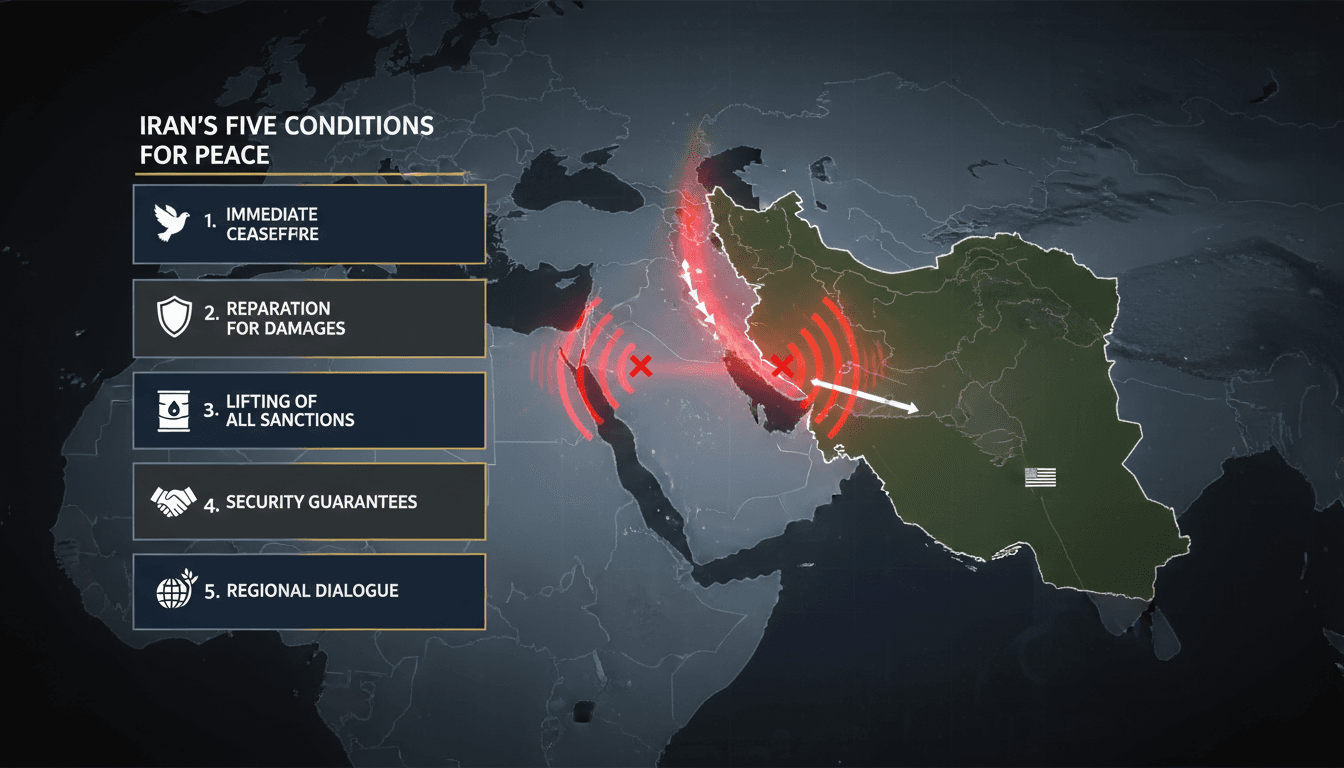
On March 25, 2026, Iran publicly rejected a US ceasefire proposal and outlined five conditions for ending the war with the United States and its allies.
The Context
- Escalating conflict: The war erupted on February 28, 2026, following US-Israel airstrikes on Iranian targets, leading to retaliatory actions from Iran, including a blockade of the Strait of Hormuz.
- Ceasefire proposal: The US, under the Trump administration, proposed a 15-point ceasefire plan that included demands for nuclear rollbacks and sanctions relief, which Iran deemed excessive.
- Regional impact: The closure of the Strait of Hormuz, a critical oil transit route, has already led to a spike in global oil prices and economic repercussions in the Gulf region.
The Number
of global oil and LNG supply transits through the Strait of Hormuz, which is currently disrupted due to the ongoing blockade.
Takeaway
As military actions continue, the potential for further destabilization in the region remains high, impacting global markets and trade.
Capitol Hill news, legislation, and policy insight.
"The Hill specializes in U.S. politics and policy, with a focus on Capitol Hill developments and a reputation for insider reporting."
— A47 Editor
Iran’s 5 conditions for ending war
Iran has outlined five conditions for ending the ongoing war in the region, rejecting a ceasefire proposal from the Trump administration. The Iranian leadership's counterproposal emphasizes demands for war reparations and sovereignty over the Strait ...
International coverage from The Guardian's global desks.
"The Guardian is known for its progressive editorial stance and in-depth analysis."
— A47 Editor
Iran rejects US ceasefire plan and submits its own amid push for talks
Iran has officially rejected a ceasefire proposal from the United States, instead presenting its own five-point counter-proposal amid ongoing military tensions in the region. Iranian officials stated that the war will conclude on Tehran's terms and t...
Public radio coverage of American news and issues.
"NPR is an American public media organization known for thoughtful reporting and a slightly left-leaning editorial tone."
— A47 Editor
Iran rejects Trump's proposal to end the war and lays out 5 conditions
Iran has officially rejected President Trump's ceasefire proposal aimed at ending the ongoing war, presenting a counterproposal that includes demands for war reparations and sovereignty over the Strait of Hormuz. This rejection highlights the deepeni...
International stories from NPR’s global desk.
"NPR is an American public media organization known for thoughtful reporting and a slightly left-leaning editorial tone."
— A47 Editor
Iran rejects Trump's proposal to end the war and lays out 5 conditions
Iran has officially rejected President Trump's ceasefire proposal aimed at ending the ongoing war, presenting a counterproposal that includes demands for war reparations and sovereignty over the Strait of Hormuz. This rejection highlights the deepeni...