
OX Security Identifies Critical Flaw in Anthropic's AI Protocol Endangering 200,000 Servers
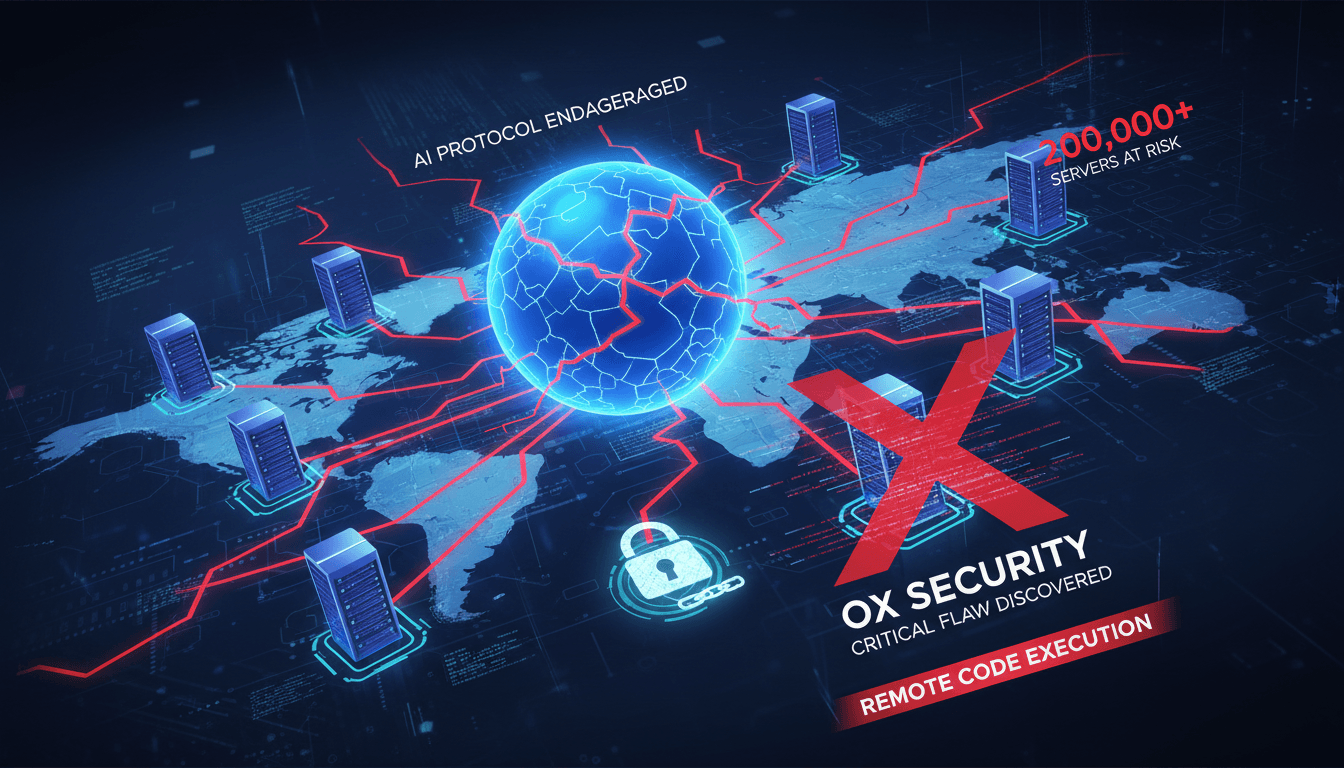
Here's what it means for you.
If you rely on AI systems that use the Model Context Protocol, your operations could be at risk of significant security breaches.
Why it matters
This vulnerability could compromise a vast number of servers globally, impacting the integrity of AI applications across various sectors.
What happened (in 30 seconds)
- On April 16, 2026, OX Security disclosed a design flaw in Anthropic's Model Context Protocol (MCP) that could allow remote code execution.
- Anthropic has refused to alter the protocol architecture, placing the onus on developers to ensure input sanitization.
- Up to 200,000 servers are potentially exposed to arbitrary command execution due to this flaw.
The context you actually need
- Anthropic's MCP is an open-source framework widely adopted for AI applications, with over 150 million downloads across 200+ projects.
- Previous vulnerabilities in Anthropic's systems have raised concerns about security, including issues reported earlier in 2026.
- OX Security's research began in late 2025 and has led to multiple responsible disclosures, highlighting systemic risks in AI supply chains.
What's really happening
The recent disclosure by OX Security regarding the Model Context Protocol (MCP) underscores a critical vulnerability in the architecture of AI systems that utilize this open-source standard. The MCP was designed to facilitate seamless interaction between AI agents and external systems, enabling a wide range of applications across programming languages like Python, TypeScript, Java, and Rust. However, the flaw identified by OX Security allows for arbitrary command injection, which could lead to unauthorized access and control over affected servers.
Anthropic's response to the allegations has been notably dismissive. By characterizing the behavior as "expected," the company has effectively shifted the responsibility for security onto developers who implement the MCP. This stance raises significant concerns about the adequacy of security measures in place across the ecosystem that relies on this protocol. With over 200,000 servers potentially at risk, the implications extend beyond individual developers to entire organizations that depend on these AI systems for critical operations.
The systemic nature of this vulnerability is particularly alarming. As AI technologies become increasingly integrated into various sectors, the potential for widespread exploitation grows. The MCP's architecture, which has achieved significant adoption, now poses a risk not only to the immediate users but also to the broader AI landscape. The interconnectedness of these systems means that a breach in one area could have cascading effects, leading to a larger crisis in AI security.
Moreover, the lack of a patch at the protocol level indicates a troubling trend in the industry where security vulnerabilities are often treated as isolated incidents rather than systemic issues. This approach can lead to a false sense of security among developers and organizations, who may believe that their individual implementations are safe without recognizing the underlying risks posed by the protocols they use.
As the situation unfolds, the responsibility for mitigating these risks will likely fall on developers and organizations to implement additional security measures, such as input sanitization and sandboxing. However, this reactive approach may not be sufficient to address the root causes of the vulnerabilities inherent in the MCP. The ongoing dialogue within the cybersecurity community will be crucial in shaping the future of AI security standards and practices.
Who feels it first (and how)
- Developers: Those implementing the MCP will need to enhance security measures to protect their applications.
- Organizations: Companies relying on AI systems using MCP may face operational risks and potential data breaches.
- Cybersecurity professionals: Increased demand for expertise in securing AI applications and protocols.
What to watch next
- Patch developments: Monitor for any updates from Anthropic regarding protocol-level changes or additional security measures.
- Regulatory responses: Watch for potential regulatory actions as awareness of AI security vulnerabilities grows.
- Market shifts: Observe how organizations adjust their security protocols and vendor relationships in response to this vulnerability.
The MCP vulnerability exposes up to 200,000 servers to remote code execution.
Developers will need to implement additional security measures to mitigate risks.
The long-term impact on the adoption of the MCP and related AI technologies remains uncertain.
Frequently Asked Questions
- Why it matters?
- This vulnerability could compromise a vast number of servers globally, impacting the integrity of AI applications across various sectors.
- What happened (in 30 seconds)?
- On April 16, 2026, OX Security disclosed a design flaw in Anthropic's Model Context Protocol (MCP) that could allow remote code execution. Anthropic has refused to alter the protocol architecture, placing the onus on developers to ensure input sanitization. Up to 200,000 servers are potentially exposed to arbitrary command execution due to this flaw.
- What's really happening?
- The recent disclosure by OX Security regarding the Model Context Protocol (MCP) underscores a critical vulnerability in the architecture of AI systems that utilize this open-source standard. The MCP was designed to facilitate seamless interaction between AI agents and external systems, enabling a wide range of applications across programming languages like Python, TypeScript, Java, and Rust. However, the flaw identified by OX Security allows for arbitrary command injection, which could lead to u
- Who feels it first (and how)?
- Developers: Those implementing the MCP will need to enhance security measures to protect their applications. Organizations: Companies relying on AI systems using MCP may face operational risks and potential data breaches. Cybersecurity professionals: Increased demand for expertise in securing AI applications and protocols.
- What to watch next?
- Patch developments: Monitor for any updates from Anthropic regarding protocol-level changes or additional security measures. Regulatory responses: Watch for potential regulatory actions as awareness of AI security vulnerabilities grows. Market shifts: Observe how organizations adjust their security protocols and vendor relationships in response to this vulnerability.
Biting coverage of AI/ML software and vendors.
"Known for skeptical, incisive reporting on enterprise tech."
— A47 Editor
Anthropic won't own MCP 'design flaw' putting 200K servers at risk, researchers say
Security researchers have identified a significant design flaw in Anthropic's Model Context Protocol (MCP), which could potentially compromise up to 200,000 servers, allowing for a complete takeover. This flaw raises questions about the robustness of...
Consumer tech news, reviews, and buying guides for gadgets and electronics.
"TechRadar is known for comprehensive buying advice, hardware reviews, and consumer tech news targeted at mainstream audiences."
— A47 Editor
'This is not a traditional coding error': Experts flag potentially critical security issues at the heart of Anthropic's MCP, exposes 150 million downloads and thousands of servers to complete takeover
Experts have raised alarms regarding critical security vulnerabilities within Anthropic's MCP, potentially exposing 150 million downloads and thousands of servers to complete takeover. Despite these concerns, Anthropic maintains that its tools are fu...
Biting coverage of AI/ML software and vendors.
"Known for skeptical, incisive reporting on enterprise tech."
— A47 Editor
Agents hooked into GitHub can steal creds – but Anthropic, Google, and Microsoft haven't warned users
Security researchers have discovered vulnerabilities in three AI agents integrated with GitHub Actions, allowing them to execute prompt injection attacks to steal sensitive API keys and access tokens. Despite these findings, companies like Anthropic,...