
Iranian Gunboats Attack Merchant Vessels in Strait of Hormuz Amid US Blockade
Here's what it means for you.
If you rely on global oil markets, the escalating tensions in the Strait of Hormuz could directly impact fuel prices and supply chains.
Why it matters
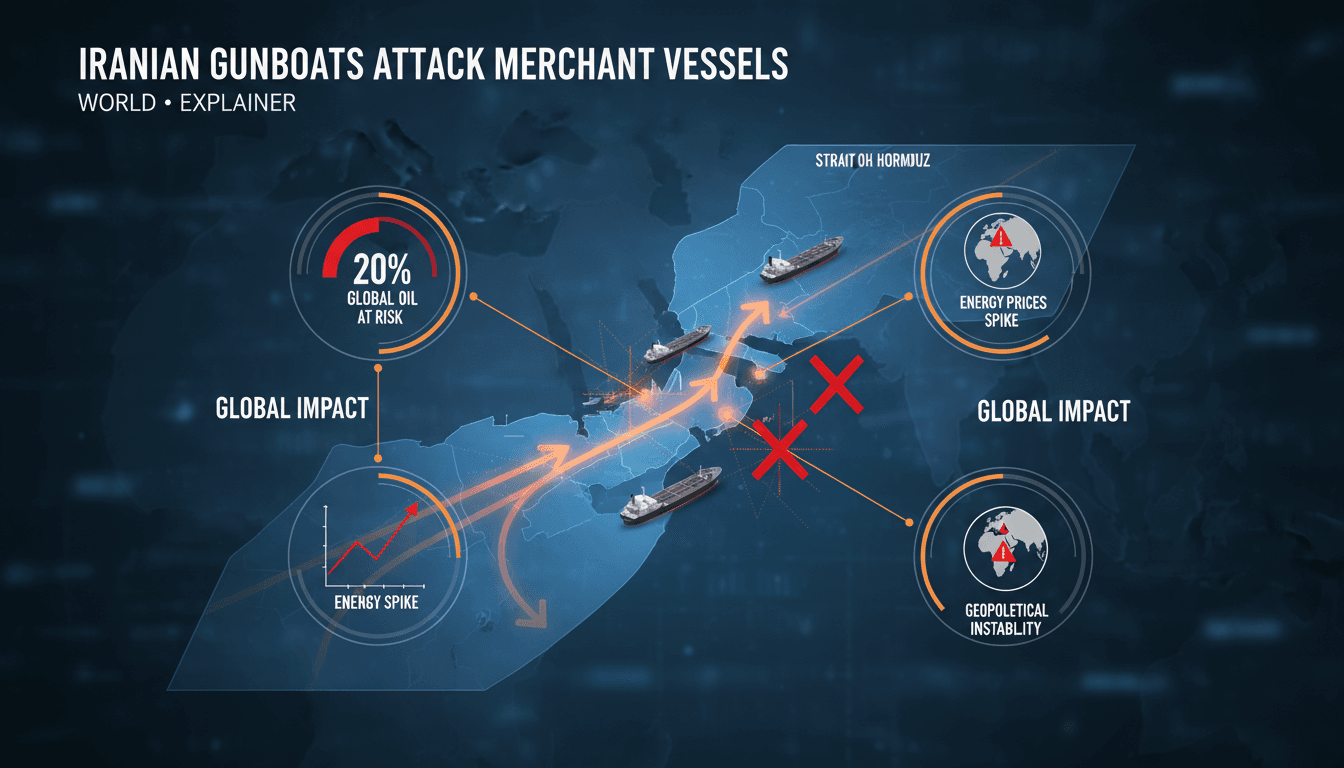
The Strait of Hormuz is a critical chokepoint for approximately 20% of the world's oil supply, making disruptions here a global concern.
What happened (in 30 seconds)
- Iranian Revolutionary Guard gunboats fired on merchant vessels in the Strait of Hormuz, escalating tensions amid a fragile ceasefire.
- The US maintains a naval blockade of Iranian ports, complicating the situation and threatening to disrupt oil flows.
- Over 20 ships retreated from the strait, causing significant fluctuations in oil prices and raising alarms among Gulf states.
The context you actually need
- The standoff is rooted in a broader US-Iran conflict that intensified following military strikes in February 2026, linked to the Israel-Hezbollah war.
- A two-week ceasefire had briefly allowed optimism for commercial shipping, but US insistence on maintaining the blockade led Iran to impose new restrictions.
- Iran's strategy includes using controlled routes and fees as leverage in negotiations, impacting global oil exports and regional stability.
What's really happening
The recent escalation in the Strait of Hormuz is a manifestation of the ongoing geopolitical tensions between the US and Iran, which have roots in a complex web of military, economic, and diplomatic factors. Following US and Israeli strikes on Iranian targets in late February 2026, the situation in the region has deteriorated significantly, resulting in thousands of casualties and heightened military readiness on both sides.
The US has implemented a naval blockade aimed at enforcing economic pressure on Iran, particularly to curb its nuclear ambitions. This blockade has been met with fierce resistance from Iran, which views it as an act of aggression. In response to the blockade, Iran's Revolutionary Guard has adopted a strategy of gunboat diplomacy, asserting control over the Strait of Hormuz and threatening to restrict passage for commercial vessels unless the blockade is lifted.
The ceasefire that was established for two weeks provided a temporary reprieve, during which Iran briefly declared the strait "fully open" for commercial shipping. This announcement led to a significant drop in crude oil prices, reflecting market optimism. However, the US's reaffirmation of the blockade quickly reversed this trend, prompting Iran to reassert its control over the strait. Iranian parliamentary speaker Mohammed Bagher Qalibaf's declaration that passage would be impossible for others while Iranian exports remain blocked underscores the precarious balance of power in the region.
As tensions escalated, Iranian gunboats fired on multiple vessels, including a projectile that damaged a container ship and forced two Indian-flagged vessels to retreat. This aggressive posture has resulted in over 20 ships turning back, causing significant disruptions in maritime traffic and raising concerns among Gulf states about energy security and regional stability.
The implications of this crisis extend beyond immediate military confrontations. The Strait of Hormuz is a vital artery for global oil supply, with approximately 20.9 million barrels per day transiting through it. Disruptions here can lead to volatile oil prices, impacting economies worldwide. For countries like the UAE, which relies heavily on stable oil prices for its economy, the situation is particularly alarming. The UAE Minister Dr. Sultan Ahmed Al Jaber's assertion that the strait "has never been Iran’s to close" reflects the urgency with which Gulf states are monitoring the situation.
Who feels it first (and how)
- Oil traders and investors: Fluctuating prices directly affect their profits and market strategies.
- Shipping companies: Increased risks and potential delays in transit can lead to higher operational costs.
- Consumers in oil-dependent economies: Rising fuel prices can impact transportation costs and overall living expenses.
- Gulf states: Nations like the UAE and Saudi Arabia are particularly vulnerable to disruptions in oil supply and price volatility.
What to watch next
- Ceasefire expiration on April 22: The potential for renewed hostilities could further disrupt oil flows and escalate military tensions.
- US-Iran negotiations: Progress or setbacks in diplomatic talks could influence market stability and regional security.
- Global oil price fluctuations: Watch for significant changes in oil prices as the situation develops, impacting economies worldwide.
The Strait of Hormuz is critical for global oil supply, with 20% of the world's oil passing through daily.
Continued tensions will lead to increased volatility in oil prices and shipping routes.
The outcome of US-Iran negotiations and their impact on the ceasefire and regional stability remains uncertain.
Frequently Asked Questions
- Why it matters?
- The Strait of Hormuz is a critical chokepoint for approximately 20% of the world's oil supply, making disruptions here a global concern.
- What happened (in 30 seconds)?
- Iranian Revolutionary Guard gunboats fired on merchant vessels in the Strait of Hormuz, escalating tensions amid a fragile ceasefire. The US maintains a naval blockade of Iranian ports, complicating the situation and threatening to disrupt oil flows. Over 20 ships retreated from the strait, causing significant fluctuations in oil prices and raising alarms among Gulf states.
- What's really happening?
- The recent escalation in the Strait of Hormuz is a manifestation of the ongoing geopolitical tensions between the US and Iran, which have roots in a complex web of military, economic, and diplomatic factors. Following US and Israeli strikes on Iranian targets in late February 2026, the situation in the region has deteriorated significantly, resulting in thousands of casualties and heightened military readiness on both sides. The US has implemented a naval blockade aimed at enforcing economic pr
- Who feels it first (and how)?
- Oil traders and investors: Fluctuating prices directly affect their profits and market strategies. Shipping companies: Increased risks and potential delays in transit can lead to higher operational costs. Consumers in oil-dependent economies: Rising fuel prices can impact transportation costs and overall living expenses. Gulf states: Nations like the UAE and Saudi Arabia are particularly vulnerable to disruptions in oil supply and price volatility.
- What to watch next?
- Ceasefire expiration on April 22: The potential for renewed hostilities could further disrupt oil flows and escalate military tensions. US-Iran negotiations: Progress or setbacks in diplomatic talks could influence market stability and regional security. Global oil price fluctuations: Watch for significant changes in oil prices as the situation develops, impacting economies worldwide.
UAE-based newspaper covering Gulf politics, society, and international developments.
"Gulf News is one of the UAE’s most prominent English-language publications."
— A47 Editor
Hormuz turns into gunboat bargaining table as escalation risks mount
The Strait of Hormuz has become a focal point of military tension, with the U.S. and Iran engaged in escalating confrontations, including a recent ultimatum from President Trump demanding Iran reopen this critical maritime route. This situation has t...
Oil, metals, and agriculture: supply/demand headlines, OPEC chatter, inventories, and price action.
"Solid tape for energy and metals traders tracking macro and micro catalysts."
— A47 Editor
Reaction roundup: Experts, analysts weigh in on Strait of Hormuz reopening
The Strait of Hormuz has been declared open for commercial shipping, following a fragile ceasefire between the United States and Iran. This announcement comes amidst ongoing geopolitical tensions and fluctuating oil prices, prompting a rush of oil ta...
UAE-based English-language newspaper covering regional politics, economics, and global affairs.
"The National reflects Emirati policy perspectives while maintaining international editorial standards."
— A47 Editor
Trump and Araghchi announce reopening of Hormuz – but Tehran says move rests on US ending blockade
U.S. President Donald Trump and Iranian Deputy Foreign Minister Abbas Araghchi announced the reopening of the Strait of Hormuz, a vital shipping route, contingent upon the U.S. ending its blockade on Iranian ports. This development follows a period o...
Regional and international reporting focused on Middle Eastern politics, diplomacy, and economics.
"Asharq Al-Awsat is a Saudi-owned international newspaper reflecting mainstream Gulf political perspectives."
— A47 Editor
Trump’s Blockade of Hormuz Strait to Have Severe Economic Implications
President Donald Trump has announced a blockade of the Strait of Hormuz following the failure of U.S.-Iran ceasefire talks that lasted 21 hours without reaching an agreement. This blockade is aimed at interdicting vessels in this crucial maritime rou...