
European Allies Reject U.S. Request to Secure Strait of Hormuz Amid Ongoing Iran Conflict
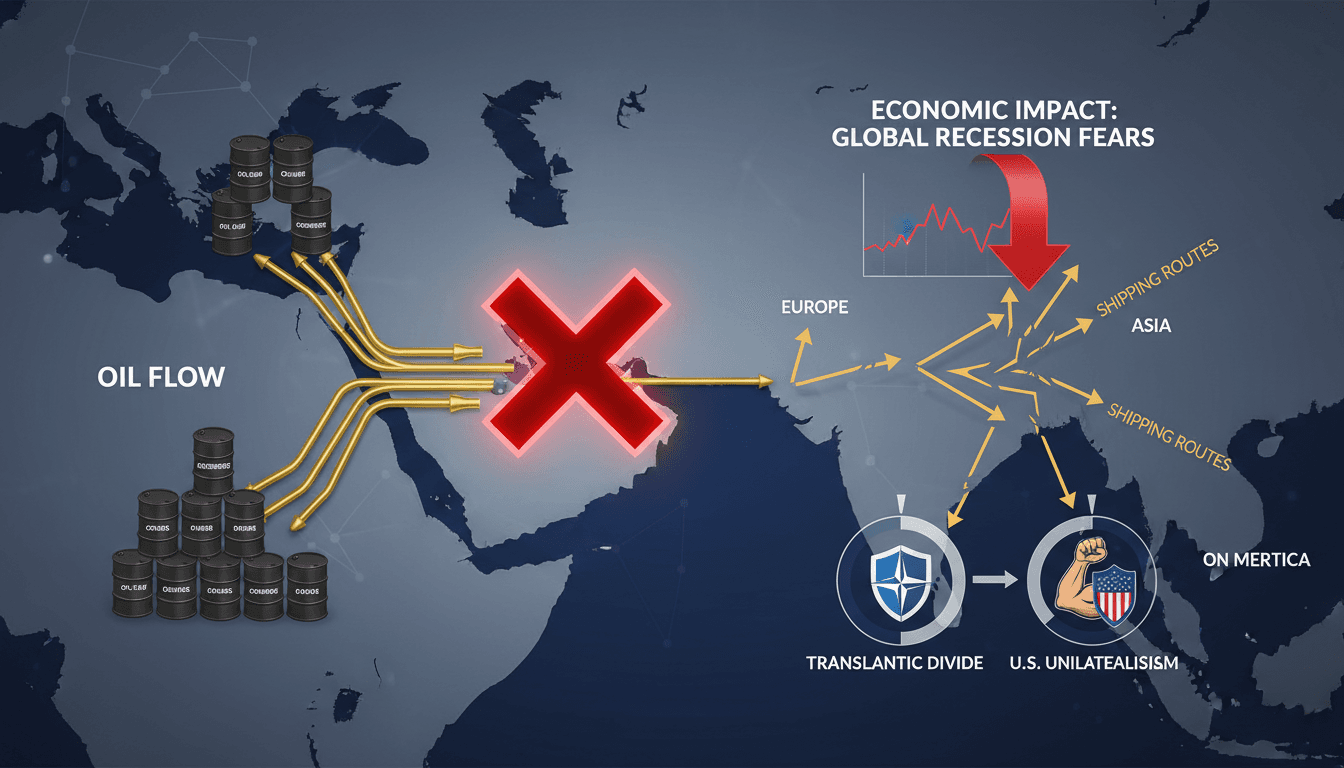
Here's what it means for you.
If you rely on global oil markets, the refusal of European allies to engage militarily in the Strait of Hormuz could lead to higher fuel prices and increased costs across various sectors.
Why it matters
This decision signals a significant shift in transatlantic relations and highlights the complexities of global security commitments amid competing priorities.
What happened (in 30 seconds)
- On March 16, 2026, European Union foreign ministers declined U.S. President Donald Trump's request for naval support to secure the Strait of Hormuz, which Iran had closed.
- The refusal, articulated by EU foreign policy chief Kaja Kallas, reflects Europe's prioritization of the Russia-Ukraine war and reluctance to engage in the Iran conflict.
- As a result, Trump announced that the U.S. would proceed unilaterally, raising concerns about NATO's future cohesion.
The context you actually need
- The U.S.-Israel war against Iran began on February 28, 2026, following airstrikes on Iranian targets, leading to Iran's closure of the Strait of Hormuz, a critical chokepoint for global oil trade.
- The Strait of Hormuz handles approximately 20% of global oil trade annually, making its security vital for energy markets and global economies.
- Previous tensions between the U.S. and Europe included disagreements over Ukraine support and U.S. foreign policy moves that strained NATO unity, such as potential sanctions relief on Russia.
What's really happening
The refusal of European allies to support U.S. military operations in the Strait of Hormuz underscores a growing divide in transatlantic relations, driven by differing priorities and strategic calculations. The ongoing U.S.-Israel war against Iran has created a volatile situation, with Iran's closure of the Strait significantly impacting global oil supply routes. This chokepoint is crucial, as it facilitates the transit of about 20% of the world's oil, and any disruption can lead to immediate price surges.
European leaders, particularly those in NATO, are increasingly cautious about engaging in military conflicts that do not align with their immediate security interests. The ongoing war in Ukraine has taken precedence, with European nations focusing their resources and diplomatic efforts on that front. The EU's Operation Aspides, launched in February 2024 to address Houthi attacks in the Red Sea, illustrates Europe's commitment to regional security, but it does not extend to direct military involvement in the Hormuz conflict.
Trump's call for NATO allies to deploy warships reflects a broader U.S. strategy to maintain influence in the region, yet the response from Europe indicates a reluctance to be drawn into what they perceive as a U.S.-initiated conflict. This reluctance is compounded by previous tensions, including disagreements over sanctions on Russia and U.S. foreign policy maneuvers that have eroded trust within NATO.
As the U.S. moves forward unilaterally, the implications for global oil markets are significant. Oil prices have already surged above $100 per barrel following the closure of the Strait, leading to inflationary pressures on consumers worldwide. Countries like the UAE and Kuwait are reducing oil output in response to the crisis, further straining global supply chains and exacerbating economic challenges.
The situation also raises questions about NATO's future relevance. Trump's assertion that the U.S. no longer needs NATO assistance highlights a potential shift in American foreign policy, which could lead to a more isolationist stance. European leaders are emphasizing diplomatic solutions, questioning the efficacy of U.S. military strategies, and seeking to redefine their own security frameworks independent of U.S. influence.
Who feels it first (and how)
- Consumers in Europe and North America: Higher fuel prices and increased costs of living due to rising oil prices.
- Energy-dependent industries: Sectors such as transportation and manufacturing face increased operational costs.
- Gulf states: Countries like the UAE and Kuwait may experience economic shifts due to reduced oil output and fluctuating revenues.
- Global investors: Increased volatility in oil markets could affect investment strategies and risk assessments.
What to watch next
- Oil price trends: Monitor fluctuations in oil prices as tensions evolve, which will impact global inflation and economic stability.
- NATO's strategic direction: Watch for shifts in NATO's focus and commitments, particularly regarding European security and U.S. involvement.
- Diplomatic engagements: Observe how European leaders navigate their relationships with the U.S. and Iran in light of the ongoing conflict and its implications for regional stability.
The Strait of Hormuz is critical for global oil trade, handling 20% of it annually.
Oil prices will remain volatile as geopolitical tensions persist, affecting global economies.
The long-term impact on NATO's cohesion and future military commitments remains uncertain.
Frequently Asked Questions
- Why it matters?
- This decision signals a significant shift in transatlantic relations and highlights the complexities of global security commitments amid competing priorities.
- What happened (in 30 seconds)?
- On March 16, 2026, European Union foreign ministers declined U.S. President Donald Trump's request for naval support to secure the Strait of Hormuz, which Iran had closed. The refusal, articulated by EU foreign policy chief Kaja Kallas, reflects Europe's prioritization of the Russia-Ukraine war and reluctance to engage in the Iran conflict. As a result, Trump announced that the U.S. would proceed unilaterally, raising concerns about NATO's future cohesion.
- What's really happening?
- The refusal of European allies to support U.S. military operations in the Strait of Hormuz underscores a growing divide in transatlantic relations, driven by differing priorities and strategic calculations. The ongoing U.S.-Israel war against Iran has created a volatile situation, with Iran's closure of the Strait significantly impacting global oil supply routes. This chokepoint is crucial, as it facilitates the transit of about 20% of the world's oil, and any disruption can lead to immediate pr
- Who feels it first (and how)?
- Consumers in Europe and North America: Higher fuel prices and increased costs of living due to rising oil prices. Energy-dependent industries: Sectors such as transportation and manufacturing face increased operational costs. Gulf states: Countries like the UAE and Kuwait may experience economic shifts due to reduced oil output and fluctuating revenues. Global investors: Increased volatility in oil markets could affect investment strategies and risk assessments.
- What to watch next?
- Oil price trends: Monitor fluctuations in oil prices as tensions evolve, which will impact global inflation and economic stability. NATO's strategic direction: Watch for shifts in NATO's focus and commitments, particularly regarding European security and U.S. involvement. Diplomatic engagements: Observe how European leaders navigate their relationships with the U.S. and Iran in light of the ongoing conflict and its implications for regional stability.
Arabic-language reporting on global and regional news.
"BBC Arabic is part of the BBC, generally regarded for editorial standards and broad international coverage."
— A47 Editor
ماتداعيات رفض حلفاء واشنطن تلبية دعوة ترامب لتأمين مضيق هرمز؟
European Union foreign ministers have rejected U.S. President Donald Trump's request for assistance in securing navigation in the Strait of Hormuz, following Iran's announcement of its closure amid ongoing tensions with Israel and the United States. ...
European coverage of Middle East politics and security issues.
"France 24 offers international reporting with a European editorial perspective."
— A47 Editor
'Near universal refusal' - European leaders reject Trump's demand for Strait of Hormuz mission
European leaders have largely rejected U.S. President Donald Trump's request for NATO allies to assist in reopening the Strait of Hormuz, a vital shipping route for crude oil that Iran has effectively blocked amid escalating tensions. This refusal hi...
24/7 international news from a French perspective in multiple languages.
"France 24 is viewed as a globally focused outlet with balanced coverage and a European perspective."
— A47 Editor
'Near universal refusal' - European leaders reject Trump's demand for Strait of Hormuz mission
European leaders have largely rejected U.S. President Donald Trump's request for NATO allies to assist in reopening the Strait of Hormuz, a vital shipping route for crude oil that Iran has effectively blocked amid escalating tensions. This refusal hi...
Global political, business, and cultural coverage from WSJ international desks.
"The Wall Street Journal offers extensive international reporting with a reputation for financial insight and a center-right editorial stance."
— A47 Editor
U.S. Allies Rebuff Trump’s Demand for Help Opening Strait of Hormuz
U.S. President Donald Trump has faced rejection from key allies, including Germany, Australia, and Japan, regarding his request for military assistance to secure the Strait of Hormuz amid rising tensions with Iran. While the U.K. and France have expr...
Political developments, policy debates, elections, and government affairs in the UK.
"BBC News is widely regarded as a reputable international news organization, known for its impartial tone and public service mandate."
— A47 Editor
Wary allies show there's no quick fix to Trump's Iran crisis
European leaders are showing reluctance to assist President Trump in securing the Strait of Hormuz amid escalating tensions with Iran, which has blocked this vital shipping route following U.S. and Israeli military actions. This situation reflects a ...