
New Jersey Governor Critiques FIFA Over World Cup Transportation Costs
Here's what it means for you.
If you rely on public transport in New Jersey, the upcoming World Cup could significantly impact your travel expenses.
Why it matters
This dispute highlights the financial pressures on local governments when hosting major international events.
What happened (in 30 seconds)
- Governor Mikie Sherrill criticized FIFA for not contributing to NJ Transit's estimated $48 million transportation costs for the 2026 World Cup.
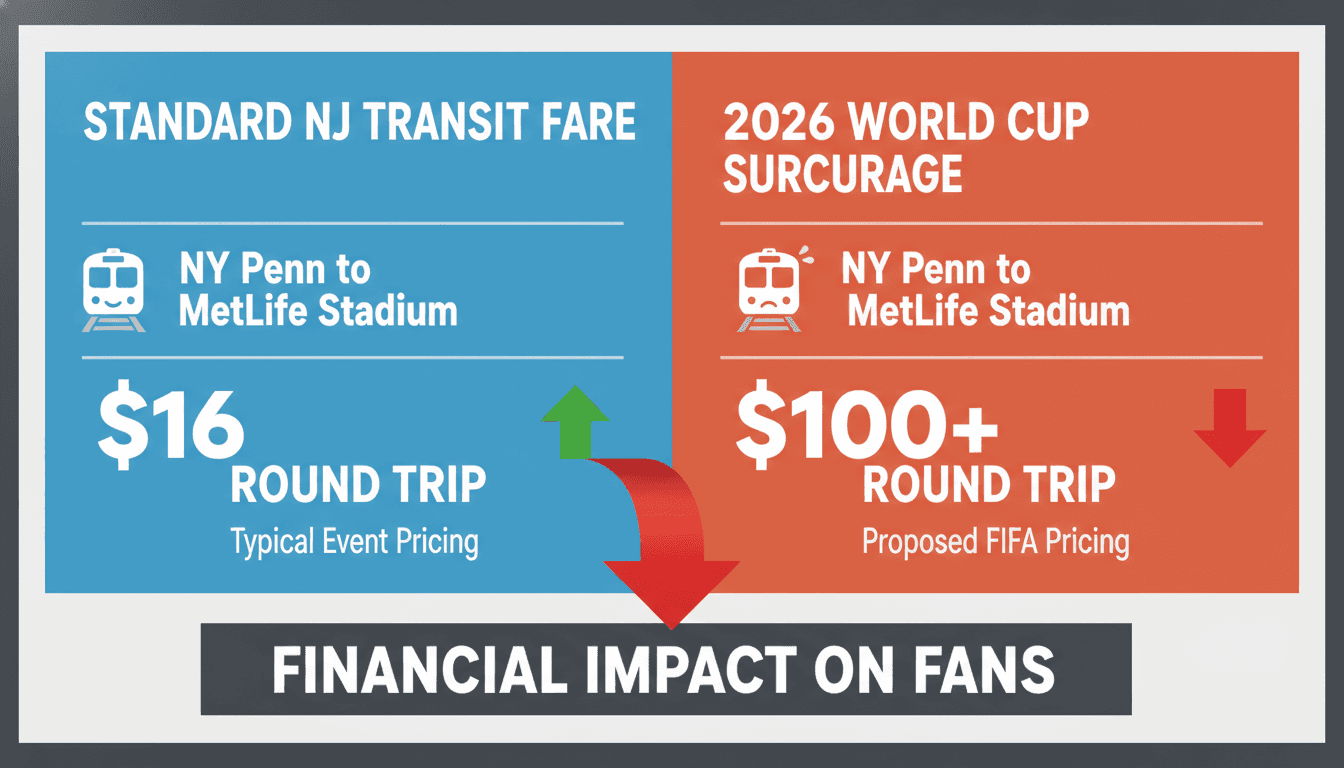
- Proposed train fares could exceed $100 round-trip, a stark increase from the standard fare of $12.90, affecting commuters and fans alike.
- FIFA responded by expressing surprise at the criticism, citing prior agreements and collaborative planning efforts.
The context you actually need
- The 2026 FIFA World Cup will be co-hosted by the U.S., Canada, and Mexico, with MetLife Stadium in New Jersey set to host eight matches, including the final.
- Initial agreements mandated free public transportation for fans, but FIFA revised these terms in 2023, allowing for cost recovery due to financial constraints.
- Sherrill's administration is focused on affordability, having previously redirected funds from a planned fan festival to address budget concerns.
What's really happening
The ongoing dispute between New Jersey Governor Mikie Sherrill and FIFA over transportation costs for the 2026 World Cup underscores a complex interplay of financial responsibility and public service. Initially, host city agreements required FIFA to provide free transportation for fans, a commitment that would have alleviated the burden on local transit systems. However, in 2023, FIFA amended these terms, allowing host cities to charge for transportation to recover costs, citing financial pressures.
As a result, NJ Transit is now facing an estimated operational cost of $48 million to transport fans to MetLife Stadium. This figure is significant, especially considering the projected revenue of $11 billion FIFA is expected to generate from the tournament. Sherrill's criticism stems from the potential impact on commuters, who could see train fares soar to over $100 round-trip from New York Penn Station, compared to the standard fare of $12.90. This increase raises concerns about accessibility for fans, particularly those from lower-income backgrounds.
The situation is further complicated by FIFA's stringent security protocols, which have eliminated parking at the stadium, necessitating rail service for approximately 40,000 fans per match. Sherrill's administration, elected on a platform of affordability, is now caught in a bind: balancing the financial realities of hosting a global event while protecting the interests of local commuters. The governor's demand for FIFA to cover transportation costs reflects a broader concern about the financial implications of hosting such events, which often place undue burdens on local infrastructure and taxpayers.
FIFA's response to Sherrill's comments has been one of surprise, emphasizing their collaborative planning efforts and the advocacy for federal funding to support local transit systems. This highlights a disconnect between FIFA's expectations and the realities faced by host cities. As the situation evolves, the finalization of train fares remains uncertain, with NJ Transit still reviewing pricing options. The outcome of this dispute will not only affect transportation costs for World Cup attendees but also set a precedent for how future international events are funded and managed at the local level.
Who feels it first (and how)
- Commuters: Increased train fares could disproportionately affect daily travelers and low-income individuals.
- Local businesses: Higher transportation costs may deter fans from attending matches, impacting local economies.
- Transit authorities: NJ Transit faces operational challenges and potential backlash from fare increases.
What to watch next
- Finalization of train fares: The decision on pricing will directly impact commuter costs and attendance at World Cup matches.
- FIFA's response to funding requests: How FIFA addresses Sherrill's demands could influence future host city agreements and financial responsibilities.
- Public sentiment: Monitoring reactions from commuters and fans will provide insight into the broader implications of this dispute.
NJ Transit estimates transportation costs at $48 million for the World Cup.
Train fares will increase significantly, affecting local commuters and fans.
How FIFA will respond to demands for financial contributions and the potential for future agreements.
Frequently Asked Questions
- Why it matters?
- This dispute highlights the financial pressures on local governments when hosting major international events.
- What happened (in 30 seconds)?
- Governor Mikie Sherrill criticized FIFA for not contributing to NJ Transit's estimated $48 million transportation costs for the 2026 World Cup. Proposed train fares could exceed $100 round-trip, a stark increase from the standard fare of $12.90, affecting commuters and fans alike. FIFA responded by expressing surprise at the criticism, citing prior agreements and collaborative planning efforts.
- What's really happening?
- The ongoing dispute between New Jersey Governor Mikie Sherrill and FIFA over transportation costs for the 2026 World Cup underscores a complex interplay of financial responsibility and public service. Initially, host city agreements required FIFA to provide free transportation for fans, a commitment that would have alleviated the burden on local transit systems. However, in 2023, FIFA amended these terms, allowing host cities to charge for transportation to recover costs, citing financial pressu
- Who feels it first (and how)?
- Commuters: Increased train fares could disproportionately affect daily travelers and low-income individuals. Local businesses: Higher transportation costs may deter fans from attending matches, impacting local economies. Transit authorities: NJ Transit faces operational challenges and potential backlash from fare increases.
- What to watch next?
- Finalization of train fares: The decision on pricing will directly impact commuter costs and attendance at World Cup matches. FIFA's response to funding requests: How FIFA addresses Sherrill's demands could influence future host city agreements and financial responsibilities. Public sentiment: Monitoring reactions from commuters and fans will provide insight into the broader implications of this dispute.
Covers global sporting events, athlete news, and cultural perspectives on sports.
"The Guardian is known for progressive editorial analysis, often exploring social and cultural dimensions of sports."
— A47 Editor
New Jersey governor hits out at Fifa over reported $100 World Cup train tickets: ‘They should pay’
New Jersey Governor Mikie Sherrill has criticized FIFA over reports that NJ Transit will charge over $100 for return train tickets to World Cup matches at MetLife Stadium, a significant increase from the usual fare of $12.90. This pricing strategy ha...
News from the United States including domestic politics, society, and culture.
"The Guardian is known for its progressive editorial stance and in-depth analysis, often advocating for social justice, environmental issues, and liberal values."
— A47 Editor
New Jersey governor hits out at Fifa over reported $100 World Cup train tickets: ‘They should pay’
New Jersey Governor Mikie Sherrill has criticized FIFA over reports that NJ Transit will charge over $100 for return train tickets to World Cup matches at MetLife Stadium, a significant increase from the usual fare of $12.90. This pricing strategy ha...
Top international stories selected by The Guardian editors.
"The Guardian is known for its progressive editorial stance and in-depth analysis."
— A47 Editor
New Jersey governor hits out at Fifa over reported $100 World Cup train tickets: ‘They should pay’
New Jersey Governor Mikie Sherrill has criticized FIFA over reports that NJ Transit will charge over $100 for return train tickets to World Cup matches at MetLife Stadium, a significant increase from the usual fare of $12.90. This pricing strategy ha...
Comprehensive coverage of Middle Eastern and global issues.
"Al Jazeera is a prominent voice from the Global South, especially the Middle East, with an emphasis on underreported stories."
— A47 Editor
FIFA ‘surprised’ by US backlash as transport costs skyrocket at World Cup
FIFA is facing backlash in the United States as transport costs for the upcoming World Cup have surged, with New Jersey Governor Mikie Sherrill and a US lawmaker urging the organization to cover the increased expenses. Reports indicate that NJ Transi...