
Netanyahu Affirms Iran Ceasefire as Step Towards Israel's Strategic Goals
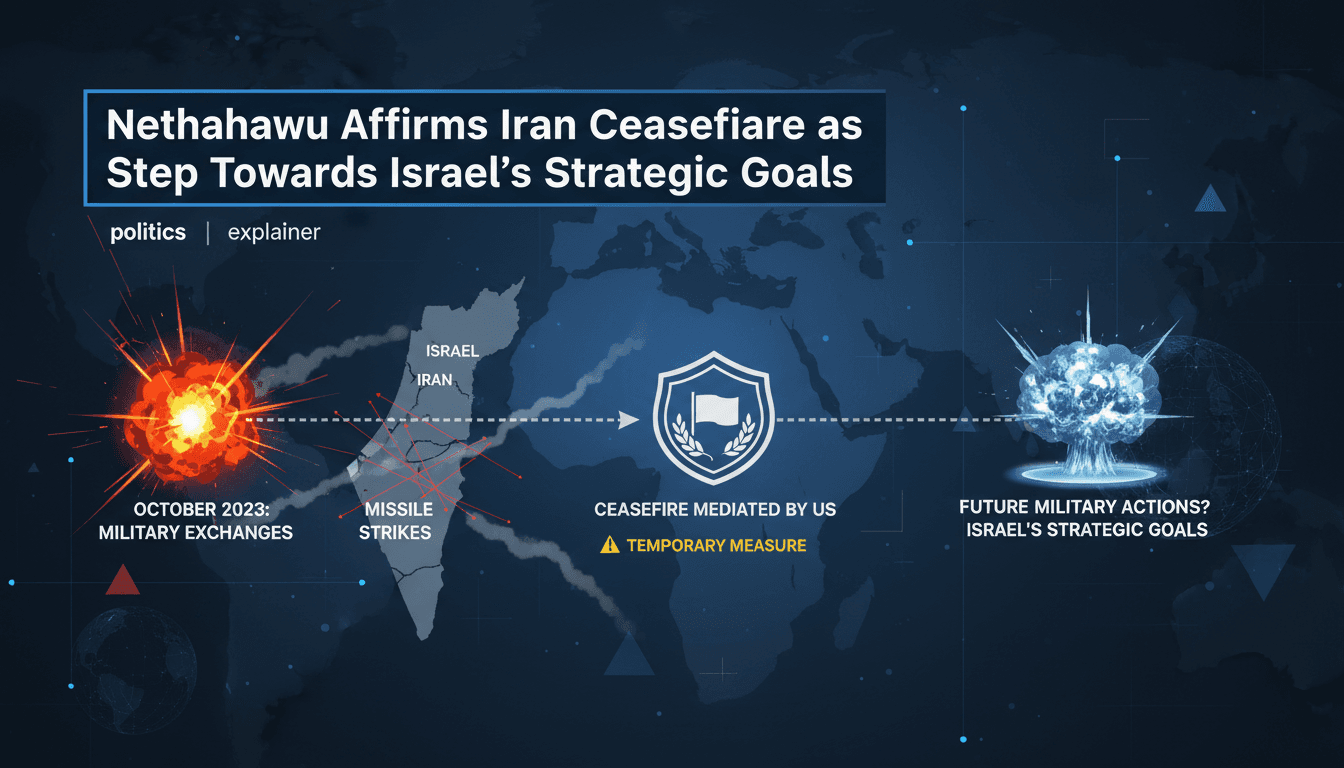
Here's what it means for you.
The ongoing geopolitical tensions could impact global markets, particularly in energy and defense sectors.
Why it matters
The ceasefire signals a temporary pause in hostilities, but the exclusion of Hezbollah from the agreement raises concerns about continued regional instability.
What happened (in 30 seconds)
- Netanyahu declared the truce with Iran as a temporary measure, not the end of the conflict.
- Iran launched 650 ballistic missiles at Israel, with most intercepted by Israeli defenses.
- The U.S. facilitated a ceasefire agreement, but hostilities with Hezbollah in Lebanon persist.
The context you actually need
- The war began in early 2026 with U.S.-Israeli airstrikes that targeted key Iranian military assets and leadership.
- Iran's retaliation involved extensive missile strikes, leading to significant Israeli casualties despite high interception rates.
- The ceasefire terms were brokered under U.S. mediation, focusing on Iranian commitments regarding military activities, but did not address the ongoing conflict with Hezbollah.
What's really happening
The recent declaration by Israeli Prime Minister Benjamin Netanyahu marks a critical juncture in the ongoing Israel-Iran conflict, which escalated dramatically in early 2026. Following a series of coordinated U.S.-Israeli airstrikes that eliminated key Iranian military leaders and infrastructure, Iran retaliated with a barrage of missile strikes aimed at Israel. Despite the high volume of 650 ballistic missiles launched, Israeli defense systems successfully intercepted approximately 95% of these attacks, mitigating potential casualties.
The ceasefire, brokered by the United States, represents a strategic pause rather than a resolution. Netanyahu's assertion that the truce is merely an "intermediate station" emphasizes Israel's ongoing military objectives in the region. This statement reflects a broader strategy aimed at not only neutralizing Iranian military capabilities but also addressing the threats posed by Hezbollah in Lebanon, which remains outside the current ceasefire agreement.
The exclusion of Hezbollah from the truce is particularly significant. As a key ally of Iran, Hezbollah's ongoing hostilities could destabilize the region further and complicate any future peace efforts. The Israeli Defense Minister's comments on the separation of fronts suggest a tactical advantage, but they also indicate that the conflict may not be over. The Israeli government appears poised to continue its military operations against Hezbollah, which could provoke further Iranian retaliation and escalate tensions in the region.
Moreover, the geopolitical implications extend beyond military engagements. The volatility in the Middle East has already had tangible effects on global markets, particularly in oil. Following the announcement of the ceasefire, Brent crude prices rose by 4%, reflecting investor concerns about the fragility of the agreement and the potential for renewed conflict. This situation underscores the interconnectedness of regional stability and global economic health, particularly for countries reliant on oil imports.
As the ceasefire takes effect, the focus will likely shift to monitoring Iranian military reconstitution efforts and assessing the implications of continued hostilities with Hezbollah. The potential for renewed conflict remains high, and the international community, particularly the United States, will play a crucial role in mediating these tensions.
Who feels it first (and how)
- Energy Sector: Companies reliant on stable oil prices may experience volatility due to geopolitical tensions.
- Defense Contractors: Increased military operations could lead to heightened demand for defense equipment and services.
- Tourism and Expat Communities in Dubai: Ongoing regional instability may deter tourists and expatriates, impacting local economies.
What to watch next
- Iran's military movements: Monitoring any signs of military reconstitution will indicate whether tensions are escalating.
- Hezbollah's response: Any retaliatory actions from Hezbollah could reignite broader conflict, affecting regional stability.
- U.S. diplomatic efforts: The effectiveness of U.S. mediation in maintaining the ceasefire and addressing Hezbollah's involvement will be crucial.
The ceasefire is operational, but hostilities with Hezbollah continue.
Regional tensions will persist, impacting global markets and security dynamics.
The long-term effectiveness of the ceasefire and its implications for Israeli-Iranian relations remain uncertain.
Frequently Asked Questions
- Why it matters?
- The ceasefire signals a temporary pause in hostilities, but the exclusion of Hezbollah from the agreement raises concerns about continued regional instability.
- What happened (in 30 seconds)?
- Netanyahu declared the truce with Iran as a temporary measure, not the end of the conflict. Iran launched 650 ballistic missiles at Israel, with most intercepted by Israeli defenses. The U.S. facilitated a ceasefire agreement, but hostilities with Hezbollah in Lebanon persist.
- What's really happening?
- The recent declaration by Israeli Prime Minister Benjamin Netanyahu marks a critical juncture in the ongoing Israel-Iran conflict, which escalated dramatically in early 2026. Following a series of coordinated U.S.-Israeli airstrikes that eliminated key Iranian military leaders and infrastructure, Iran retaliated with a barrage of missile strikes aimed at Israel. Despite the high volume of 650 ballistic missiles launched, Israeli defense systems successfully intercepted approximately 95% of these
- Who feels it first (and how)?
- Energy Sector: Companies reliant on stable oil prices may experience volatility due to geopolitical tensions. Defense Contractors: Increased military operations could lead to heightened demand for defense equipment and services. Tourism and Expat Communities in Dubai: Ongoing regional instability may deter tourists and expatriates, impacting local economies.
- What to watch next?
- Iran's military movements: Monitoring any signs of military reconstitution will indicate whether tensions are escalating. Hezbollah's response: Any retaliatory actions from Hezbollah could reignite broader conflict, affecting regional stability. U.S. diplomatic efforts: The effectiveness of U.S. mediation in maintaining the ceasefire and addressing Hezbollah's involvement will be crucial.
Pan-Arab news coverage spanning politics, business, sports, and regional affairs.
"Asharq Al-Awsat reflects a broad Arab editorial perspective with strong attention to regional geopolitics."
— A47 Editor
نتنياهو: الهدنة ليست نهاية الحرب بل محطة على طريق تحقيق الأهداف
Israeli Prime Minister Benjamin Netanyahu stated that the current ceasefire is not the end of the war but rather a step towards achieving military objectives. Reports from the Israeli army indicate that Iran has begun to restore its military capabili...
Arabic-language UAE newspaper coverage focused on domestic affairs, public institutions, business, society, and regional developments.
"Al Khaleej coverage generally reflects a mainstream UAE editorial lens with strong attention to public affairs, institutions, and regional developments."
— A47 Editor
المعارضة الإسرائيلية: هدنة إيران كارثة.. ونتنياهو فشل
Israeli opposition leaders criticized the ceasefire agreement with Iran on Wednesday, accusing Prime Minister Benjamin Netanyahu of failing to achieve the objectives of the war. The opposition's remarks highlight growing dissatisfaction with the gove...
Arabic-language coverage of political affairs and current events.
"Okaz political coverage typically follows mainstream Saudi framing on national and regional affairs."
— A47 Editor
نتنياهو: الاتفاق مع إيران ليس نهاية المعركة ولا يشمل لبنان
Israeli Prime Minister Benjamin Netanyahu stated that the agreement with Iran is not the end of the battle but a preparation phase for future actions. He emphasized that Iran has conceded all its conditions to halt the war and that Israel is ready to...