
U.S. Senators Call for CFTC Investigation into Oil Futures Trading Linked to Trump Iran Announcements
Here's what it means for you.
If you're involved in global markets, the scrutiny of oil futures trading could impact your investment strategies and risk assessments.
Why it matters
The investigation into potential insider trading could reshape regulatory frameworks and market behaviors in the oil sector.
What happened (in 30 seconds)
- Senators Warren and Whitehouse urged the Commodity Futures Trading Commission (CFTC) to investigate unusual trading patterns in oil futures prior to President Trump's announcements regarding Iran.
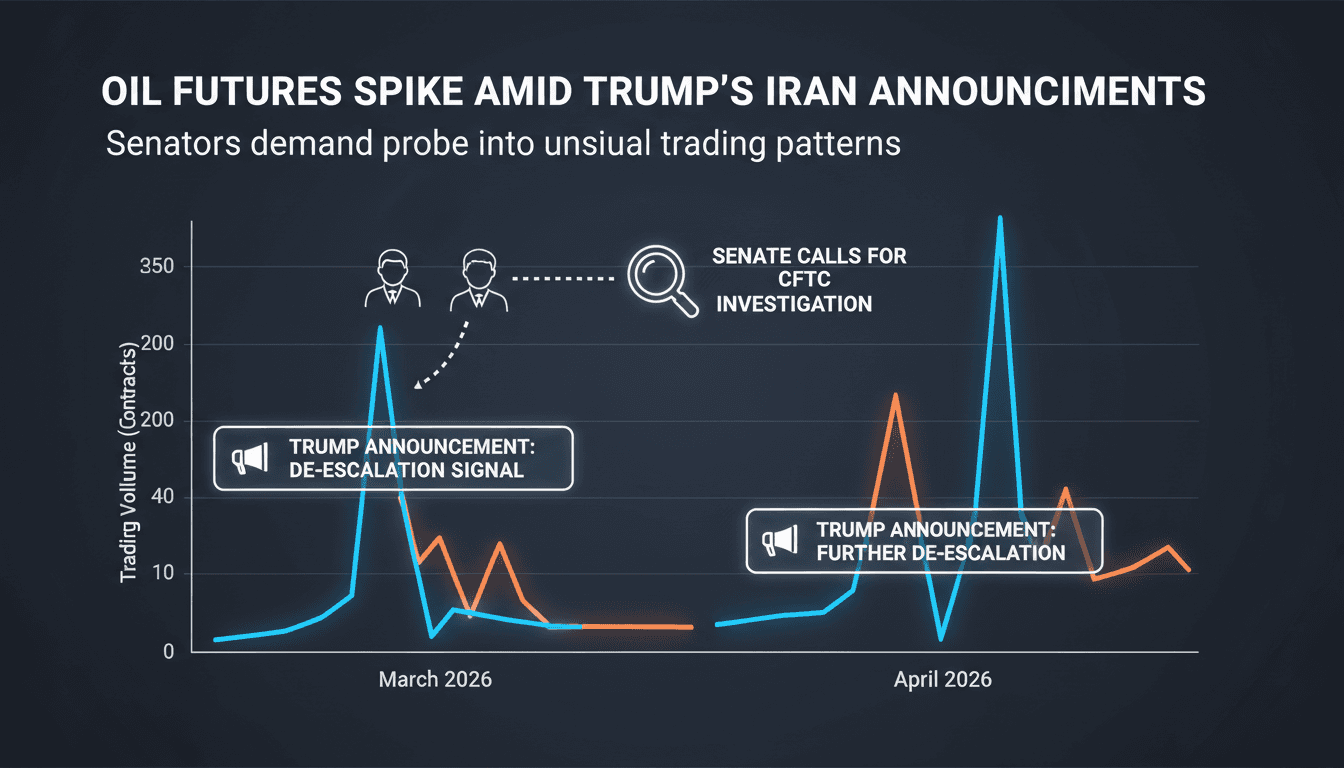
- Significant trading volumes of $500-580 million betting on falling oil prices occurred just before key announcements on March 23 and April 7, leading to sharp price drops.
- CFTC is currently monitoring the oil futures markets, but no formal investigation has been confirmed as of April 10, 2026.
The context you actually need
- The Strait of Hormuz crisis began when Iran blocked this critical oil passage on March 4, 2026, disrupting 20 million barrels per day of global oil flow and causing prices to spike.
- Trump's announcements on March 23 and April 7 signaled de-escalation, which led to immediate price drops of 14-15%, benefiting traders positioned for declines.
- Dubai crude prices reached a record high of $166 per barrel on March 19, highlighting the volatility and economic impact on oil-dependent regions.
What's really happening
The recent surge in oil futures trading has raised alarms about potential insider trading, particularly in the context of the ongoing Strait of Hormuz crisis. On March 23, just minutes before President Trump announced a delay in military strikes against Iran, trading volumes spiked dramatically, with reports indicating that traders placed bets totaling between $500 million and $580 million on falling oil prices. This strategic positioning allowed these traders to profit significantly when oil prices subsequently plummeted by 14-15%.
The context of the crisis is critical. The Strait of Hormuz is a vital chokepoint for global oil shipments, and any disruption can lead to significant price volatility. The blockade by Iran, which began on March 4, 2026, sent shockwaves through the market, pushing Dubai crude prices to record highs. The geopolitical tension created an environment ripe for speculation, where traders could leverage nonpublic information to their advantage.
Senators Warren and Whitehouse's call for a CFTC investigation highlights concerns about the integrity of the oil futures market. They pointed out that the timing of these trades raises "serious questions" about whether government insiders or their associates misused nonpublic information. The implications of such actions could be far-reaching, potentially leading to stricter regulations and oversight in the futures market.
As the CFTC monitors the situation, the lack of a formal investigation raises questions about the effectiveness of current regulatory frameworks. If it is determined that insider trading did occur, it could lead to a significant shift in how trading is conducted in the oil sector, with increased scrutiny on market participants and their trading practices.
Moreover, the aftermath of these announcements has seen oil prices stabilize, with Brent crude falling to around $95 per barrel after the April 7 ceasefire announcement. This stabilization, however, does not eliminate the underlying volatility, which continues to pose risks for traders and investors alike. The White House has also cautioned staff against engaging in prediction market bets, indicating a heightened awareness of the scrutiny surrounding trading practices.
Who feels it first (and how)
- Traders and investors in oil futures markets who may face increased regulatory scrutiny.
- Oil-dependent economies, particularly in the Gulf Cooperation Council (GCC) region, which are sensitive to price fluctuations.
- Consumers in regions like Dubai, where fuel prices have surged, impacting living costs and economic stability.
What to watch next
- CFTC's response: The outcome of the CFTC's monitoring could lead to formal investigations, impacting market confidence.
- Oil price trends: Continued volatility in oil prices will be a key indicator of market stability and investor sentiment.
- Legislative actions: Potential new regulations or oversight measures could emerge from this investigation, affecting trading practices.
Senators Warren and Whitehouse have formally requested an investigation into trading patterns.
Increased regulatory scrutiny on oil futures trading and potential changes in trading practices.
The extent to which insider trading may have influenced market movements and the CFTC's next steps.
Frequently Asked Questions
- Why it matters?
- The investigation into potential insider trading could reshape regulatory frameworks and market behaviors in the oil sector.
- What happened (in 30 seconds)?
- Senators Warren and Whitehouse urged the Commodity Futures Trading Commission (CFTC) to investigate unusual trading patterns in oil futures prior to President Trump's announcements regarding Iran. Significant trading volumes of $500-580 million betting on falling oil prices occurred just before key announcements on March 23 and April 7, leading to sharp price drops. CFTC is currently monitoring the oil futures markets, but no formal investigation has been confirmed as of April 10, 2026.
- What's really happening?
- The recent surge in oil futures trading has raised alarms about potential insider trading, particularly in the context of the ongoing Strait of Hormuz crisis. On March 23, just minutes before President Trump announced a delay in military strikes against Iran, trading volumes spiked dramatically, with reports indicating that traders placed bets totaling between $500 million and $580 million on falling oil prices. This strategic positioning allowed these traders to profit significantly when oil pr
- Who feels it first (and how)?
- Traders and investors in oil futures markets who may face increased regulatory scrutiny. Oil-dependent economies, particularly in the Gulf Cooperation Council (GCC) region, which are sensitive to price fluctuations. Consumers in regions like Dubai, where fuel prices have surged, impacting living costs and economic stability.
- What to watch next?
- CFTC's response: The outcome of the CFTC's monitoring could lead to formal investigations, impacting market confidence. Oil price trends: Continued volatility in oil prices will be a key indicator of market stability and investor sentiment. Legislative actions: Potential new regulations or oversight measures could emerge from this investigation, affecting trading practices.
Oil, metals, and agriculture: supply/demand headlines, OPEC chatter, inventories, and price action.
"Solid tape for energy and metals traders tracking macro and micro catalysts."
— A47 Editor
Senators urge probe into oil trading before Trump’s Iran announcement
Two Democratic Senators have called for an investigation by the Commodity Futures Trading Commission (CFTC) into suspicious oil trading activities that occurred prior to President Trump's announcements regarding military operations in Iran. This requ...
Global markets, investing, and macroeconomics from a premier financial newsroom.
"Bloomberg is respected for in-depth financial reporting and data-driven analysis."
— A47 Editor
Senators Push CFTC to Probe Oil Trading Before Trump Iran News
Two Democratic US Senators are urging the Commodity Futures Trading Commission (CFTC) to investigate suspicious trading activities in oil futures that occurred prior to President Donald Trump's significant announcements regarding military operations ...