
Israeli Airstrike Destroys Last Bridge Over Lebanon's Litani River
Here's what it means for you.
The destruction of critical infrastructure in Lebanon could disrupt regional stability and impact global oil prices, affecting markets you engage with.
Why it matters
This airstrike exacerbates tensions in the Middle East, potentially influencing energy markets and international relations.
What happened (in 30 seconds)
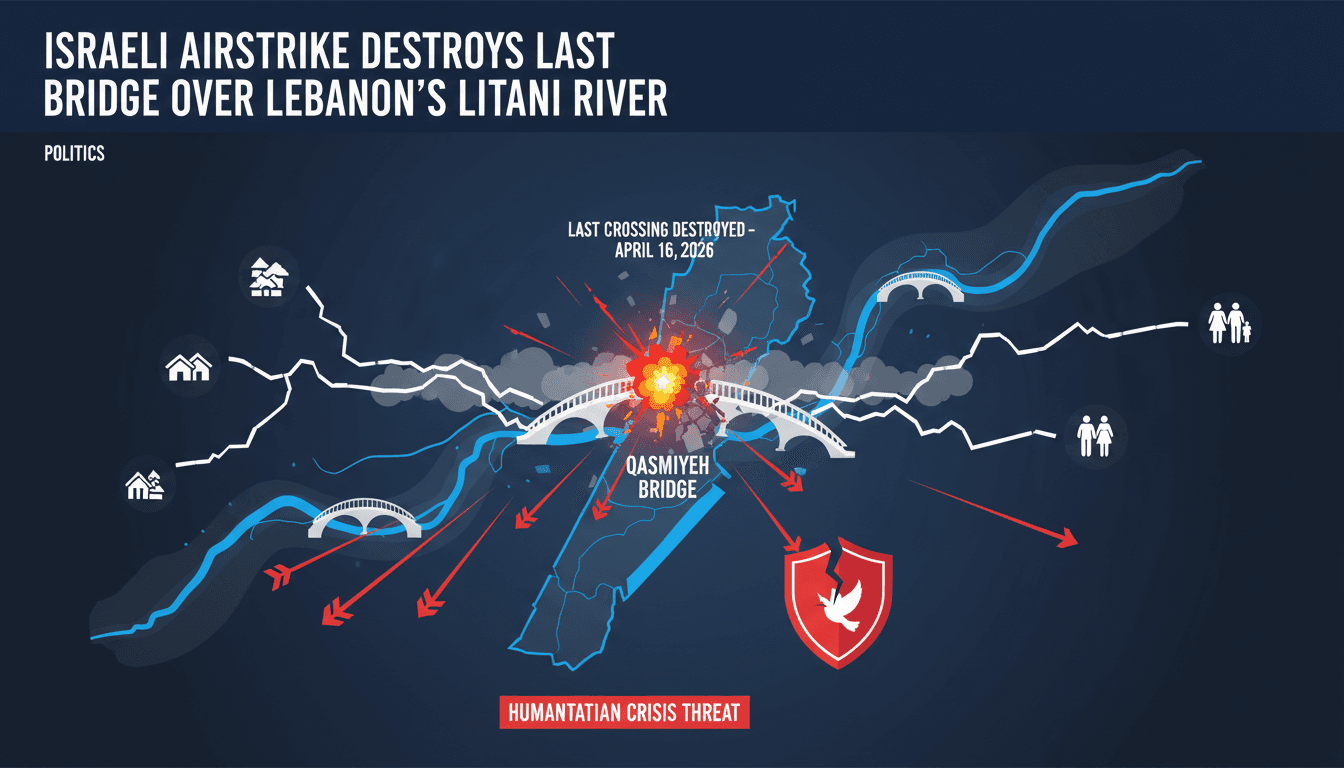
- On April 16, 2026, an Israeli airstrike destroyed the Qasmiyeh Bridge, the last operational crossing over Lebanon's Litani River.
- The strike is part of a broader Israeli campaign against Hezbollah, aimed at crippling their supply routes and military movement.
- Following the airstrike, a makeshift crossing was established after a U.S.-brokered ceasefire, but conditions remain dire for displaced residents.
The context you actually need
- Israel has systematically targeted bridges over the Litani River since March 2026, destroying or damaging at least nine major crossings.
- The Qasmiyeh Bridge was previously damaged on April 8, making its complete destruction a significant escalation in the conflict.
- Lebanese authorities reported casualties from the airstrike, highlighting the human cost of the ongoing military operations.
What's really happening
The Israeli airstrike on the Qasmiyeh Bridge is a critical component of Israel's military strategy against Hezbollah, which has been intensifying since early March 2026. The Litani River serves as a strategic demarcation line, and control over crossings is vital for both military logistics and civilian access. By targeting infrastructure, Israel aims to disrupt Hezbollah's operational capabilities, which rely on the movement of supplies and personnel across the river.
The destruction of the Qasmiyeh Bridge, the last remaining operational crossing, has significant implications for the civilian population in southern Lebanon. With the bridge gone, access to essential services, food, and medical supplies is severely hampered. The Lebanese Army's establishment of a makeshift crossing indicates the urgent need for mobility, but conditions remain precarious for those displaced by the conflict.
The broader context includes a U.S.-brokered ceasefire that has temporarily halted hostilities, yet violations have already been reported. The ceasefire's effectiveness will be crucial in determining the immediate future of the region. If it holds, it may allow for humanitarian aid to reach affected areas, but the underlying tensions between Israel and Hezbollah remain unresolved.
Moreover, the airstrike's timing coincides with a period of heightened regional volatility, which could influence global oil prices. As the conflict escalates, concerns about supply disruptions may lead to fluctuations in oil markets, impacting economies far beyond the Middle East. For instance, oil prices saw a decline on April 17 amid hopes for a ceasefire, but any resurgence in conflict could reverse this trend.
In summary, the destruction of the Qasmiyeh Bridge is not just a localized event; it is a catalyst for broader regional instability, affecting civilian lives, military strategies, and global economic conditions.
Who feels it first (and how)
- Lebanese civilians: Directly impacted by the loss of access to essential services and increased danger from ongoing military operations.
- Hezbollah: Faces operational challenges due to disrupted supply routes and increased Israeli military pressure.
- UAE expatriates: Approximately 250,000 Lebanese expatriates in the UAE may experience anxiety over family safety and disrupted remittances.
- Global oil markets: Traders and investors will closely monitor the situation for potential impacts on oil supply and prices.
What to watch next
- Ceasefire durability: Monitoring the effectiveness of the U.S.-brokered ceasefire will be crucial in assessing immediate humanitarian needs and regional stability.
- Oil price fluctuations: Watch for changes in oil prices as the conflict evolves, which could affect global markets and economic conditions.
- Humanitarian aid access: The ability of aid organizations to reach affected populations will indicate the severity of the humanitarian crisis and the international response.
The Qasmiyeh Bridge is irreparably destroyed, impacting civilian access and military logistics.
Continued tensions between Israel and Hezbollah, with potential for further military actions.
The long-term effects on regional stability and global oil prices as the situation develops.
Frequently Asked Questions
- Why it matters?
- This airstrike exacerbates tensions in the Middle East, potentially influencing energy markets and international relations.
- What happened (in 30 seconds)?
- On April 16, 2026, an Israeli airstrike destroyed the Qasmiyeh Bridge, the last operational crossing over Lebanon's Litani River. The strike is part of a broader Israeli campaign against Hezbollah, aimed at crippling their supply routes and military movement. Following the airstrike, a makeshift crossing was established after a U.S.-brokered ceasefire, but conditions remain dire for displaced residents.
- What's really happening?
- The Israeli airstrike on the Qasmiyeh Bridge is a critical component of Israel's military strategy against Hezbollah, which has been intensifying since early March 2026. The Litani River serves as a strategic demarcation line, and control over crossings is vital for both military logistics and civilian access. By targeting infrastructure, Israel aims to disrupt Hezbollah's operational capabilities, which rely on the movement of supplies and personnel across the river. The destruction of the Qas
- Who feels it first (and how)?
- Lebanese civilians: Directly impacted by the loss of access to essential services and increased danger from ongoing military operations. Hezbollah: Faces operational challenges due to disrupted supply routes and increased Israeli military pressure. UAE expatriates: Approximately 250,000 Lebanese expatriates in the UAE may experience anxiety over family safety and disrupted remittances. Global oil markets: Traders and investors will closely monitor the situation for potential impacts on oil
- What to watch next?
- Ceasefire durability: Monitoring the effectiveness of the U.S.-brokered ceasefire will be crucial in assessing immediate humanitarian needs and regional stability. Oil price fluctuations: Watch for changes in oil prices as the conflict evolves, which could affect global markets and economic conditions. Humanitarian aid access: The ability of aid organizations to reach affected populations will indicate the severity of the humanitarian crisis and the international response.
Global news coverage with extensive reporting on Middle Eastern conflicts and geopolitics.
"Al Jazeera is a Qatar-based broadcaster known for wide regional coverage and alternative perspectives."
— A47 Editor
Israeli strike destroys last working bridge over Lebanon’s Litani River
An Israeli airstrike has destroyed the last operational bridge over the Litani River in Lebanon, marking a significant escalation in the ongoing conflict in the region. This strike adds to the series of airstrikes that have resulted in extensive dest...
Comprehensive coverage of Middle Eastern and global issues.
"Al Jazeera is a prominent voice from the Global South, especially the Middle East, with an emphasis on underreported stories."
— A47 Editor
Israeli strike destroys last working bridge over Lebanon’s Litani River
An Israeli airstrike has destroyed the last operational bridge over the Litani River in Lebanon, marking a significant escalation in the ongoing conflict in the region. This strike adds to the series of airstrikes that have resulted in extensive dest...
Regional and international reporting focused on Middle Eastern politics, diplomacy, and economics.
"Asharq Al-Awsat is a Saudi-owned international newspaper reflecting mainstream Gulf political perspectives."
— A47 Editor
Israeli Strike Severs Last Bridge Linking Southern Lebanon to Rest of Country
An Israeli airstrike has destroyed the last bridge connecting southern Lebanon to the rest of the country, significantly isolating the region amid ongoing military conflict. This strike has rendered the bridge irreparable, further complicating the hu...
Pan-Arab news coverage spanning politics, business, sports, and regional affairs.
"Asharq Al-Awsat reflects a broad Arab editorial perspective with strong attention to regional geopolitics."
— A47 Editor
إسرائيل تقصف آخر جسر يربط جنوب لبنان ببقية البلاد
A senior Lebanese security official reported to Reuters that an Israeli airstrike targeted the last bridge connecting southern Lebanon to the rest of the country. This attack signifies a significant escalation in the ongoing conflict in the region, i...
Regional coverage and analysis focused on politics, diplomacy, and business across the Middle East.
"Al-Monitor is known for analytical reporting on Middle East politics and policy developments."
— A47 Editor
Israeli strike severs last bridge linking southern Lebanon to rest of country, Lebanese security official says
An Israeli airstrike has destroyed the last bridge connecting southern Lebanon to the rest of the country, as reported by a senior Lebanese security official. This strike has rendered the bridge irreparable, further isolating the region amid ongoing ...
Arabic-language UAE newspaper coverage focused on domestic affairs, public institutions, business, society, and regional developments.
"Al Khaleej coverage generally reflects a mainstream UAE editorial lens with strong attention to public affairs, institutions, and regional developments."
— A47 Editor
إسرائيل تدمر آخر جسر يربط جنوب لبنان ببقية البلاد (فيديو)
A senior Lebanese security official reported to Reuters that an Israeli strike targeted the Qasmiyeh bridge, marking the destruction of the last bridge connecting southern Lebanon to the rest of the country. This action underscores the ongoing tensio...