
U.S. Lawmakers Near Final Agreement on CLARITY Act Stablecoin Yield Provisions
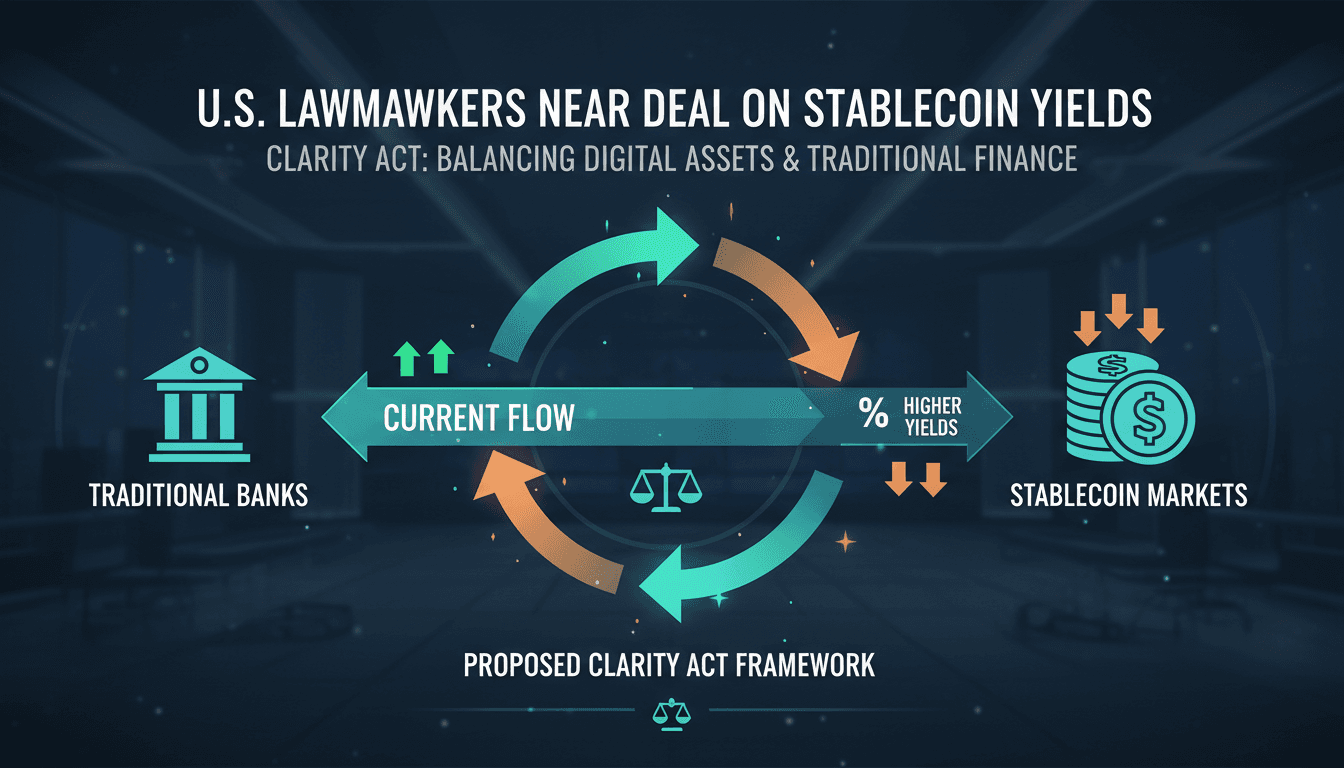
Here's what it means for you.
If you engage with digital assets, the outcome of these negotiations could reshape how you earn rewards on stablecoin holdings.
Why it matters
The resolution of yield restrictions on stablecoins could significantly influence the competitive landscape between traditional banks and crypto firms.
What happened (in 30 seconds)
- On April 16, 2026, U.S. lawmakers approached a deal on the CLARITY Act's stablecoin yield provisions, narrowing disputes to just a few key issues.
- The Senate Banking Committee, led by Senators Thom Tillis and Angela Alsobrooks, aims to ban passive yields on stablecoin balances while permitting activity-based rewards.
- Industry reactions are mixed, with some praising the compromises and others warning of potential regulatory arbitrage risks.
The context you actually need
- The CLARITY Act builds on the 2025 GENIUS Act, which established a federal framework for digital asset markets and required payment stablecoins to be fully backed by cash or short-term Treasuries.
- Negotiations stalled earlier in 2026 due to concerns from banks about deposit flight to crypto, leading to a push for yield restrictions that differentiate between passive and activity-based rewards.
- The stakes are high, with an estimated market capitalization of USD Coin at $78.6 billion, highlighting the significant financial implications of these regulations.
What's really happening
The ongoing negotiations surrounding the CLARITY Act's yield provisions reflect a broader struggle between traditional financial institutions and the rapidly evolving digital asset landscape. As lawmakers work to finalize the legislation, they are navigating a complex web of interests that includes banks, crypto firms, and consumers.
The primary contention lies in the definition and regulation of yields on stablecoin holdings. Banks are concerned that allowing passive yields could lead to a significant outflow of deposits, estimated at $6.6 trillion, as consumers might prefer the higher returns offered by stablecoins over traditional savings accounts. This fear has prompted banks to advocate for strict oversight and limitations on how stablecoins can generate yields.
Conversely, crypto firms argue that restricting yields could stifle innovation and limit the competitive advantages that digital assets can offer. The compromise reached by Senators Tillis and Alsobrooks aims to strike a balance by banning passive yields while allowing for activity-based rewards, such as loyalty programs and transaction incentives. This approach seeks to maintain the appeal of stablecoins without undermining the traditional banking system.
The involvement of industry leaders, such as Coinbase's Chief Legal Officer Paul Grewal and analysts from JPMorgan, underscores the high stakes of these negotiations. Grewal has indicated that negotiators are "very close to a deal," suggesting that a resolution may be imminent. Meanwhile, JPMorgan analysts view the potential passage of the CLARITY Act as a catalyst for the market, although they caution about the risks of regulatory arbitrage that could arise from the new framework.
As the Senate Banking Committee prepares for markup sessions, the outcome of these negotiations will likely set the tone for future regulatory approaches to digital assets. The implications extend beyond the U.S., as other countries observe how the U.S. navigates this complex regulatory landscape, potentially influencing their own policies on stablecoins and digital assets.
Who feels it first (and how)
- Banks: Concerned about deposit flight and the need for strict oversight on stablecoin yields.
- Crypto firms: Seeking to maintain competitive advantages and innovation opportunities through stablecoin rewards.
- Consumers: Potentially impacted by changes in how they earn rewards on stablecoin holdings, affecting their investment choices.
- Regulators: Tasked with balancing innovation in the digital asset space with the stability of traditional banking systems.
What to watch next
- Senate markup sessions: The outcomes of these sessions will clarify the final language of the CLARITY Act and its implications for stablecoin yields.
- Market reactions: Watch for shifts in the stablecoin market capitalization and consumer behavior as the regulatory landscape evolves.
- International regulatory responses: Other countries may adjust their own stablecoin regulations based on the U.S. approach, impacting global digital asset markets.
The CLARITY Act aims to establish a federal framework for digital asset markets.
A deal on yield provisions will be reached soon, influencing the competitive landscape between banks and crypto firms.
The long-term effects of these regulations on consumer behavior and market dynamics remain to be seen.
Frequently Asked Questions
- Why it matters?
- The resolution of yield restrictions on stablecoins could significantly influence the competitive landscape between traditional banks and crypto firms.
- What happened (in 30 seconds)?
- On April 16, 2026, U.S. lawmakers approached a deal on the CLARITY Act's stablecoin yield provisions, narrowing disputes to just a few key issues. The Senate Banking Committee, led by Senators Thom Tillis and Angela Alsobrooks, aims to ban passive yields on stablecoin balances while permitting activity-based rewards. Industry reactions are mixed, with some praising the compromises and others warning of potential regulatory arbitrage risks.
- What's really happening?
- The ongoing negotiations surrounding the CLARITY Act's yield provisions reflect a broader struggle between traditional financial institutions and the rapidly evolving digital asset landscape. As lawmakers work to finalize the legislation, they are navigating a complex web of interests that includes banks, crypto firms, and consumers. The primary contention lies in the definition and regulation of yields on stablecoin holdings. Banks are concerned that allowing passive yields could lead to a sig
- Who feels it first (and how)?
- Banks: Concerned about deposit flight and the need for strict oversight on stablecoin yields. Crypto firms: Seeking to maintain competitive advantages and innovation opportunities through stablecoin rewards. Consumers: Potentially impacted by changes in how they earn rewards on stablecoin holdings, affecting their investment choices. Regulators: Tasked with balancing innovation in the digital asset space with the stability of traditional banking systems.
- What to watch next?
- Senate markup sessions: The outcomes of these sessions will clarify the final language of the CLARITY Act and its implications for stablecoin yields. Market reactions: Watch for shifts in the stablecoin market capitalization and consumer behavior as the regulatory landscape evolves. International regulatory responses: Other countries may adjust their own stablecoin regulations based on the U.S. approach, impacting global digital asset markets.
Real-time updates, analysis, and reports on the blockchain and cryptocurrency sectors.
"Crypto News delivers real-time updates, analysis, and reports on the blockchain and cryptocurrency sectors."
— A47 Editor
CLARITY Act stablecoin deal nears as lawmakers resolve final yield fight
Negotiations surrounding the U.S. CLARITY Act, a significant bill aimed at establishing a regulatory framework for digital assets, are nearing completion as lawmakers resolve the final disputes over stablecoin yields. Analysts from JPMorgan report th...
News, analysis, and thought leadership focusing exclusively on Bitcoin.
"Bitcoin Magazine is one of the original publications devoted to Bitcoin, offering in-depth news, analysis, and commentary."
— A47 Editor
Crypto Legislation Nears Finish Line as JPMorgan Sees Breakthrough on Negotiations
Lawmakers in Washington are nearing a final agreement on the Digital Asset Market Clarity Act, with JPMorgan reporting significant progress in negotiations. This development indicates a potential resolution to ongoing discussions surrounding cryptocu...
Research, news, and analysis on blockchain startups, DeFi, and regulations.
"Crypto Briefing provides research, news, and analysis on blockchain startups, DeFi, and crypto regulations with investor-focused coverage."
— A47 Editor
CLARITY Act negotiations narrow to 2-3 issues, XRP price remains skeptical
Negotiations surrounding the CLARITY Act have narrowed down to 2-3 key issues, indicating potential regulatory changes that could impact the cryptocurrency market, particularly XRP. Despite this progress, market sentiment remains skeptical, limiting ...
Covers blockchain, cryptocurrency news, project analysis, and market insights.
"CoinDesk is a well-established cryptocurrency and blockchain news provider, offering comprehensive insights, market data, and industry research."
— A47 Editor
The CLARITY Act breakthrough: Why JPMorgan says the U.S. crypto rulebook is ‘close to completion’
Analysts at JPMorgan report that negotiations surrounding the CLARITY Act are nearing a breakthrough, with lawmakers resolving key disputes over stablecoin rewards and regulatory oversight. This development signals a potential finalization of the U.S...
News and analysis on Bitcoin, altcoins, and blockchain innovation.
"Bitcoinist delivers news and analysis on Bitcoin, altcoins, and blockchain innovation with a focus on market trends and industry updates."
— A47 Editor
Ripple CEO Sets May Timeline For CLARITY Act Approval Amid Stablecoin Yield Debate
Ripple CEO Brad Garlinghouse expressed increased confidence regarding the CLARITY Act, a significant cryptocurrency market structure bill, as Congress reconvened after the Easter recess. He indicated that May would be a crucial month for the bill's p...