
Iraq Halts Natural Gas Imports from Iran Amid Escalating US-Israel-Iran Conflict
Here's what it means for you.
Rising energy costs and potential supply chain disruptions could impact your business operations and living expenses.
Why it matters
This disruption exacerbates Iraq's ongoing energy crisis, affecting regional stability and energy prices globally.
What happened (in 30 seconds)
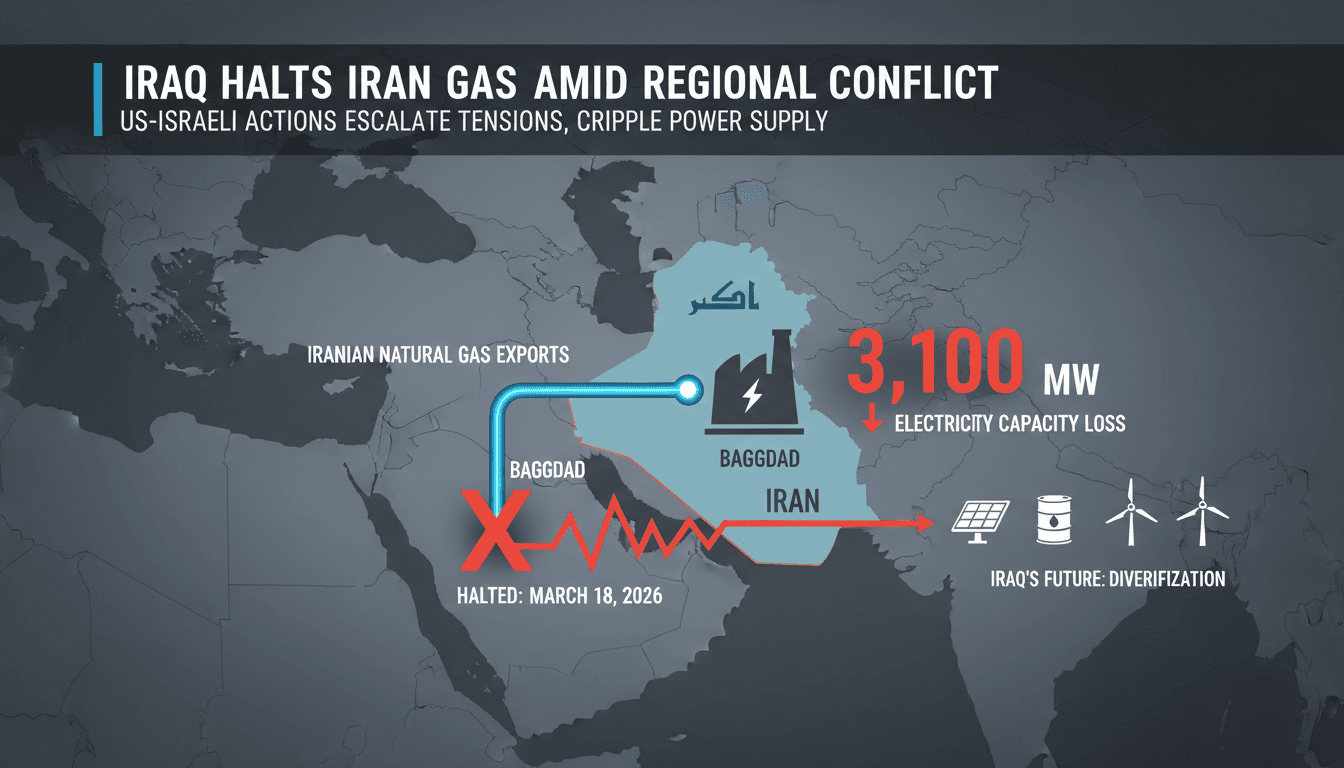
- On March 18, 2026, Iraq's natural gas imports from Iran were completely halted due to an Israeli strike on Iran's South Pars gas field.
- The interruption resulted in a loss of 3,100 megawatts of electricity capacity, worsening Iraq's power shortages.
- Iraq's Electricity Ministry is now transitioning to alternative fuels and domestic reserves to stabilize the grid.
The context you actually need
- Iraq relies heavily on Iranian natural gas, accounting for up to 40 percent of its power generation needs, despite having significant domestic reserves.
- The conflict escalated after US-Israeli strikes on Iranian facilities began on February 28, 2026, leading to reciprocal attacks on energy infrastructure.
- The South Pars gas field, a critical energy asset, was targeted, prompting Iran to halt gas exports to Iraq and further destabilizing the region's energy landscape.
What's really happening
The halt of Iranian natural gas exports to Iraq on March 18, 2026, is a significant escalation in the ongoing US-Israel-Iran conflict that began with airstrikes on February 28. This conflict has seen both sides targeting energy infrastructure, which is crucial for the economies of the involved nations. The Israeli strike on the South Pars gas field, which is shared with Qatar, was a pivotal moment that led to Iran's decision to stop gas exports to Iraq.
Iraq's reliance on Iranian gas is a result of its own domestic challenges, including corruption, outdated infrastructure, and technical limitations that have hindered the development of its energy sector. With the loss of 3,100 megawatts of electricity capacity, the Iraqi government is now facing an urgent crisis as summer approaches, when demand for electricity peaks due to high temperatures. The Electricity Ministry's response has been to seek alternative fuels and tap into domestic gas reserves, but these efforts may not be sufficient to meet the immediate energy needs of the population.
The broader implications of this disruption extend beyond Iraq. As Gulf states, including the UAE and Qatar, react to the escalating conflict and the resulting energy price surges, the entire region faces economic pressures. Global oil prices have already risen by over 5 percent in response to the conflict, indicating that the effects of this disruption will be felt far beyond Iraq's borders. Additionally, the closure of the Hormuz Strait, a critical chokepoint for global oil shipments, could exacerbate these price increases and lead to further instability in the energy market.
As Iraq attempts to stabilize its energy grid, the ongoing conflict and regional tensions will likely continue to impact energy prices and supply chains, affecting businesses and consumers alike. The situation remains fluid, and the potential for further escalation could lead to additional disruptions in the energy sector.
Who feels it first (and how)
- Iraqi citizens: Facing power shortages and potential blackouts during peak summer demand.
- Energy sector workers: Job instability as companies adjust to reduced gas supplies and seek alternative energy sources.
- Regional businesses: Increased operational costs due to rising energy prices and potential supply chain disruptions.
- Investors in Gulf markets: Heightened volatility and uncertainty impacting stock prices and investment strategies.
What to watch next
- Energy prices: Monitor fluctuations in global oil and gas prices, as further escalations in the conflict could lead to significant increases.
- Iraq's energy policy: Watch for announcements regarding alternative energy initiatives or partnerships to reduce reliance on Iranian gas.
- Regional diplomatic efforts: Observe any attempts at negotiations or ceasefires that could stabilize the situation and restore gas supplies.
Iraq has halted gas imports from Iran, resulting in a significant power deficit.
Energy prices will continue to rise as the conflict escalates and supply chains are disrupted.
The long-term impact on Iraq's energy infrastructure and the potential for a resolution to the conflict.
Frequently Asked Questions
- Why it matters?
- This disruption exacerbates Iraq's ongoing energy crisis, affecting regional stability and energy prices globally.
- What happened (in 30 seconds)?
- On March 18, 2026, Iraq's natural gas imports from Iran were completely halted due to an Israeli strike on Iran's South Pars gas field. The interruption resulted in a loss of 3,100 megawatts of electricity capacity, worsening Iraq's power shortages. Iraq's Electricity Ministry is now transitioning to alternative fuels and domestic reserves to stabilize the grid.
- What's really happening?
- The halt of Iranian natural gas exports to Iraq on March 18, 2026, is a significant escalation in the ongoing US-Israel-Iran conflict that began with airstrikes on February 28. This conflict has seen both sides targeting energy infrastructure, which is crucial for the economies of the involved nations. The Israeli strike on the South Pars gas field, which is shared with Qatar, was a pivotal moment that led to Iran's decision to stop gas exports to Iraq. Iraq's reliance on Iranian gas is a resu
- Who feels it first (and how)?
- Iraqi citizens: Facing power shortages and potential blackouts during peak summer demand. Energy sector workers: Job instability as companies adjust to reduced gas supplies and seek alternative energy sources. Regional businesses: Increased operational costs due to rising energy prices and potential supply chain disruptions. Investors in Gulf markets: Heightened volatility and uncertainty impacting stock prices and investment strategies.
- What to watch next?
- Energy prices: Monitor fluctuations in global oil and gas prices, as further escalations in the conflict could lead to significant increases. Iraq's energy policy: Watch for announcements regarding alternative energy initiatives or partnerships to reduce reliance on Iranian gas. Regional diplomatic efforts: Observe any attempts at negotiations or ceasefires that could stabilize the situation and restore gas supplies.
Regional and international reporting focused on Middle Eastern politics, diplomacy, and economics.
"Asharq Al-Awsat is a Saudi-owned international newspaper reflecting mainstream Gulf political perspectives."
— A47 Editor
Iraq’s Gas Imports from Iran Halted Due to War
Iraq has halted its gas imports from Iran due to ongoing military conflicts, particularly following an Israeli airstrike on Iran's South Pars gas field, which has disrupted gas flows and exacerbated Iraq's energy crisis.
UAE-based English-language newspaper covering regional politics, economics, and global affairs.
"The National reflects Emirati policy perspectives while maintaining international editorial standards."
— A47 Editor
Iraq suffers major power capacity loss as Iran halts gas flows after South Pars strike
Iraq is experiencing a significant loss in power capacity as Iran has halted gas flows following an Israeli airstrike on Iran's South Pars gas field. This disruption is exacerbating Iraq's ongoing energy crisis, which is already strained by the regio...
UAE-based English-language newspaper covering regional politics, economics, and global affairs.
"The National reflects Emirati policy perspectives while maintaining international editorial standards."
— A47 Editor
Iraq faces polycrisis as Iran war grinds its oil exports to a halt
Iraq is currently facing a severe polycrisis as the ongoing war in Iran has led to a complete halt of its oil exports, significantly impacting its economy and energy security. The conflict has disrupted supply chains and raised concerns about inflati...