
Iranian Agencies Indicate Possible IRGC Sea Mines in Strait of Hormuz Shipping Lanes
Here's what it means for you.
If you rely on global shipping routes, the recent developments in the Strait of Hormuz could lead to increased costs and delays in your supply chain.
Why it matters
The Strait of Hormuz is a critical chokepoint for global oil supplies, affecting energy prices and trade flows worldwide.
What happened (in 30 seconds)
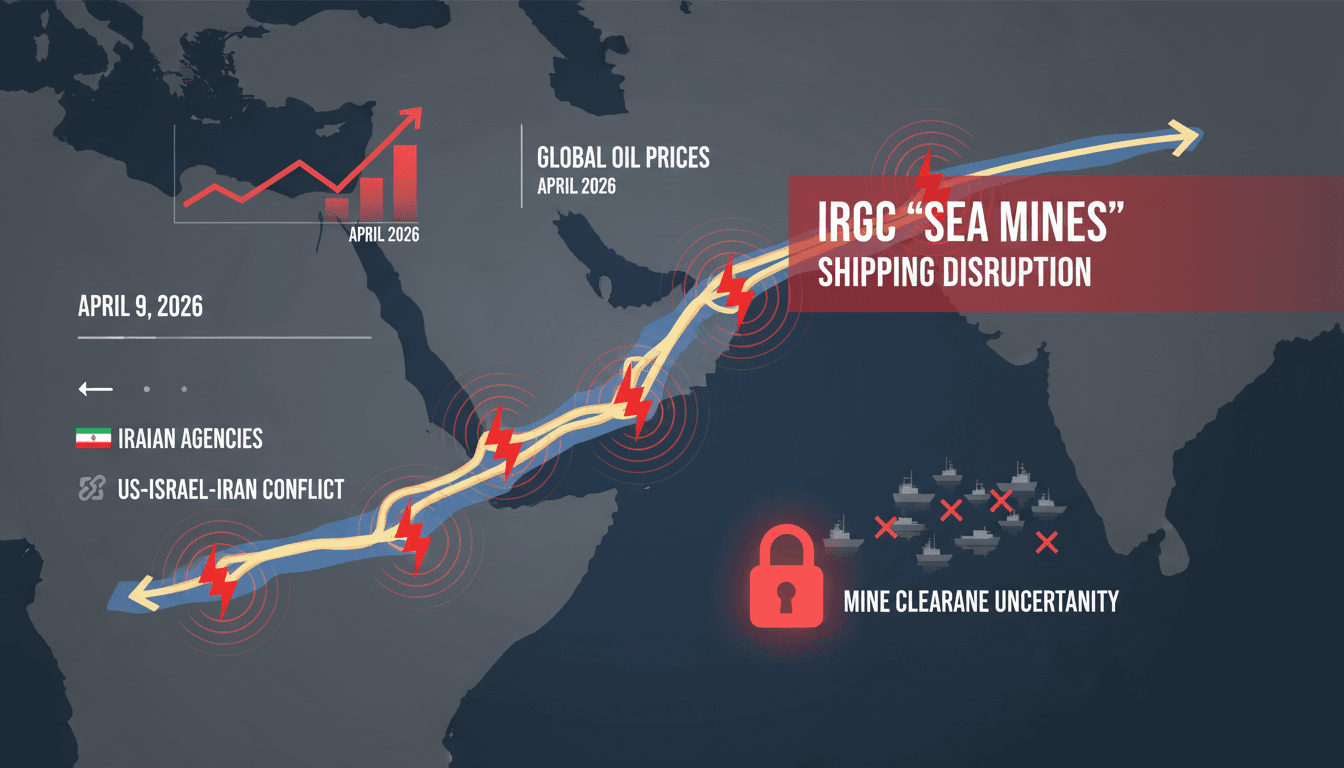
- On April 9, 2026, Iranian news agencies published a nautical chart indicating possible sea mines in the Strait of Hormuz, marking a 'danger zone' for shipping.
- The chart's release follows a fragile ceasefire after the 2026 US-Israel-Iran war, during which Iran restricted traffic through the strait, impacting over 90% of shipping.
- Oil prices rose by 3% to over $97 per barrel amid skepticism about the safety of shipping routes and the potential for further conflict.
The context you actually need
- The Strait of Hormuz is vital for global energy, with approximately 20 million barrels per day, or 20-25% of the world's seaborne oil trade, transiting through it.
- Tensions escalated following the killing of Iran's Supreme Leader Ali Khamenei in February 2026, leading to military actions and retaliatory measures that severely disrupted shipping.
- Iran's Revolutionary Guard Corps (IRGC) has maintained control over the strait, proposing tolls for alternative routes, which could further complicate international shipping logistics.
What's really happening
The recent publication of a nautical chart by Iranian semiofficial agencies indicating potential sea mines in the Strait of Hormuz is a significant escalation in a series of events that have unfolded since the onset of the 2026 US-Israel-Iran war. Following the death of Supreme Leader Ali Khamenei on February 28, 2026, Iran's military response included missile strikes and the closure of the strait, a critical maritime passage for global oil transport.
The IRGC's actions, including the deployment of mines and attacks on merchant vessels, have led to a drastic reduction in shipping traffic, with reports indicating a drop of over 90%. This disruption has not only impacted oil prices, which have surged in response to fears of supply shortages, but has also raised questions about the safety and reliability of maritime routes in the region.
The chart published on April 9 marks a 'danger zone' over the Traffic Separation Scheme, suggesting that vessels should consider alternative routes near Larak Island, closer to Iran's coast. This recommendation comes amid a fragile ceasefire that was only recently agreed upon, highlighting the precarious nature of the situation. The IRGC's control over the strait and its proposal for tolls exceeding $1 million per ship for using alternative routes indicate a strategy to exert economic pressure while maintaining military leverage.
The implications of these developments are profound. Shipping firms are now hesitant to transit through the strait without verification of mine clearance, leading to a trickle of vessels attempting the route. This uncertainty is likely to exacerbate supply chain delays and increase operational costs for businesses reliant on timely shipments. Furthermore, the geopolitical landscape remains tense, with the potential for further military engagements as the US and its allies push for a full reopening of the strait.
In summary, the situation in the Strait of Hormuz is not just a regional issue; it has far-reaching consequences for global trade, energy prices, and the stability of international shipping routes. The interplay of military actions, economic pressures, and geopolitical maneuvering will continue to shape the dynamics of this critical maritime corridor.
Who feels it first (and how)
- Shipping companies: Facing increased operational costs and delays due to uncertainty in safe passage.
- Energy sector: Oil producers and consumers will experience price fluctuations and supply chain disruptions.
- Dubai and UAE residents: Economic strain from disrupted shipping and increased costs of goods due to reliance on limited transportation routes.
- Global markets: Investors and businesses will react to rising oil prices and geopolitical instability, affecting stock prices and market confidence.
What to watch next
- Shipping traffic levels: Monitor the number of vessels transiting the Strait of Hormuz, as a significant decrease could indicate ongoing risks.
- Oil price fluctuations: Keep an eye on oil prices, which may rise further if tensions escalate or shipping routes remain compromised.
- Geopolitical developments: Watch for any military actions or diplomatic negotiations that could impact the ceasefire and the reopening of the strait.
The Strait of Hormuz is a critical chokepoint for global oil supplies, with significant implications for energy prices.
Continued tensions between Iran and the US/Israel will affect shipping routes and operational costs for businesses.
The long-term effectiveness of the ceasefire and whether Iran will maintain its current strategy regarding maritime control.
Frequently Asked Questions
- Why it matters?
- The Strait of Hormuz is a critical chokepoint for global oil supplies, affecting energy prices and trade flows worldwide.
- What happened (in 30 seconds)?
- On April 9, 2026, Iranian news agencies published a nautical chart indicating possible sea mines in the Strait of Hormuz, marking a 'danger zone' for shipping. The chart's release follows a fragile ceasefire after the 2026 US-Israel-Iran war, during which Iran restricted traffic through the strait, impacting over 90% of shipping. Oil prices rose by 3% to over $97 per barrel amid skepticism about the safety of shipping routes and the potential for further conflict.
- What's really happening?
- The recent publication of a nautical chart by Iranian semiofficial agencies indicating potential sea mines in the Strait of Hormuz is a significant escalation in a series of events that have unfolded since the onset of the 2026 US-Israel-Iran war. Following the death of Supreme Leader Ali Khamenei on February 28, 2026, Iran's military response included missile strikes and the closure of the strait, a critical maritime passage for global oil transport. The IRGC's actions, including the deployme
- Who feels it first (and how)?
- Shipping companies: Facing increased operational costs and delays due to uncertainty in safe passage. Energy sector: Oil producers and consumers will experience price fluctuations and supply chain disruptions. Dubai and UAE residents: Economic strain from disrupted shipping and increased costs of goods due to reliance on limited transportation routes. Global markets: Investors and businesses will react to rising oil prices and geopolitical instability, affecting stock prices and market con
- What to watch next?
- Shipping traffic levels: Monitor the number of vessels transiting the Strait of Hormuz, as a significant decrease could indicate ongoing risks. Oil price fluctuations: Keep an eye on oil prices, which may rise further if tensions escalate or shipping routes remain compromised. Geopolitical developments: Watch for any military actions or diplomatic negotiations that could impact the ceasefire and the reopening of the strait.
24/7 international news from a French perspective in multiple languages.
"France 24 is viewed as a globally focused outlet with balanced coverage and a European perspective."
— A47 Editor
Chart shows Iran may have put sea mines in Strait of Hormuz
Semiofficial news agencies in Iran released a chart indicating that the paramilitary Revolutionary Guard may have deployed sea mines in the Strait of Hormuz during ongoing conflicts. This announcement comes amid a fragile two-week ceasefire with the ...
Regional and international reporting focused on Middle Eastern politics, diplomacy, and economics.
"Asharq Al-Awsat is a Saudi-owned international newspaper reflecting mainstream Gulf political perspectives."
— A47 Editor
Iran Publishes Chart Showing It May Have Put Sea Mines in Strait of Hormuz as Shaky Ceasefire Holds
Iran has published a chart indicating the potential placement of sea mines in the Strait of Hormuz, coinciding with a fragile ceasefire in the ongoing US-Iran conflict. This development raises concerns about maritime safety and the stability of a cru...
English-language reporting on Saudi politics, policy, and society.
"Saudi Gazette reflects mainstream Saudi institutional perspectives."
— A47 Editor
Iran flags mine risk in Hormuz Strait, designates alternative routes
Iran has announced alternative routes for vessels transiting through the Strait of Hormuz due to the risk of sea mines in the area, as stated by the Revolutionary Guards. This decision aims to enhance maritime safety and prevent potential collisions ...