
Kremlin Warns of Escalating Conflict in Middle East Amid US-Israel-Iran Tensions
Here's what it means for you.
Your travel plans and daily expenses may be impacted as tensions in the Middle East escalate.
Why it matters
The ongoing conflict threatens global energy supplies and economic stability, affecting markets worldwide.
What happened (in 30 seconds)
- Kremlin spokesman Dmitry Peskov described the Middle East as "on fire" amid escalating US-Israel-Iran tensions.
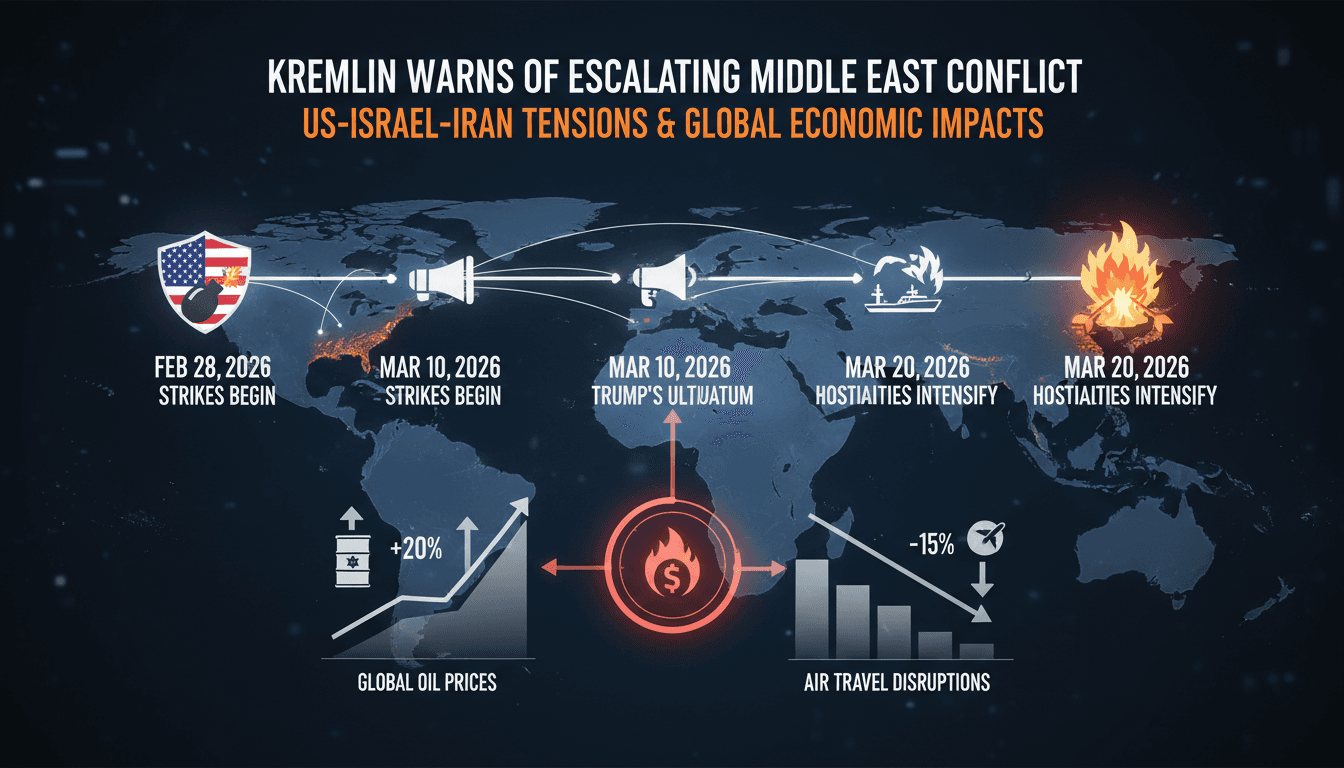
- US and Israeli forces initiated a military campaign against Iran on February 28, 2026, leading to retaliatory strikes from Iran and its proxies.
- US President Donald Trump issued an ultimatum to Iran regarding the Strait of Hormuz, heightening the risk of further military engagement.
The context you actually need
- The conflict stems from long-standing tensions between the US, Israel, and Iran, with military exchanges dating back to 2024 and 2025.
- The US-Israeli airstrikes on February 28 targeted critical Iranian infrastructure, aiming to weaken Iran's military capabilities.
- Iran's response involved missile and drone attacks on Israel and Gulf allies, escalating the conflict's geographical scope and economic implications.
What's really happening
The current escalation of hostilities in the Middle East is rooted in a complex web of geopolitical tensions that have been building for years. The US and Israel launched a coordinated military campaign against Iran on February 28, 2026, executing approximately 900 airstrikes aimed at crippling Iran's nuclear facilities and military infrastructure. This aggressive strategy is seen as an attempt to counter Iran's growing influence in the region, particularly through its support of proxy groups like Hezbollah in Lebanon and the Houthis in Yemen.
In retaliation, Iran has unleashed a series of missile and drone strikes targeting not only Israel but also US military bases and Gulf states allied with the US. This response is part of a broader strategy to demonstrate Iran's capability and resolve in the face of external aggression. The involvement of proxies has expanded the conflict's geographical footprint, drawing in multiple actors and increasing the risk of a wider regional war.
The situation is further complicated by the Strait of Hormuz, a critical chokepoint for global oil shipments. Iran has partially closed this strait, which has already led to significant disruptions in oil supply and price surges, with prices exceeding $115 per barrel. This has triggered a ripple effect through global markets, leading to increased fuel costs and economic uncertainty.
As the conflict continues, the Trump administration has signaled a willingness to maintain military pressure on Iran, with President Trump issuing an ultimatum demanding the reopening of the Strait of Hormuz by April 8. Failure to comply could result in further military action, escalating the conflict even more. Meanwhile, Russia has stepped in, advocating for de-escalation and proposing ceasefire negotiations, though Iran has denied direct talks with the US.
The implications of this conflict extend beyond military engagements; they are felt in global economic markets, particularly in energy prices and air travel. With thousands of flights canceled across the Middle East and rising jet fuel costs, the economic pressures are mounting for both businesses and consumers worldwide.
Who feels it first (and how)
- Travelers: Disrupted air travel with thousands of flight cancellations, particularly affecting Dubai residents.
- Airlines: Increased operational costs due to soaring jet fuel prices, leading to fare hikes.
- Expatriates: Rising living costs and economic pressures due to fluctuating oil prices impacting daily expenses.
- Investors: Heightened uncertainty in energy markets prompting reviews of sovereign investments in Gulf states.
What to watch next
- Oil price trends: Monitor fluctuations in oil prices as they directly impact global economic stability and consumer costs.
- Military developments: Keep an eye on any escalations in military engagements or diplomatic efforts for ceasefire, which could shift the conflict's trajectory.
- Travel advisories: Watch for updates on travel restrictions and flight availability, especially in the Middle East, as the situation evolves.
The conflict has led to significant disruptions in air travel and rising oil prices.
Continued military engagement and economic repercussions as both sides remain entrenched in their positions.
The potential for a diplomatic resolution or a broader regional war involving additional countries.
Frequently Asked Questions
- Why it matters?
- The ongoing conflict threatens global energy supplies and economic stability, affecting markets worldwide.
- What happened (in 30 seconds)?
- Kremlin spokesman Dmitry Peskov described the Middle East as "on fire" amid escalating US-Israel-Iran tensions. US and Israeli forces initiated a military campaign against Iran on February 28, 2026, leading to retaliatory strikes from Iran and its proxies. US President Donald Trump issued an ultimatum to Iran regarding the Strait of Hormuz, heightening the risk of further military engagement.
- What's really happening?
- The current escalation of hostilities in the Middle East is rooted in a complex web of geopolitical tensions that have been building for years. The US and Israel launched a coordinated military campaign against Iran on February 28, 2026, executing approximately 900 airstrikes aimed at crippling Iran's nuclear facilities and military infrastructure. This aggressive strategy is seen as an attempt to counter Iran's growing influence in the region, particularly through its support of proxy groups li
- Who feels it first (and how)?
- Travelers: Disrupted air travel with thousands of flight cancellations, particularly affecting Dubai residents. Airlines: Increased operational costs due to soaring jet fuel prices, leading to fare hikes. Expatriates: Rising living costs and economic pressures due to fluctuating oil prices impacting daily expenses. Investors: Heightened uncertainty in energy markets prompting reviews of sovereign investments in Gulf states.
- What to watch next?
- Oil price trends: Monitor fluctuations in oil prices as they directly impact global economic stability and consumer costs. Military developments: Keep an eye on any escalations in military engagements or diplomatic efforts for ceasefire, which could shift the conflict's trajectory. Travel advisories: Watch for updates on travel restrictions and flight availability, especially in the Middle East, as the situation evolves.
RT is a Russian state-funded network covering global events from a Russian perspective.
"RT is widely criticized for promoting pro-Kremlin narratives and is considered by many to be a state propaganda outlet."
— A47 Editor
Middle East is ‘on fire’ – Kremlin
Kremlin spokesman Dmitry Peskov has declared that the Middle East is 'on fire' following recent US-Israeli airstrikes on Iran, which have resulted in significant casualties and heightened military tensions in the region. The strikes have reportedly t...
Regional coverage and analysis focused on politics, diplomacy, and business across the Middle East.
"Al-Monitor is known for analytical reporting on Middle East politics and policy developments."
— A47 Editor
Kremlin says the whole Middle East is 'on fire'
The Kremlin has declared that the entire Middle East is 'on fire' amid escalating tensions due to U.S. and Israeli military actions against Iran. President Donald Trump has issued a stark ultimatum, demanding the reopening of the strategically vital ...
Oil, metals, and agriculture: supply/demand headlines, OPEC chatter, inventories, and price action.
"Solid tape for energy and metals traders tracking macro and micro catalysts."
— A47 Editor
Kremlin says the whole Middle East is ’on fire’
The Kremlin has declared that the entire Middle East is 'on fire,' reflecting escalating tensions and conflicts in the region. This statement underscores the severity of the situation, particularly in light of ongoing hostilities that have significan...