
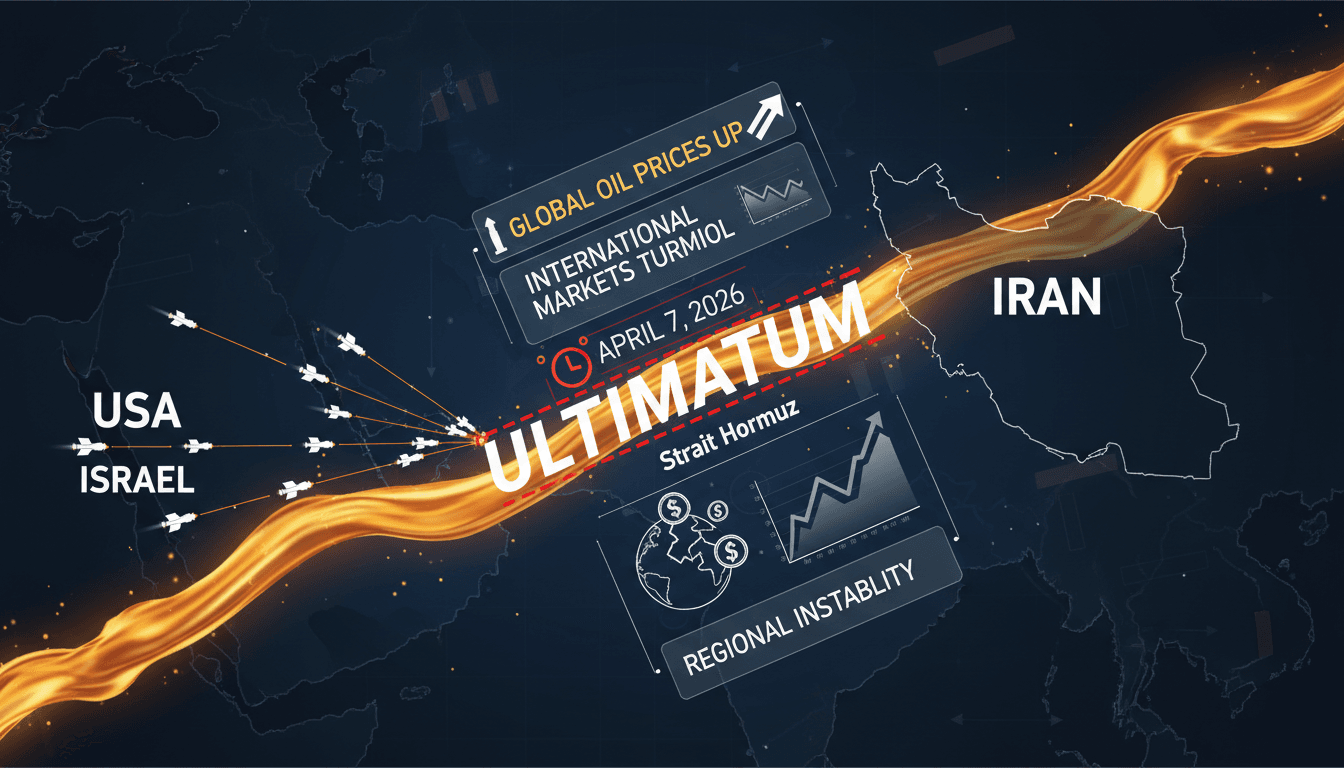
Trump Issues Ultimatum to Iran Over Strait of Hormuz Amid Ongoing Conflict
Here's what it means for you.
As tensions escalate in the Strait of Hormuz, your fuel costs and global supply chains are at risk of significant disruption.
Why it matters
The Strait of Hormuz is a critical maritime chokepoint, with 20% of the world's oil passing through, making any conflict here a potential catalyst for global economic instability.
What happened (in 30 seconds)
- Trump issued a stark ultimatum to Iran, threatening to destroy its infrastructure if the Strait of Hormuz remains closed by April 8.
- Iran rejected a ceasefire proposal and continues missile exchanges with Israel and Gulf states, escalating military tensions.
- Over 3,600 fatalities have been reported from ongoing U.S.-Israeli airstrikes on Iranian targets since February 28, 2026.
The context you actually need
- The conflict began on February 28, 2026, with U.S.-Israeli airstrikes targeting Iranian military sites, prompting Iran to blockade the Strait of Hormuz.
- Iran's missile and drone attacks on Israel and Gulf states have intensified, with U.S. threats directed at civilian infrastructure.
- Failed UN resolutions for maritime protection highlight the geopolitical complexities, particularly due to Chinese opposition.
What's really happening
The ongoing crisis in the Strait of Hormuz stems from a complex interplay of military aggression, geopolitical maneuvering, and economic stakes. Since February 28, 2026, the U.S. and Israel have conducted extensive airstrikes against Iranian military and infrastructure targets, resulting in significant casualties, including over 3,600 deaths, with a substantial number being civilians. This military action has been framed by the U.S. as a necessary response to Iran's perceived threats, particularly regarding its nuclear program and regional proxy activities.
Iran's blockade of the Strait of Hormuz—a vital artery for global oil transport—has escalated tensions further. The strait is crucial, with approximately 20% of the world's oil transiting through it. The Iranian government has responded to the strikes and blockade by launching missile attacks against Israel and Gulf states, which have been intercepted but demonstrate Iran's willingness to escalate the conflict. The situation has been exacerbated by Trump's ultimatum, which dismisses concerns over potential war crimes, indicating a willingness to escalate military action significantly if Iran does not comply.
The U.S. and its allies, particularly Israel and Saudi Arabia, are motivated by a desire to curb Iran's influence in the region, which they view as destabilizing. This includes Iran's support for militant groups like Hezbollah and the Houthis, which have engaged in proxy conflicts against U.S. interests. The failure of the UN Security Council to pass resolutions for maritime protection, primarily due to Chinese opposition, reflects the broader geopolitical rifts that complicate the situation.
As the deadline approaches, the stakes are high. Iran has rejected a proposed 45-day ceasefire, demanding a permanent end to hostilities, which indicates a lack of willingness to negotiate under current conditions. The potential for further military escalation looms large, with Trump’s threats to destroy Iranian infrastructure if the strait remains closed signaling a drastic shift in U.S. policy that could have far-reaching implications.
The economic ramifications are already being felt, with oil prices surging past $115 per barrel. This spike is likely to impact global markets, leading to inflationary pressures and increased costs for consumers worldwide. Countries reliant on oil imports, such as Australia, South Korea, and the Philippines, are already seeking alternative supplies, indicating a shift in global supply chains that could have lasting effects.
Who feels it first (and how)
- Consumers: Rising fuel prices will directly impact household budgets and transportation costs.
- Businesses: Industries reliant on oil and gas will face increased operational costs, potentially leading to higher prices for goods and services.
- Investors: Volatility in oil markets may lead to mixed signals in stock markets, affecting investment strategies.
- Geopolitical analysts: Increased scrutiny on Middle Eastern policies and military strategies will heighten demand for expert analysis and forecasting.
- Dubai residents: Proximity to conflict zones means potential disruptions and safety concerns, as evidenced by recent incidents involving intercepted projectiles.
What to watch next
- Oil prices: Monitor fluctuations in oil prices as they will indicate the market's response to ongoing military actions and geopolitical developments.
- Diplomatic negotiations: Watch for any shifts in diplomatic efforts, particularly regarding ceasefire proposals or sanctions relief, which could alter the trajectory of the conflict.
- Military escalations: Keep an eye on the frequency and intensity of military strikes and retaliations, as these will signal the likelihood of further conflict or potential resolutions.
The Strait of Hormuz is critical for global oil transit, and any conflict here will impact oil prices and supply chains.
Continued military action and retaliatory strikes will persist until a diplomatic resolution is reached or one side capitulates.
The long-term implications for U.S.-Iran relations and regional stability remain uncertain, particularly with external influences from other global powers.
Frequently Asked Questions
- Why it matters?
- The Strait of Hormuz is a critical maritime chokepoint, with 20% of the world's oil passing through, making any conflict here a potential catalyst for global economic instability.
- What happened (in 30 seconds)?
- Trump issued a stark ultimatum to Iran, threatening to destroy its infrastructure if the Strait of Hormuz remains closed by April 8. Iran rejected a ceasefire proposal and continues missile exchanges with Israel and Gulf states, escalating military tensions. Over 3,600 fatalities have been reported from ongoing U.S.-Israeli airstrikes on Iranian targets since February 28, 2026.
- What's really happening?
- The ongoing crisis in the Strait of Hormuz stems from a complex interplay of military aggression, geopolitical maneuvering, and economic stakes. Since February 28, 2026, the U.S. and Israel have conducted extensive airstrikes against Iranian military and infrastructure targets, resulting in significant casualties, including over 3,600 deaths, with a substantial number being civilians. This military action has been framed by the U.S. as a necessary response to Iran's perceived threats, particular
- Who feels it first (and how)?
- Consumers: Rising fuel prices will directly impact household budgets and transportation costs. Businesses: Industries reliant on oil and gas will face increased operational costs, potentially leading to higher prices for goods and services. Investors: Volatility in oil markets may lead to mixed signals in stock markets, affecting investment strategies. Geopolitical analysts: Increased scrutiny on Middle Eastern policies and military strategies will heighten demand for expert analysis and f
- What to watch next?
- Oil prices: Monitor fluctuations in oil prices as they will indicate the market's response to ongoing military actions and geopolitical developments. Diplomatic negotiations: Watch for any shifts in diplomatic efforts, particularly regarding ceasefire proposals or sanctions relief, which could alter the trajectory of the conflict. Military escalations: Keep an eye on the frequency and intensity of military strikes and retaliations, as these will signal the likelihood of further conflict or p
International coverage from The Guardian's global desks.
"The Guardian is known for its progressive editorial stance and in-depth analysis."
— A47 Editor
Middle East crisis live: Iran war ceasefire doesn’t include Lebanon, says Israel; Trump says uranium will be ‘taken care of’
A provisional ceasefire has been agreed upon between the U.S. and Iran, allowing for the reopening of the Strait of Hormuz for two weeks, despite Israel's assertion that the ceasefire does not extend to Lebanon. This agreement follows escalating tens...
European coverage of Middle East politics and security issues.
"France 24 offers international reporting with a European editorial perspective."
— A47 Editor
Trump's threatened destruction of Iranian infrastructure could be a war crime, legal experts say
U.S. President Donald Trump has threatened to bomb Iranian infrastructure, including bridges and power plants, if Iran does not comply with demands to reopen the Strait of Hormuz by a specified deadline. Legal experts warn that such actions could con...
Coverage of current events and conflicts in the Middle East.
"France 24 is viewed as a globally focused outlet with balanced coverage and a European perspective."
— A47 Editor
Trump's threatened destruction of Iranian infrastructure could be a war crime, legal experts say
U.S. President Donald Trump has threatened to bomb Iranian infrastructure, including bridges and power plants, if Iran does not comply with demands to reopen the Strait of Hormuz by a specified deadline. Legal experts warn that such actions could con...