
Yair Lapid Criticizes US-Iran Ceasefire as Political Disaster Due to Israeli Exclusion from Negotiations
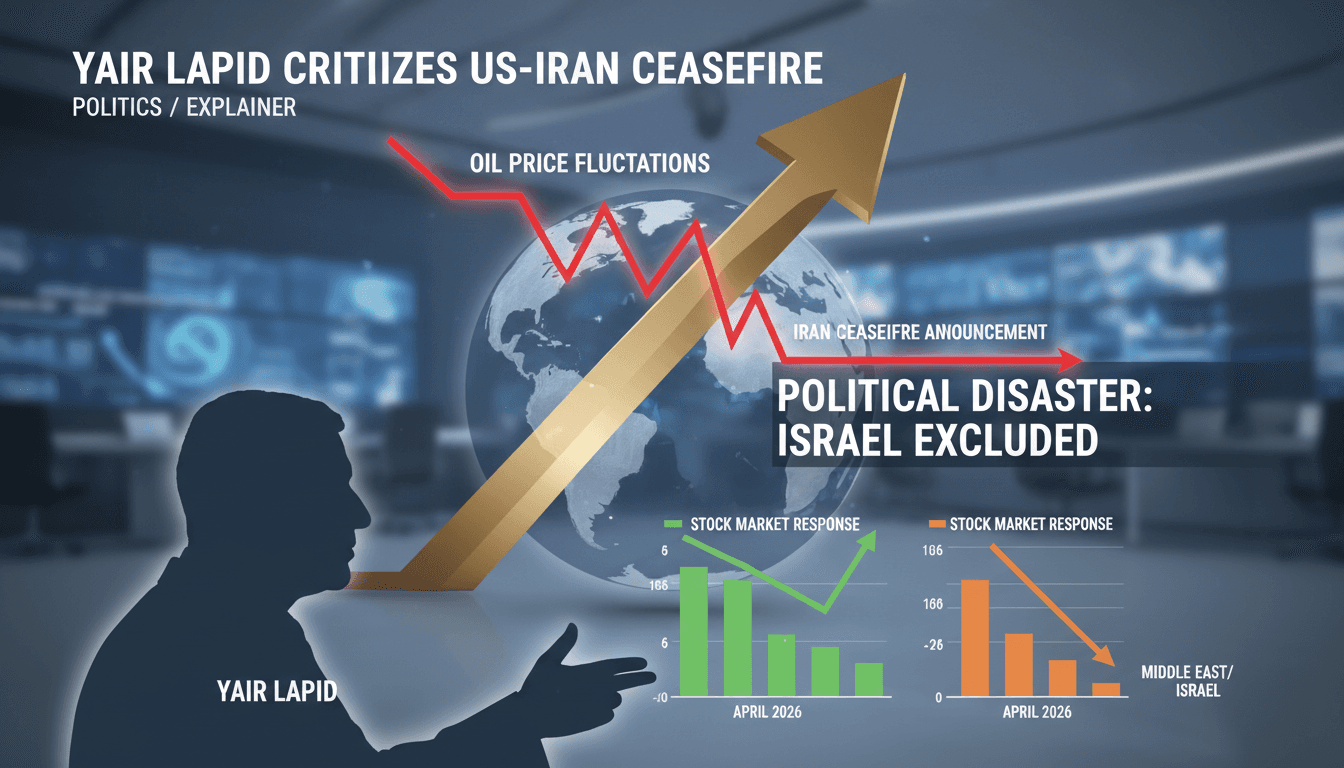
Here's what it means for you.
If you're navigating global markets or energy sectors, the fallout from this ceasefire could reshape pricing and investment strategies.
Why it matters
This ceasefire has significant implications for global oil prices and geopolitical stability in the Middle East.
What happened (in 30 seconds)
- Yair Lapid, Israeli opposition leader, criticized the US-Iran ceasefire as a "political disaster" due to Israel's exclusion from negotiations.
- US President Donald Trump announced the ceasefire on April 7, 2026, following a five-week military campaign against Iran.
- Global oil prices plummeted by 17% immediately after the ceasefire announcement, impacting markets worldwide.
The context you actually need
- The conflict escalated after Iran's blockade of the Strait of Hormuz, disrupting 20% of global oil trade and prompting US military action.
- Negotiations for the ceasefire were facilitated by Pakistani mediation, with Iran presenting a 10-point peace plan.
- Israeli responses to the ceasefire announcement were divided, with opposition leaders blaming Netanyahu's leadership while coalition figures criticized Trump's approach.
What's really happening
The recent US-Iran ceasefire marks a critical juncture in Middle Eastern geopolitics, particularly for Israel, which has historically viewed Iran as a primary threat. The ceasefire, which suspends military strikes against Iran for two weeks, was announced by President Trump following a series of aggressive military actions aimed at curbing Iran's influence in the region. The backdrop of this ceasefire is a five-week military campaign initiated by the US and Israel, triggered by Iran's blockade of the Strait of Hormuz, a vital maritime corridor for global oil transport.
The ceasefire's announcement came after a series of US strikes targeting Iranian infrastructure, which were a response to Tehran's actions that threatened international oil trade. The US ultimatum issued on April 7, demanding compliance from Iran, set the stage for the ceasefire agreement, which was facilitated by Pakistan. However, the exclusion of Israel from these negotiations has sparked significant backlash from Israeli political leaders, particularly from Lapid, who argues that such decisions should include Israel, given its direct stake in the regional security landscape.
The immediate impact of the ceasefire was felt in global markets, with oil prices dropping by 17% as uncertainty around military conflict eased. This price drop is crucial, as it alleviates some of the economic pressures on countries dependent on oil imports and can lead to a ripple effect in energy costs globally. For Dubai, this meant a surge in the stock market, marking its largest intraday gain in six years, as the UAE's economy is closely tied to oil prices.
Looking ahead, the ceasefire is not merely a pause in hostilities; it is a strategic maneuver that could reshape alliances and power dynamics in the region. The upcoming negotiations scheduled in Islamabad on April 10 will be pivotal in determining the future trajectory of US-Iran relations and Israel's role in regional security discussions. The exclusion of Israel from these talks raises questions about its influence and the potential for future conflicts, especially if Iran perceives this as an opportunity to strengthen its position without Israeli opposition.
Who feels it first (and how)
- Energy sector professionals: Fluctuations in oil prices directly impact their operations and profitability.
- Investors in Gulf markets: Stock market reactions to geopolitical events can influence investment strategies and asset valuations.
- Israeli citizens: Political decisions regarding national security can affect public sentiment and stability within Israel.
What to watch next
- Upcoming negotiations in Islamabad: These talks will be crucial in shaping US-Iran relations and could lead to further agreements or escalations.
- Oil price trends: Continued monitoring of oil prices will indicate how the ceasefire impacts global markets and energy costs.
- Israeli political responses: Observing how Israeli leadership adapts to the exclusion from negotiations will provide insight into potential shifts in domestic policy and military strategy.
The ceasefire is currently active and has led to a significant drop in oil prices.
Future negotiations will influence the stability of US-Iran relations and Israel's strategic positioning.
The long-term effects of the ceasefire on regional security dynamics and Israeli public opinion remain uncertain.
Frequently Asked Questions
- Why it matters?
- This ceasefire has significant implications for global oil prices and geopolitical stability in the Middle East.
- What happened (in 30 seconds)?
- Yair Lapid, Israeli opposition leader, criticized the US-Iran ceasefire as a "political disaster" due to Israel's exclusion from negotiations. US President Donald Trump announced the ceasefire on April 7, 2026, following a five-week military campaign against Iran. Global oil prices plummeted by 17% immediately after the ceasefire announcement, impacting markets worldwide.
- What's really happening?
- The recent US-Iran ceasefire marks a critical juncture in Middle Eastern geopolitics, particularly for Israel, which has historically viewed Iran as a primary threat. The ceasefire, which suspends military strikes against Iran for two weeks, was announced by President Trump following a series of aggressive military actions aimed at curbing Iran's influence in the region. The backdrop of this ceasefire is a five-week military campaign initiated by the US and Israel, triggered by Iran's blockade o
- Who feels it first (and how)?
- Energy sector professionals: Fluctuations in oil prices directly impact their operations and profitability. Investors in Gulf markets: Stock market reactions to geopolitical events can influence investment strategies and asset valuations. Israeli citizens: Political decisions regarding national security can affect public sentiment and stability within Israel.
- What to watch next?
- Upcoming negotiations in Islamabad: These talks will be crucial in shaping US-Iran relations and could lead to further agreements or escalations. Oil price trends: Continued monitoring of oil prices will indicate how the ceasefire impacts global markets and energy costs. Israeli political responses: Observing how Israeli leadership adapts to the exclusion from negotiations will provide insight into potential shifts in domestic policy and military strategy.
Capitol Hill news, legislation, and policy insight.
"The Hill specializes in U.S. politics and policy, with a focus on Capitol Hill developments and a reputation for insider reporting."
— A47 Editor
Israeli opposition leader slams US-Iran ceasefire as 'political disaster'
Israeli opposition leader Yair Lapid has criticized the recently announced temporary ceasefire between the U.S. and Iran, labeling it a 'political disaster' and expressing concerns that Israel was not included in the negotiations that impact its nati...
English-language reporting on Saudi politics, policy, and society.
"Saudi Gazette reflects mainstream Saudi institutional perspectives."
— A47 Editor
Israel opposition leaders assail Netanyahu over Iran ceasefire
Israel's opposition leaders criticized Prime Minister Benjamin Netanyahu for agreeing to a ceasefire with Iran, claiming it represents a diplomatic failure and that Israel was excluded from key discussions affecting its national security. Opposition ...
Pan-Arab news coverage spanning politics, business, sports, and regional affairs.
"Asharq Al-Awsat reflects a broad Arab editorial perspective with strong attention to regional geopolitics."
— A47 Editor
زعيم المعارضة في إسرائيل: وقف إطلاق النار مع إيران «كارثة سياسية»
Israeli opposition leader Yair Lapid criticized the recent ceasefire agreement with Iran, labeling it an unprecedented political disaster. His remarks reflect deep concerns regarding the implications of such a deal on Israel's security and diplomatic...
Regional and international reporting focused on Middle Eastern politics, diplomacy, and economics.
"Asharq Al-Awsat is a Saudi-owned international newspaper reflecting mainstream Gulf political perspectives."
— A47 Editor
Israel Opposition Leaders Slam Netanyahu Over Ceasefire with Iran
Israeli opposition leaders have criticized Prime Minister Benjamin Netanyahu for his approach to a ceasefire with Iran, arguing that it undermines national security and emboldens adversaries. This criticism comes amid ongoing military operations and ...