
Israel Proposes Tripartite Security Zones in Southern Lebanon Amid Escalating Military Operations
Here's what it means for you.
If you have ties to the Middle East, especially in Lebanon or the Gulf, the ongoing conflict could disrupt your business operations and personal connections.
Why it matters
The Israeli tripartite zoned occupation plan could reshape regional security dynamics and impact global markets, particularly in energy and tourism.
What happened (in 30 seconds)
- On April 14, 2026, Israeli officials proposed a tripartite division of southern Lebanon into three security zones amid escalating military operations against Hezbollah.
- Intensified operations began on April 15, with Israeli Defense Forces (IDF) advancing beyond established lines, resulting in significant civilian displacement and casualties.
- Negotiations are currently ongoing in Washington, with the plan's implementation actively unfolding on the ground.
The context you actually need
- Tensions escalated in March 2026 following Hezbollah's rocket attacks in response to US-Israeli strikes on Iran, prompting Israel's ground invasion.
- Over 1.2 million Lebanese civilians have been displaced due to the conflict, with significant humanitarian concerns arising from the military actions.
- The geopolitical landscape is shifting, as Israel seeks to neutralize Hezbollah's missile threats, reminiscent of the 1982–2000 occupation period.
What's really happening
The Israeli tripartite zoned occupation plan is a strategic response to the perceived threat posed by Hezbollah, an Iran-backed militant group. The plan, drafted by former Strategic Affairs Minister Ron Dermer, outlines a long-term military presence in southern Lebanon, specifically up to the Litani River. This presence is contingent upon Hezbollah's disarmament, which Israel views as essential for its national security.
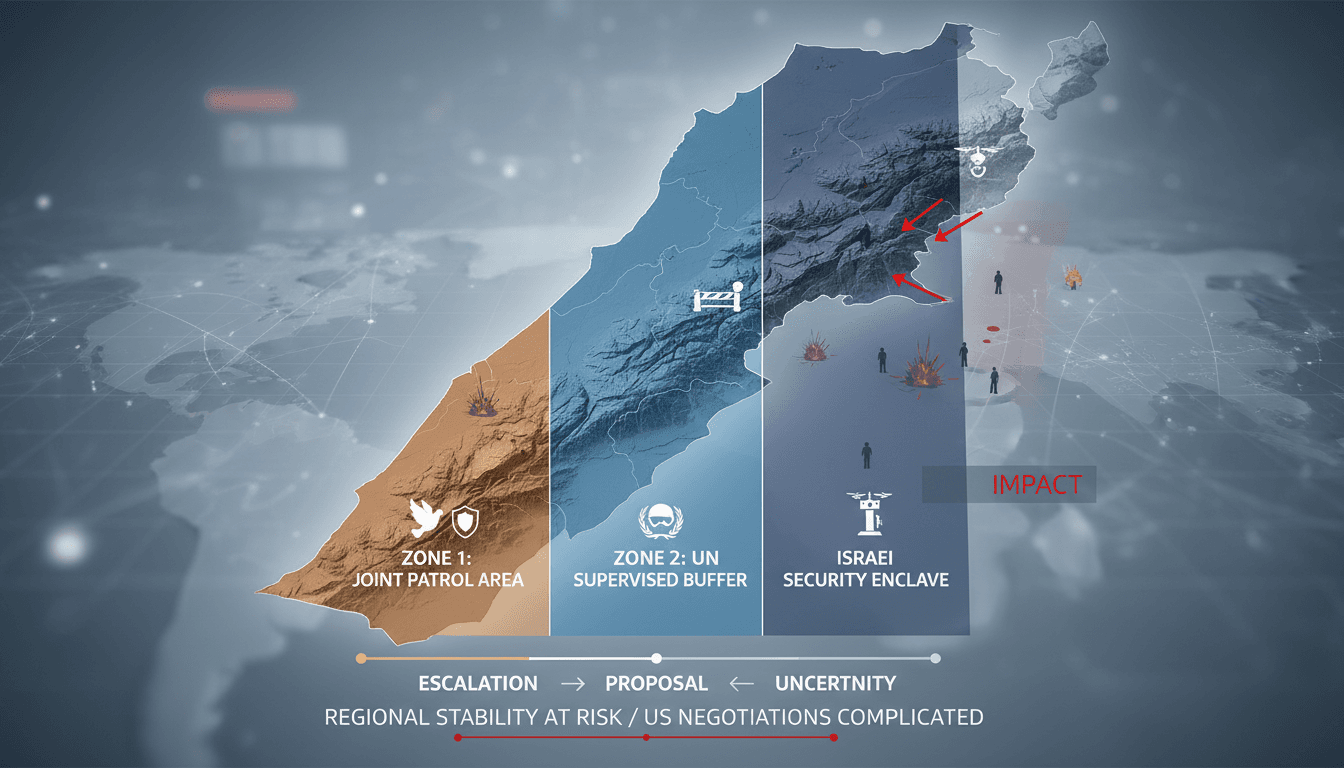
The proposal divides southern Lebanon into three distinct zones: Zone 1, an 8-kilometer buffer with a permanent IDF presence; Zone 2, extending to the Litani River, where Israeli forces would conduct clearing operations before handing control back to the Lebanese government; and Zone 3, which would require the disarmament of Hezbollah in northern areas. This zoning strategy aims to create a controlled environment that minimizes the risk of rocket attacks on Israeli territory.
The military operations that began in March 2026 have already resulted in significant civilian casualties and displacement, with over 1.2 million people forced to flee their homes. The humanitarian crisis is exacerbated by the ongoing airstrikes and ground clashes, which have led to the deaths of civilians, including rescue workers. The IDF's actions are framed as necessary to neutralize threats, but they also raise serious ethical and legal questions regarding civilian safety and international law.
As the situation unfolds, negotiations in Washington are crucial. The U.S. is mediating discussions between Israel and Lebanon, but the prospects for a ceasefire remain uncertain. Israeli officials, including Ambassador Leiter, emphasize the need for cooperation against Hezbollah, while Lebanese leaders, including Prime Minister Nawaf Salam, are calling for an immediate ceasefire and the return of displaced civilians.
The broader implications of this conflict extend beyond the immediate region. The ongoing violence has already led to volatility in oil prices and disruptions in tourism, particularly affecting Gulf states. The UAE, for instance, has suspended flights to Beirut, impacting the travel plans of over 200,000 Lebanese expatriates living in Dubai. This situation not only affects personal connections but also has significant economic repercussions for the region.
Who feels it first (and how)
- Lebanese civilians: Over 1.2 million displaced, facing humanitarian crises and loss of homes.
- Lebanese expatriates in Dubai: Heightened anxiety for family members in Lebanon, with travel disruptions affecting personal and business ties.
- Regional businesses: Tourism losses exceeding $12 billion in Gulf states due to flight suspensions and safety concerns.
- Energy markets: Volatility in oil prices as geopolitical tensions escalate.
What to watch next
- Negotiation outcomes: The effectiveness of U.S.-mediated talks in achieving a ceasefire will be critical for regional stability.
- Humanitarian aid responses: The international community's ability to provide aid to displaced populations will impact the humanitarian crisis's severity.
- Market reactions: Watch for fluctuations in oil prices and tourism-related sectors as the conflict evolves.
The tripartite plan aims for a long-term Israeli military presence in southern Lebanon.
Continued military operations and civilian displacement as negotiations unfold.
The potential for a ceasefire and its impact on regional stability.
Frequently Asked Questions
- Why it matters?
- The Israeli tripartite zoned occupation plan could reshape regional security dynamics and impact global markets, particularly in energy and tourism.
- What happened (in 30 seconds)?
- On April 14, 2026, Israeli officials proposed a tripartite division of southern Lebanon into three security zones amid escalating military operations against Hezbollah. Intensified operations began on April 15, with Israeli Defense Forces (IDF) advancing beyond established lines, resulting in significant civilian displacement and casualties. Negotiations are currently ongoing in Washington, with the plan's implementation actively unfolding on the ground.
- What's really happening?
- The Israeli tripartite zoned occupation plan is a strategic response to the perceived threat posed by Hezbollah, an Iran-backed militant group. The plan, drafted by former Strategic Affairs Minister Ron Dermer, outlines a long-term military presence in southern Lebanon, specifically up to the Litani River. This presence is contingent upon Hezbollah's disarmament, which Israel views as essential for its national security. The proposal divides southern Lebanon into three distinct zones: Zone 1, a
- Who feels it first (and how)?
- Lebanese civilians: Over 1.2 million displaced, facing humanitarian crises and loss of homes. Lebanese expatriates in Dubai: Heightened anxiety for family members in Lebanon, with travel disruptions affecting personal and business ties. Regional businesses: Tourism losses exceeding $12 billion in Gulf states due to flight suspensions and safety concerns. Energy markets: Volatility in oil prices as geopolitical tensions escalate.
- What to watch next?
- Negotiation outcomes: The effectiveness of U.S.-mediated talks in achieving a ceasefire will be critical for regional stability. Humanitarian aid responses: The international community's ability to provide aid to displaced populations will impact the humanitarian crisis's severity. Market reactions: Watch for fluctuations in oil prices and tourism-related sectors as the conflict evolves.
Arabic-language UAE newspaper coverage focused on domestic affairs, public institutions, business, society, and regional developments.
"Al Khaleej coverage generally reflects a mainstream UAE editorial lens with strong attention to public affairs, institutions, and regional developments."
— A47 Editor
إسرائيل لفرض الاحتلال بتقسيم ثلاثي لجنوب لبنان
Israel has escalated its military operations in southern Lebanon, intensifying airstrikes and attempting to expand its ground offensive as of Wednesday. This increase in military activity suggests a strategic move to assert control over the region am...
Pan-Arab news coverage spanning politics, business, sports, and regional affairs.
"Asharq Al-Awsat reflects a broad Arab editorial perspective with strong attention to regional geopolitics."
— A47 Editor
غارات من الجنوب إلى الساحل: لبنان تحت تصعيد متعدد الجبهات
Military escalation in Lebanon has intensified following a direct meeting between Lebanese and Israeli officials, with operations expanding from the southern regions to the coast. This unprecedented increase in military activity raises concerns about...
Pan-Arab news coverage spanning politics, business, sports, and regional affairs.
"Asharq Al-Awsat reflects a broad Arab editorial perspective with strong attention to regional geopolitics."
— A47 Editor
«حزب الله» يواجه تفاوض لبنان مع إسرائيل بتصعيد سياسي وعسكري
Hezbollah has intensified its military operations in southern Lebanon, launching approximately 40 rockets within an hour towards towns in the Galilee region, shortly after the initiation of negotiations between Lebanon and Israel.
Pan-Arab news coverage spanning politics, business, sports, and regional affairs.
"Asharq Al-Awsat reflects a broad Arab editorial perspective with strong attention to regional geopolitics."
— A47 Editor
الجيش الإسرائيلي استهدف عنصراً في «حزب الله»
The Israeli army announced that it conducted an airstrike targeting a member of Hezbollah in southern Lebanon on Tuesday. This operation highlights ongoing tensions in the region, particularly between Israel and Hezbollah, which has been a significan...
Pan-Arab news coverage spanning politics, business, sports, and regional affairs.
"Asharq Al-Awsat reflects a broad Arab editorial perspective with strong attention to regional geopolitics."
— A47 Editor
إسرائيل تكثف تدمير القرى الحدودية اللبنانية استباقاً للمحادثات السياسية
Israel has intensified the destruction of Lebanese border villages ahead of critical political negotiations, marking the first direct talks with Lebanon since the May 17, 1983 agreement. This escalation raises concerns about the stability of the regi...