
Israeli Forces Continue Systematic Demolition of Southern Lebanon Border Villages Amid Escalating Conflict
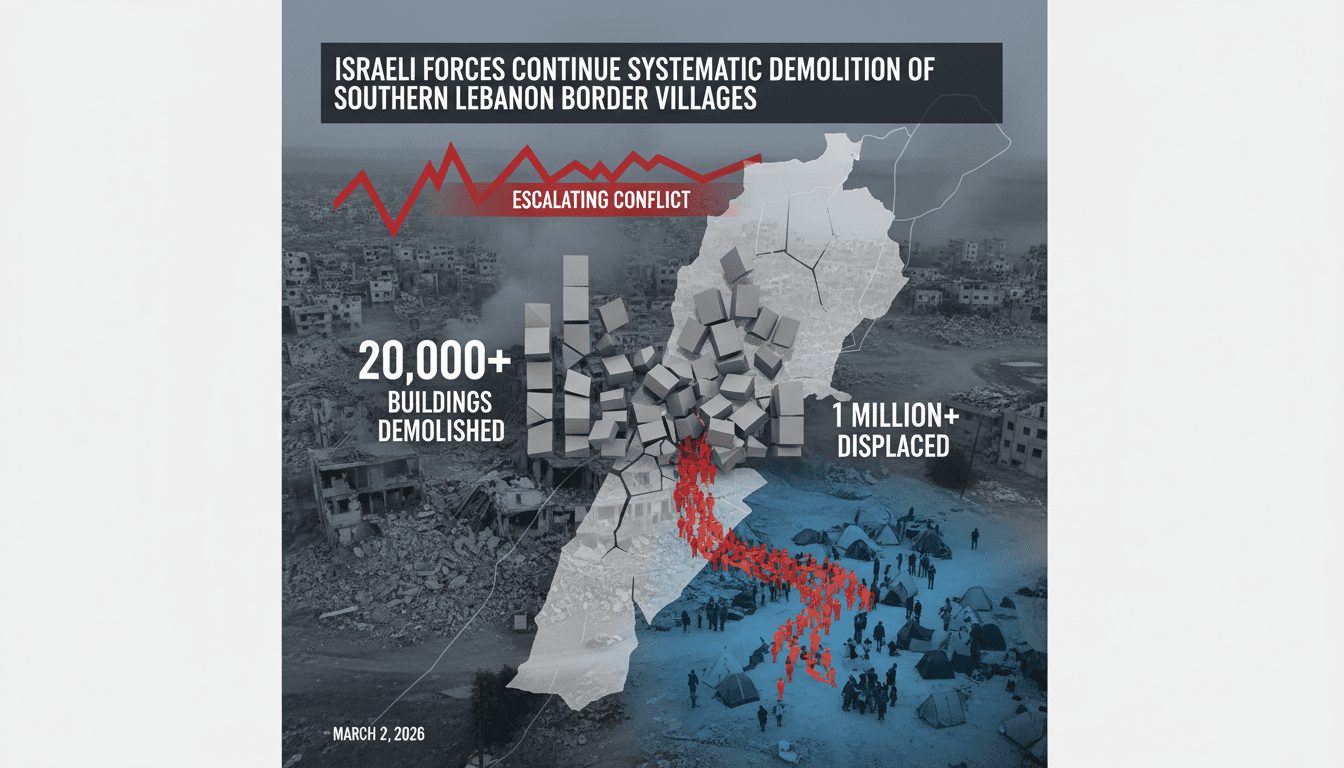
Here's what it means for you.
The ongoing conflict and humanitarian crisis in Lebanon could impact regional stability, affecting expatriate communities and global markets.
Why it matters
The systematic demolition of villages in southern Lebanon raises significant humanitarian concerns and could destabilize the region, impacting international relations and economic conditions.
What happened (in 30 seconds)
- March 2, 2026: Hezbollah launches rocket and drone attacks into Israel, triggering Israeli military responses.
- March 16, 2026: Israeli ground operations commence, leading to the demolition of over 1,400 buildings in southern Lebanon.
- April 2026: Over 1 million people are displaced, with widespread condemnation from Lebanese officials and international bodies.
The context you actually need
- Renewed hostilities: The demolitions follow a partial ceasefire in November 2024, which required Hezbollah to withdraw south of the Litani River.
- Escalation triggers: The assassination of Iran's Supreme Leader Ali Khamenei has intensified retaliatory actions from Hezbollah, prompting Israeli military operations.
- International response: UN experts and the EU have called for a halt to the demolitions, labeling them as potential war crimes and collective punishment.
What's really happening
Since March 2, 2026, the Israeli Defense Forces (IDF) have been engaged in systematic demolitions of entire border villages in southern Lebanon, a strategy reminiscent of operations in Gaza. This escalation follows Hezbollah's retaliatory attacks in response to the assassination of Iran's Supreme Leader, Ali Khamenei, which has heightened tensions in the region. The IDF's operations aim to establish a security buffer zone extending to the Litani River, effectively controlling a significant portion of Lebanese territory.
The demolitions, which have destroyed over 1,400 buildings across at least seven villages, are part of a broader military strategy to neutralize Hezbollah's infrastructure embedded within civilian areas. The Israeli government, under Defense Minister Israel Katz, has accelerated these demolitions, raising concerns about potential violations of international law. The operations have led to widespread displacement, with over 1 million people forced to flee their homes, representing approximately 18% of Lebanon's population.
The humanitarian implications are severe. With more than 1,238 reported deaths in the early phases of the conflict and 51 clinics and hospitals closed, the health crisis is exacerbating an already dire situation. Lebanese officials have condemned the demolitions as collective punishment and illegal occupation, while international bodies have urged an immediate cessation of hostilities. The ongoing strikes have also hindered access to UN peacekeeping forces in the region, further complicating the humanitarian response.
As the situation unfolds, the potential for war crimes allegations looms large, with both local and international actors calling for accountability. The demolitions not only impact the immediate communities but also resonate throughout the region, affecting diplomatic relations and economic stability. The fear among Lebanese expatriates, particularly in places like Dubai, is palpable, as families grapple with the uncertainty of their loved ones' safety amid the destruction.
Who feels it first (and how)
- Lebanese civilians: Over 1 million displaced individuals facing immediate humanitarian crises.
- Healthcare providers: Clinics and hospitals closed, limiting access to medical care for the injured and displaced.
- Expatriate communities: Lebanese expatriates, particularly in the UAE, are concerned for their families and the potential for regional instability.
- International organizations: NGOs and UN agencies are struggling to provide aid amid ongoing military operations and access restrictions.
What to watch next
- International diplomatic efforts: Watch for potential negotiations or interventions from global powers aimed at de-escalating the conflict.
- Humanitarian aid responses: Monitor the effectiveness and reach of aid organizations as they attempt to address the growing humanitarian crisis.
- Regional stability indicators: Keep an eye on shifts in public sentiment and political stability within Lebanon and neighboring countries as the situation evolves.
The demolitions have displaced over 1 million people and resulted in significant infrastructure damage.
Continued international condemnation and potential sanctions against Israel if demolitions are deemed war crimes.
The long-term implications for Israeli-Hezbollah relations and the potential for further military escalation.
Frequently Asked Questions
- Why it matters?
- The systematic demolition of villages in southern Lebanon raises significant humanitarian concerns and could destabilize the region, impacting international relations and economic conditions.
- What happened (in 30 seconds)?
- March 2, 2026: Hezbollah launches rocket and drone attacks into Israel, triggering Israeli military responses. March 16, 2026: Israeli ground operations commence, leading to the demolition of over 1,400 buildings in southern Lebanon. April 2026: Over 1 million people are displaced, with widespread condemnation from Lebanese officials and international bodies.
- What's really happening?
- Since March 2, 2026, the Israeli Defense Forces (IDF) have been engaged in systematic demolitions of entire border villages in southern Lebanon, a strategy reminiscent of operations in Gaza. This escalation follows Hezbollah's retaliatory attacks in response to the assassination of Iran's Supreme Leader, Ali Khamenei, which has heightened tensions in the region. The IDF's operations aim to establish a security buffer zone extending to the Litani River, effectively controlling a significant porti
- Who feels it first (and how)?
- Lebanese civilians: Over 1 million displaced individuals facing immediate humanitarian crises. Healthcare providers: Clinics and hospitals closed, limiting access to medical care for the injured and displaced. Expatriate communities: Lebanese expatriates, particularly in the UAE, are concerned for their families and the potential for regional instability. International organizations: NGOs and UN agencies are struggling to provide aid amid ongoing military operations and access restrictions
- What to watch next?
- International diplomatic efforts: Watch for potential negotiations or interventions from global powers aimed at de-escalating the conflict. Humanitarian aid responses: Monitor the effectiveness and reach of aid organizations as they attempt to address the growing humanitarian crisis. Regional stability indicators: Keep an eye on shifts in public sentiment and political stability within Lebanon and neighboring countries as the situation evolves.
Arabic-language reporting on global and regional news.
"BBC Arabic is part of the BBC, generally regarded for editorial standards and broad international coverage."
— A47 Editor
بلدات كاملة سويت بالأرض في جنوبي لبنان... صور توثّق حجم عمليّات الهدم الإسرائيلية
A BBC investigation has uncovered evidence of the destruction of over 1,400 buildings in southern Lebanon since the onset of the conflict, highlighting the extensive damage inflicted on local communities.
International coverage of politics, culture, and current affairs.
"BBC News is widely regarded as a reputable international news organization, known for its impartial tone and public service mandate."
— A47 Editor
Satellite images reveal scale of Israeli demolitions as Lebanese villages destroyed
Satellite images analyzed by BBC Verify indicate that over 1,400 buildings have been destroyed in southern Lebanon since March 2, coinciding with a series of Israeli airstrikes that have resulted in significant civilian casualties. The demolitions ha...
Arabic-language UAE newspaper coverage focused on domestic affairs, public institutions, business, society, and regional developments.
"Al Khaleej coverage generally reflects a mainstream UAE editorial lens with strong attention to public affairs, institutions, and regional developments."
— A47 Editor
قتلى وجرحى إثر قصف إسرائيلي على جنوب لبنان
Reports indicate that 14 individuals have been killed due to Israeli airstrikes on several villages in southern Lebanon. The attacks have raised significant concerns regarding the ongoing tensions in the region and the impact on civilian populations.