
United States and Iran Reach Two-Week Ceasefire Agreement Amid Ongoing Conflict
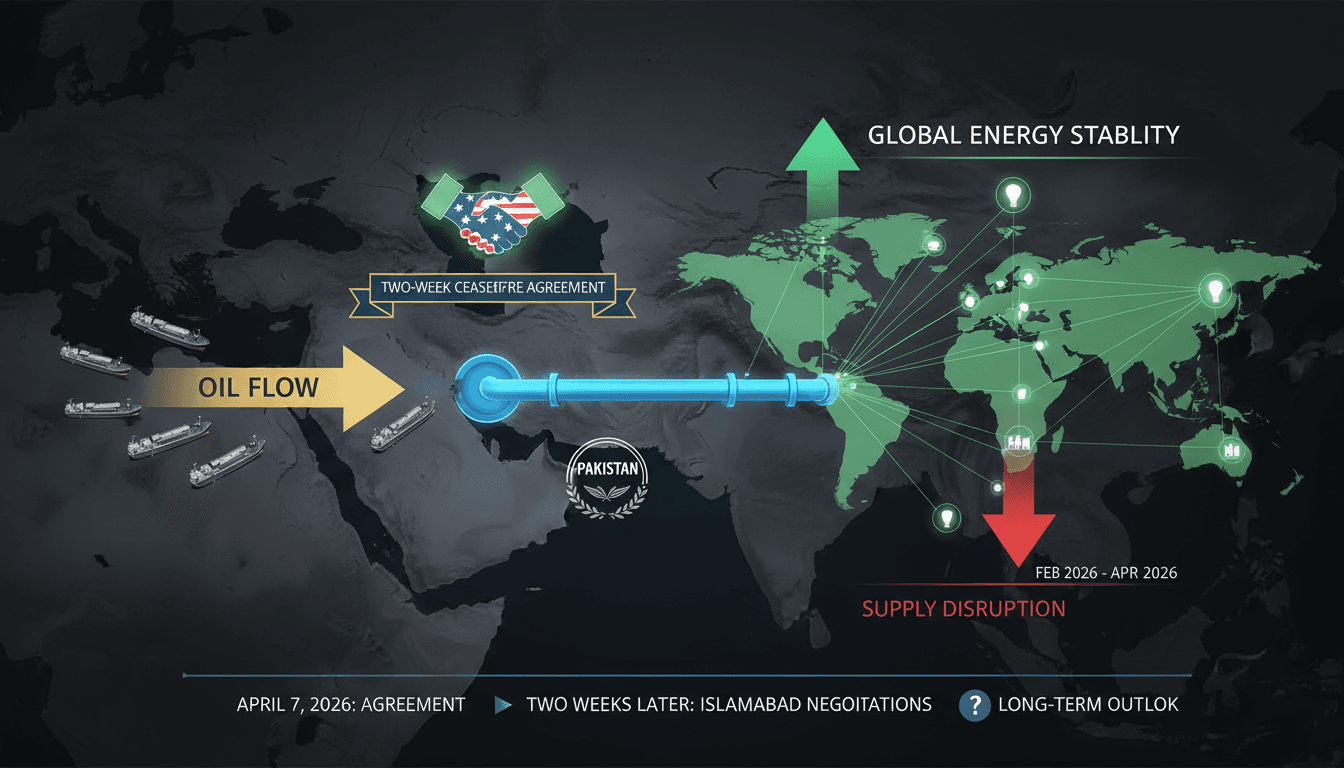
Here's what it means for you.
The ceasefire could stabilize global energy prices and shipping routes, impacting markets and consumers worldwide.
Why it matters
This ceasefire directly influences global oil supply chains and geopolitical stability, affecting energy prices and international relations.
What happened (in 30 seconds)
- The United States and Iran agreed to a two-week ceasefire on April 7, 2026, mediated by Pakistan.
- Iran is required to reopen the Strait of Hormuz for safe passage of vessels, crucial for global oil transit.
- U.S. strikes on Iranian territory are suspended, facilitating negotiations scheduled for April 10 in Islamabad.
The context you actually need
- The conflict began with coordinated U.S. and Israeli strikes on Iran in early March 2026, leading to a five-week war.
- Iran's closure of the Strait of Hormuz caused oil prices to surge over 30% above pre-war levels, disrupting global energy supplies.
- Missile alerts and air defense interceptions were reported in the UAE, highlighting ongoing regional tensions despite the ceasefire.
What's really happening
The ceasefire agreement between the United States and Iran marks a significant moment in a tumultuous period of conflict that has rattled global markets and geopolitical stability. The five-week war, initiated by U.S. and Israeli airstrikes on Iranian targets, led to Iran's strategic closure of the Strait of Hormuz, a critical maritime chokepoint through which approximately 20% of the world's oil transits. This closure not only escalated tensions but also triggered an energy crisis, with oil prices soaring over 30% as supply chains were disrupted.
The ceasefire, proposed by Pakistan, aims to halt hostilities and create a conducive environment for diplomatic negotiations. The agreement stipulates that Iran must reopen the Strait of Hormuz immediately, allowing for the safe passage of vessels, while the U.S. suspends its military operations against Iranian territory. This conditional truce is designed to facilitate talks scheduled for April 10, 2026, in Islamabad, where both nations hope to address underlying tensions and seek a more permanent resolution.
The implications of this ceasefire extend beyond immediate military concerns. Global markets reacted positively, with oil prices dropping significantly—between 13% and 20%—following the announcement. This decline reflects a renewed sense of stability and optimism among investors, who had been bracing for further escalations. The ceasefire also offers a temporary reprieve for countries reliant on oil imports, particularly in regions like Europe and Asia, where energy prices had surged due to the conflict.
However, the ceasefire's effectiveness hinges on compliance from both sides. Iran's military has been tasked with ensuring safe passage through the Strait, while U.S. forces remain vigilant against potential provocations. Israel's partial adherence to the ceasefire, particularly regarding operations against Hezbollah in Lebanon, adds another layer of complexity to the situation. The ongoing missile alerts in the UAE and other Gulf states underscore the fragility of this truce, as regional actors remain on high alert.
Ultimately, the ceasefire serves as a critical juncture for both the U.S. and Iran. It presents an opportunity for dialogue and potential de-escalation, but the underlying tensions and mutual distrust remain significant hurdles. The coming days will be crucial in determining whether this ceasefire can lead to a more lasting peace or if hostilities will reignite.
Who feels it first (and how)
- Energy sector professionals: Fluctuations in oil prices directly impact their operations and profitability.
- Consumers: Changes in oil prices affect fuel costs and overall living expenses.
- Geopolitical analysts: They will closely monitor the implications for U.S.-Iran relations and regional stability.
- Shipping companies: Safe passage through the Strait of Hormuz is vital for their operations and logistics planning.
- Investors: Market reactions to the ceasefire will influence investment strategies in energy and related sectors.
What to watch next
- Negotiation outcomes in Islamabad: The success or failure of talks on April 10 will shape future U.S.-Iran relations and regional stability.
- Oil price trends: Continued fluctuations in oil prices will indicate market confidence in the ceasefire's durability.
- Military activity in the region: Any resumption of hostilities or missile alerts could signal a breakdown of the ceasefire and escalate tensions.
The ceasefire is currently in effect and contingent on the reopening of the Strait of Hormuz.
Global oil prices will remain volatile as markets react to developments in the ceasefire and negotiations.
The long-term impact of this ceasefire on U.S.-Iran relations and regional stability remains uncertain.
Frequently Asked Questions
- Why it matters?
- This ceasefire directly influences global oil supply chains and geopolitical stability, affecting energy prices and international relations.
- What happened (in 30 seconds)?
- The United States and Iran agreed to a two-week ceasefire on April 7, 2026, mediated by Pakistan. Iran is required to reopen the Strait of Hormuz for safe passage of vessels, crucial for global oil transit. U.S. strikes on Iranian territory are suspended, facilitating negotiations scheduled for April 10 in Islamabad.
- What's really happening?
- The ceasefire agreement between the United States and Iran marks a significant moment in a tumultuous period of conflict that has rattled global markets and geopolitical stability. The five-week war, initiated by U.S. and Israeli airstrikes on Iranian targets, led to Iran's strategic closure of the Strait of Hormuz, a critical maritime chokepoint through which approximately 20% of the world's oil transits. This closure not only escalated tensions but also triggered an energy crisis, with oil pri
- Who feels it first (and how)?
- Energy sector professionals: Fluctuations in oil prices directly impact their operations and profitability. Consumers: Changes in oil prices affect fuel costs and overall living expenses. Geopolitical analysts: They will closely monitor the implications for U.S.-Iran relations and regional stability. Shipping companies: Safe passage through the Strait of Hormuz is vital for their operations and logistics planning. Investors: Market reactions to the ceasefire will influence investment str
- What to watch next?
- Negotiation outcomes in Islamabad: The success or failure of talks on April 10 will shape future U.S.-Iran relations and regional stability. Oil price trends: Continued fluctuations in oil prices will indicate market confidence in the ceasefire's durability. Military activity in the region: Any resumption of hostilities or missile alerts could signal a breakdown of the ceasefire and escalate tensions.
Global markets, investing, and macroeconomics from a premier financial newsroom.
"Bloomberg is respected for in-depth financial reporting and data-driven analysis."
— A47 Editor
US and Iran Agree to Two-Week Ceasefire
The US and Iran have reached a two-week ceasefire agreement, which includes Iran's commitment to reopen the strategically vital Strait of Hormuz. This decision follows heightened tensions and threats from President Donald Trump regarding military act...
Global markets, investing, and macroeconomics from a premier financial newsroom.
"Bloomberg is respected for in-depth financial reporting and data-driven analysis."
— A47 Editor
MacCarley: Iran’s Strait of Hormuz Control Throttling
The United States and Iran have reached a two-week ceasefire agreement, halting military actions after six weeks of conflict. This truce is expected to facilitate negotiations regarding the reopening of the strategically significant Strait of Hormuz,...
Global markets, investing, and macroeconomics from a premier financial newsroom.
"Bloomberg is respected for in-depth financial reporting and data-driven analysis."
— A47 Editor
US and Iran Agree to Two-Week Ceasefire Plan
The US and Iran have reached a two-week ceasefire agreement, which is expected to halt military actions and facilitate the reopening of the strategically significant Strait of Hormuz. This development follows ongoing diplomatic negotiations aimed at ...
Top international stories selected by The Guardian editors.
"The Guardian is known for its progressive editorial stance and in-depth analysis."
— A47 Editor
US and Iran agree to provisional ceasefire as Tehran says it will reopen strait of Hormuz
The United States and Iran have reached a provisional two-week ceasefire, allowing for the reopening of the strategically important Strait of Hormuz. This agreement was facilitated by a last-minute diplomatic intervention from Pakistan, which came af...
News from the United States including domestic politics, society, and culture.
"The Guardian is known for its progressive editorial stance and in-depth analysis, often advocating for social justice, environmental issues, and liberal values."
— A47 Editor
US and Iran agree to provisional ceasefire with Tehran saying it will reopen strait of Hormuz
The United States and Iran have reached a provisional two-week ceasefire, facilitated by a last-minute diplomatic intervention from Pakistan, which effectively canceled an ultimatum from President Donald Trump demanding Iran's surrender or face sever...