
U.S. Senators Introduce Legislation to Reclassify Prediction Markets as Gambling
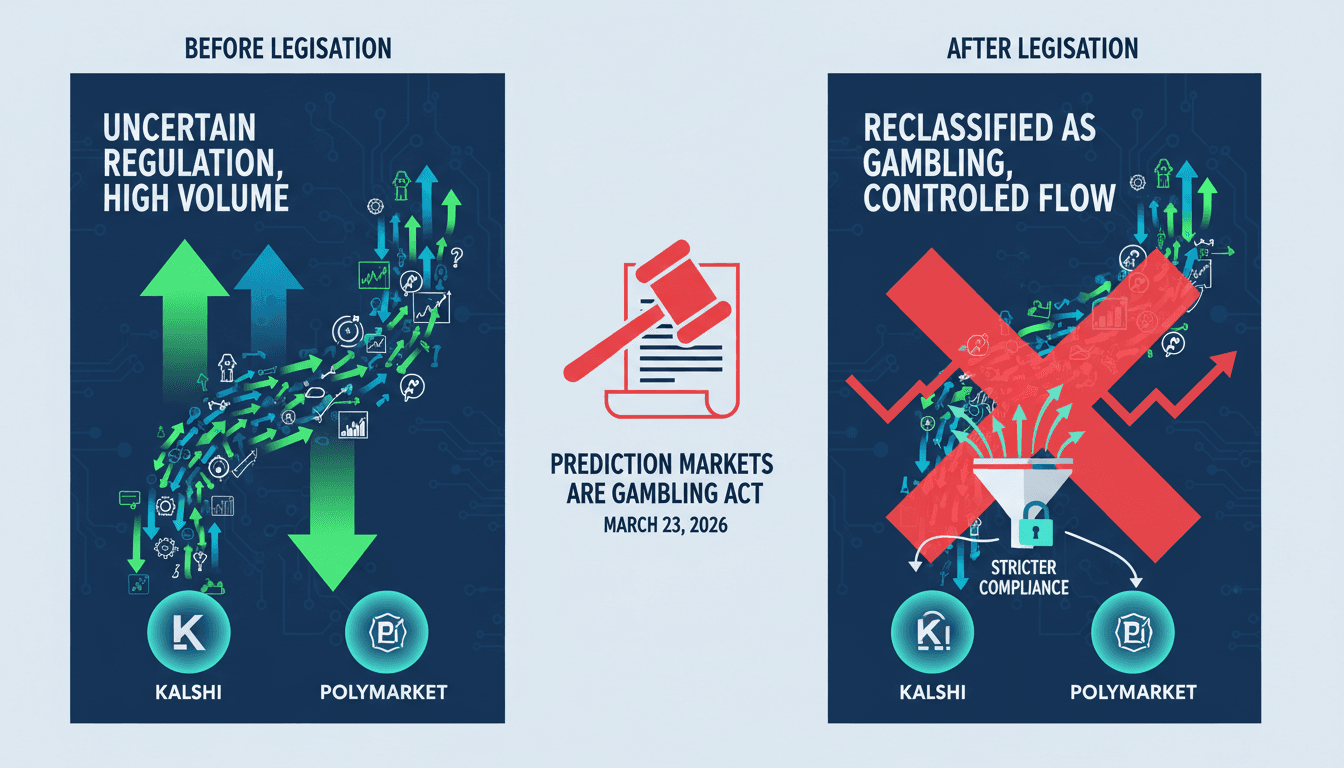
Here's what it means for you.
If you engage with prediction markets, your access and the nature of your trades may change significantly due to new regulatory measures.
Why it matters
This legislation could reshape the landscape of prediction markets, impacting how you trade and the types of contracts available.
What happened (in 30 seconds)
- On March 23, 2026, Senators John Curtis and Adam Schiff introduced the 'Prediction Markets Are Gambling Act' to classify prediction markets as gambling platforms.
- Kalshi and Polymarket, two major prediction market platforms, responded by implementing enhanced integrity safeguards to prevent insider trading and manipulation.
- The bill aims to enforce state gambling laws and remove CFTC oversight, affecting the future of prediction markets in the U.S.
The context you actually need
- Prediction markets like Kalshi and Polymarket have gained traction since receiving CFTC approval, allowing them to operate as event contracts rather than traditional gambling.
- High trading volumes, particularly in events like the March Madness tournament, have raised concerns about market integrity and compliance with gambling regulations.
- State and federal scrutiny has intensified, prompting legislative action to address potential violations of tribal sovereignty and insider trading risks.
What's really happening
The introduction of the 'Prediction Markets Are Gambling Act' represents a significant shift in how prediction markets are regulated in the U.S. By reclassifying these platforms as gambling entities, the bill aims to enforce existing state gambling laws and eliminate the oversight currently provided by the Commodity Futures Trading Commission (CFTC). This legislative move is rooted in growing concerns regarding market manipulation, particularly in politically sensitive areas and high-stakes sports events.
Kalshi and Polymarket, which have thrived under the CFTC's regulatory framework, are now faced with the prospect of operating under stricter gambling laws. In anticipation of the bill's potential passage, both platforms have proactively enhanced their compliance measures. Kalshi has introduced new technological safeguards to block politicians and athletes from participating in relevant markets, while also implementing whistleblower tools to encourage reporting of any unethical behavior. Polymarket has updated its terms of use to define insider trading more clearly and has launched a dedicated market integrity page to promote transparency.
The bill's introduction is not just a regulatory adjustment; it reflects a broader cultural and economic shift regarding how Americans engage with prediction markets. As these platforms have grown in popularity, particularly during high-profile events like the March Madness tournament, they have attracted scrutiny from traditional gaming associations and lawmakers alike. The staggering trading volume of $100 million on a single March Madness winner prediction contract underscores the financial stakes involved and the potential for market manipulation.
The bipartisan nature of the legislation, backed by both Curtis and Schiff, signals a consensus on the need for regulation in this burgeoning market. Traditional gaming associations, including the American Gaming Association, have endorsed the bill, viewing it as a protective measure for state-regulated betting and tribal interests. This endorsement suggests that established gaming entities see an opportunity to solidify their market position in the face of emerging competition from prediction markets.
As these changes unfold, the implications for traders and investors are profound. The reclassification could limit the types of contracts available, reduce liquidity, and increase compliance costs for platforms. For users, this means a potential decrease in the variety of trading options and an increase in regulatory hurdles.
Who feels it first (and how)
- Traders and investors in prediction markets may face restricted access and fewer contract options.
- Kalshi and Polymarket users will experience changes in platform policies and trading dynamics.
- Traditional gaming companies could benefit from reduced competition and increased market share.
- Regulators and lawmakers will need to monitor compliance and enforcement of new regulations.
What to watch next
- Legislative progress: Keep an eye on the bill's advancement through Congress, as its fate will determine the future of prediction markets.
- Market responses: Watch how Kalshi and Polymarket adapt their business models in response to regulatory changes and user feedback.
- Trading volume trends: Monitor shifts in trading volumes on prediction markets, particularly during major events, to gauge user engagement and market health.
The bill has been introduced and is currently under consideration in the U.S. Senate.
Kalshi and Polymarket will continue to enhance compliance measures and adapt their platforms to meet new regulatory requirements.
The long-term impact on trading volumes and user engagement in prediction markets remains uncertain.
Frequently Asked Questions
- Why it matters?
- This legislation could reshape the landscape of prediction markets, impacting how you trade and the types of contracts available.
- What happened (in 30 seconds)?
- On March 23, 2026, Senators John Curtis and Adam Schiff introduced the 'Prediction Markets Are Gambling Act' to classify prediction markets as gambling platforms. Kalshi and Polymarket, two major prediction market platforms, responded by implementing enhanced integrity safeguards to prevent insider trading and manipulation. The bill aims to enforce state gambling laws and remove CFTC oversight, affecting the future of prediction markets in the U.S.
- What's really happening?
- The introduction of the 'Prediction Markets Are Gambling Act' represents a significant shift in how prediction markets are regulated in the U.S. By reclassifying these platforms as gambling entities, the bill aims to enforce existing state gambling laws and eliminate the oversight currently provided by the Commodity Futures Trading Commission (CFTC). This legislative move is rooted in growing concerns regarding market manipulation, particularly in politically sensitive areas and high-stakes spor
- Who feels it first (and how)?
- Traders and investors in prediction markets may face restricted access and fewer contract options. Kalshi and Polymarket users will experience changes in platform policies and trading dynamics. Traditional gaming companies could benefit from reduced competition and increased market share. Regulators and lawmakers will need to monitor compliance and enforcement of new regulations.
- What to watch next?
- Legislative progress: Keep an eye on the bill's advancement through Congress, as its fate will determine the future of prediction markets. Market responses: Watch how Kalshi and Polymarket adapt their business models in response to regulatory changes and user feedback. Trading volume trends: Monitor shifts in trading volumes on prediction markets, particularly during major events, to gauge user engagement and market health.
Global business headlines with AI angles.
"General business outlet that frequently covers AI."
— A47 Editor
Prediction Markets Make Drastic Changes After Lawmakers Introduce Bill to Reclassify Kalshi, Polymarket As Gambling Sites
Prediction markets Kalshi and Polymarket are facing significant regulatory challenges as lawmakers have introduced a bill to reclassify them as gambling sites, which could impose stricter regulations on their operations. This development follows rece...
Tech culture, product news, and critical takes on the tech industry's social impact.
"The Guardian's tech coverage blends mainstream news, critical analysis, and cultural commentary on emerging technologies and digital trends."
— A47 Editor
Kalshi and Polymarket ban insider trading as senators look to curb prediction markets
Kalshi and Polymarket, leading platforms in prediction markets, have implemented new measures to prevent insider trading following the introduction of a bill by two senators that could significantly restrict the industry. Kalshi announced a ban on po...
Covers blockchain, cryptocurrency news, project analysis, and market insights.
"Cointelegraph is a leading crypto-focused media outlet known for timely news, analysis, and educational content related to blockchain and digital assets."
— A47 Editor
Kalshi joins Polymarket in sweeping user bans to head off insider trading
Kalshi and Polymarket have implemented sweeping user bans to prevent insider trading, coinciding with the introduction of a bipartisan bill aimed at banning popular sports event contracts. This move reflects a proactive approach to regulatory complia...
Startup news with frequent AI coverage.
"Covers launches, funding, and product updates in AI."
— A47 Editor
Bipartisan bill seeks to ban sports betting on Kalshi and Polymarket
A bipartisan bill has been introduced aiming to ban sports betting on prediction market platforms Kalshi and Polymarket, while established companies like FanDuel and DraftKings remain unaffected due to their compliance with state-specific gambling la...
UK and international business news, economics, and corporate coverage.
"The Guardian’s business section covers finance and markets with a progressive editorial tone."
— A47 Editor
Bipartisan Senate bill would ban sports betting on online prediction markets
A bipartisan bill was introduced in the US Senate that seeks to ban federally regulated platforms from allowing wagers on sporting events, targeting prediction markets like Kalshi and Polymarket amid increasing scrutiny from state regulators.
News from the United States including domestic politics, society, and culture.
"The Guardian is known for its progressive editorial stance and in-depth analysis, often advocating for social justice, environmental issues, and liberal values."
— A47 Editor
Bipartisan Senate bill would ban sports betting on online prediction markets
A bipartisan bill was introduced in the US Senate that seeks to ban federally regulated platforms from allowing wagers on sporting events, targeting prediction markets like Kalshi and Polymarket amid increasing scrutiny from state regulators.