
Israeli Airstrikes Hit Southern Beirut and Lebanon Amid Ongoing Conflict
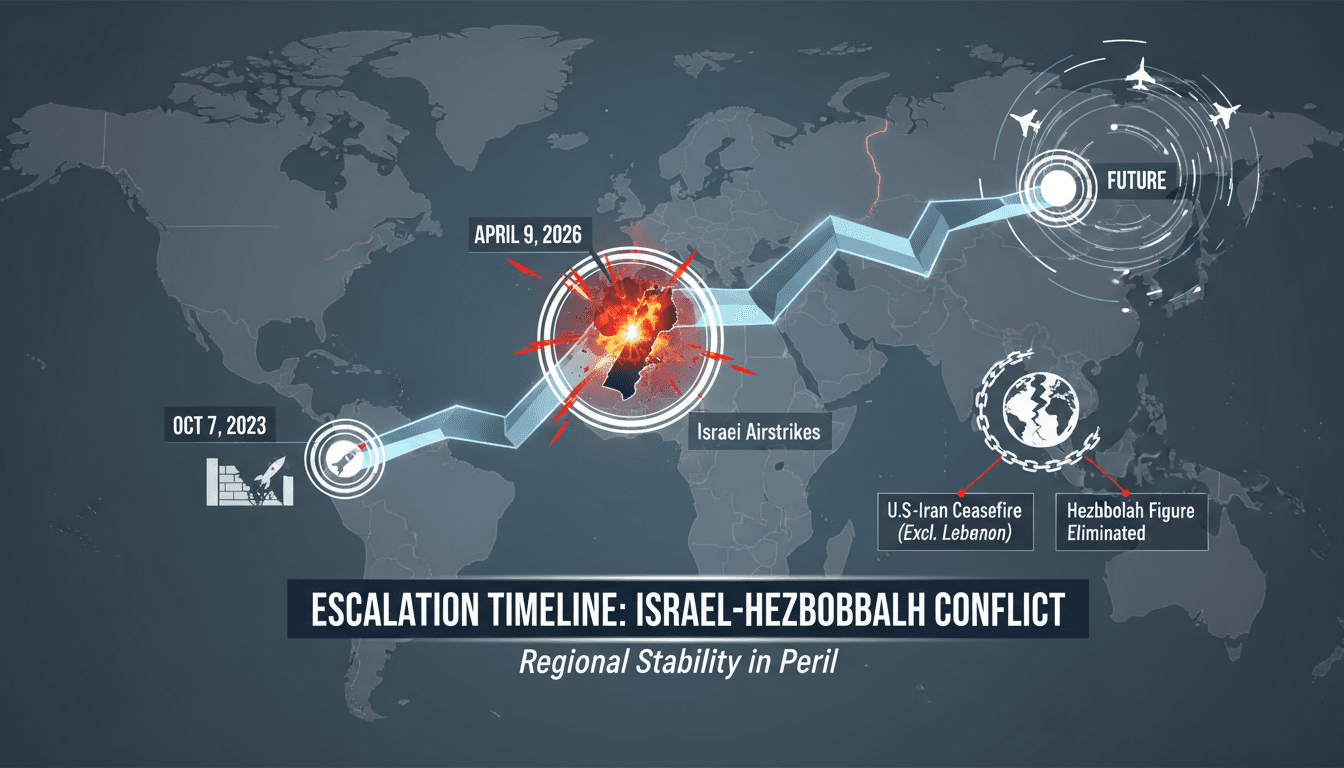
Here's what it means for you.
If you have ties to Lebanon or the Middle East, the ongoing conflict could disrupt travel and impact regional stability.
Why it matters
The escalation of military actions in Lebanon threatens to destabilize the region, affecting global markets and international relations.
What happened (in 30 seconds)
- Israeli airstrikes targeted southern suburbs of Beirut and multiple sites in southern Lebanon on April 9, 2026.
- Cumulative casualties from recent strikes reached 182 killed and 890 wounded, according to Lebanese authorities.
- Lebanese leaders condemned the attacks, declaring a national day of mourning amid ongoing military operations.
The context you actually need
- The strikes are part of the 2026 Israel-Hezbollah war, which began on March 2, 2026, and has involved ground incursions and airstrikes targeting Hezbollah infrastructure.
- A U.S.-brokered ceasefire with Iran excludes Lebanon, allowing for continued military actions and increasing tensions in the region.
- Preceding events included the killing of a Hezbollah deputy leader's guard, which escalated hostilities and prompted Israeli military operations.
What's really happening
The recent airstrikes in Lebanon represent a significant escalation in the ongoing conflict between Israel and Hezbollah, which has roots in a complex web of regional politics and military strategies. The Israeli Defense Forces (IDF) have intensified their operations in southern Lebanon, targeting what they claim are Hezbollah positions. This follows a series of military engagements that began in early March 2026, marking a renewed phase in a long-standing conflict.
The backdrop to these airstrikes includes a U.S.-brokered ceasefire with Iran, which notably excludes Lebanon. This exclusion allows Israel to act without the fear of direct Iranian retaliation, as Hezbollah is seen as a proxy for Iranian interests in the region. The strikes on April 9 specifically targeted neighborhoods in Beirut and southern towns known for their Hezbollah presence, indicating a strategic focus on crippling the group's military capabilities.
The cumulative casualties reported from these strikes—182 dead and 890 injured—underscore the human cost of this conflict, which is likely to provoke further retaliatory actions from Hezbollah. The group has characterized the airstrikes as "desperate revenge on civilians," suggesting that they may respond with increased aggression, potentially leading to a cycle of violence that could draw in other regional players.
Moreover, the strikes have significant implications for Lebanon's internal stability. The declaration of a national day of mourning by Lebanese Prime Minister Nawaf Salam reflects the gravity of the situation and the potential for domestic unrest. As the conflict escalates, the Lebanese government may face challenges in maintaining order and addressing the humanitarian needs of its citizens.
Internationally, the situation is precarious. The ongoing military operations and the potential for further escalation could disrupt oil markets, particularly given the heightened tensions in the Strait of Hormuz. This vital shipping lane is crucial for global oil supply, and any instability could lead to increased prices and supply chain disruptions.
Who feels it first (and how)
- Lebanese civilians: Directly impacted by airstrikes and potential retaliatory violence.
- Expatriates in Dubai: Heightened anxiety over family safety and potential travel disruptions.
- Global oil markets: Increased prices and supply chain concerns due to regional instability.
What to watch next
- Hezbollah's response: Monitor for retaliatory actions that could escalate the conflict further.
- International diplomatic efforts: Watch for any new initiatives aimed at brokering a ceasefire or de-escalation in the region.
- Market reactions: Keep an eye on oil prices and stock market fluctuations in response to ongoing tensions.
The airstrikes have resulted in significant casualties and condemnation from Lebanese leaders.
Increased military operations from both Israel and Hezbollah in the coming days.
The potential for international intervention or changes in U.S. policy regarding the conflict.
Frequently Asked Questions
- Why it matters?
- The escalation of military actions in Lebanon threatens to destabilize the region, affecting global markets and international relations.
- What happened (in 30 seconds)?
- Israeli airstrikes targeted southern suburbs of Beirut and multiple sites in southern Lebanon on April 9, 2026. Cumulative casualties from recent strikes reached 182 killed and 890 wounded, according to Lebanese authorities. Lebanese leaders condemned the attacks, declaring a national day of mourning amid ongoing military operations.
- What's really happening?
- The recent airstrikes in Lebanon represent a significant escalation in the ongoing conflict between Israel and Hezbollah, which has roots in a complex web of regional politics and military strategies. The Israeli Defense Forces (IDF) have intensified their operations in southern Lebanon, targeting what they claim are Hezbollah positions. This follows a series of military engagements that began in early March 2026, marking a renewed phase in a long-standing conflict. The backdrop to these airstr
- Who feels it first (and how)?
- Lebanese civilians: Directly impacted by airstrikes and potential retaliatory violence. Expatriates in Dubai: Heightened anxiety over family safety and potential travel disruptions. Global oil markets: Increased prices and supply chain concerns due to regional instability.
- What to watch next?
- Hezbollah's response: Monitor for retaliatory actions that could escalate the conflict further. International diplomatic efforts: Watch for any new initiatives aimed at brokering a ceasefire or de-escalation in the region. Market reactions: Keep an eye on oil prices and stock market fluctuations in response to ongoing tensions.
Arabic-language coverage of international news and geopolitics.
"RT Arabic is a Russian state-funded outlet often criticized for promoting Kremlin-aligned narratives."
— A47 Editor
غارات إسرائيلية تستهدف الضاحية الجنوبية لبيروت وعددا من المناطق في جنوب لبنان (فيديو)
Israeli warplanes conducted a series of airstrikes early Thursday targeting the southern suburbs of Beirut and several towns in southern Lebanon. This military action reflects ongoing tensions in the region and highlights the volatile security situat...
Pan-Arab political news and analysis.
"Al-Quds Al-Arabi is a London-based Arabic newspaper known for political coverage."
— A47 Editor
غارات إسرائيلية تستهدف الضاحية الجنوبية لبيروت وعددا من المناطق في جنوب لبنان
Israeli warplanes conducted a series of airstrikes early Thursday targeting the southern suburbs of Beirut and several towns in southern Lebanon, including Shiyah, Kafra, and Majdal Selim, alongside artillery shelling in the southern town of Haris.