
Ben Roberts-Smith Charged with War Crimes in Historic Prosecution
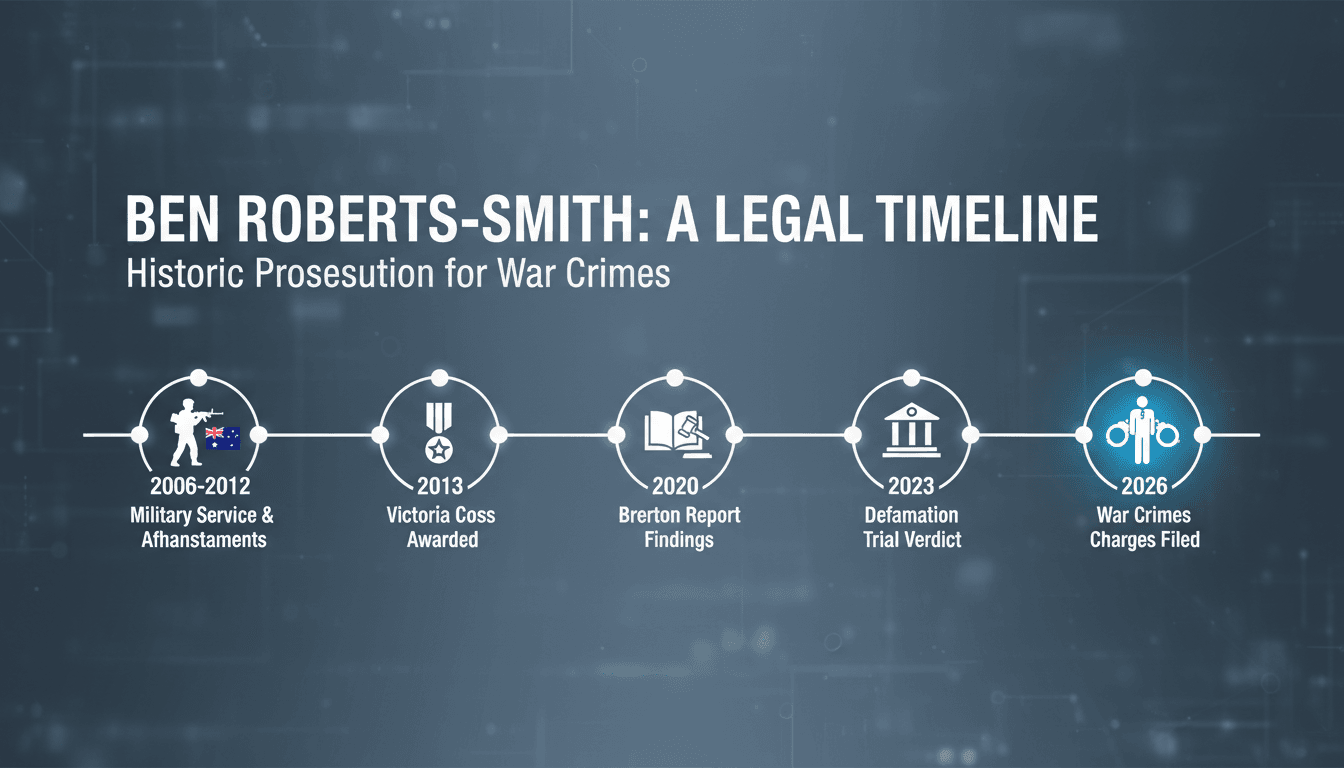
Here's what it means for you.
The prosecution of a decorated soldier for war crimes could reshape public trust in military accountability and influence global perceptions of Australia’s commitment to justice.
Why it matters
This case represents a significant moment in Australia’s legal landscape, potentially setting a precedent for how military personnel are held accountable for actions taken during conflict.
What happened (in 30 seconds)
- On April 7, 2026, Ben Roberts-Smith was arrested at Sydney Airport and charged with five counts of war crimes related to the deaths of unarmed Afghan civilians.
- The charges stem from the 2020 Brereton Report, which documented unlawful killings by Australian special forces during deployments in Afghanistan.
- Roberts-Smith, a highly decorated soldier, denies the allegations and is currently remanded in custody, with a bail review scheduled for April 17, 2026.
The context you actually need
- Roberts-Smith is Australia’s most decorated living soldier, having received the Victoria Cross for bravery in combat, which complicates public perceptions of his alleged actions.
- The Brereton Report uncovered credible evidence of 39 unlawful killings by Australian special forces, prompting calls for accountability and criminal investigations.
- Public opinion is polarized, with supporters defending Roberts-Smith against what they perceive as media persecution, while critics advocate for accountability and justice for victims.
What's really happening
The arrest of Ben Roberts-Smith marks a pivotal moment in Australia’s approach to military accountability, particularly regarding actions taken during the Afghanistan conflict. This case is not just about one soldier; it reflects broader systemic issues within the Australian Defence Force (ADF) and the military justice system. The allegations against Roberts-Smith emerged from the 2020 Brereton Report, which revealed a troubling pattern of unlawful killings by Australian special forces. This report was a response to growing public and political pressure for transparency and accountability in military operations, especially given the long duration of Australia's involvement in Afghanistan from 2001 to 2021.
Roberts-Smith’s charges are significant because they challenge the traditional narrative surrounding military heroes and the perceived infallibility of decorated soldiers. The Victoria Cross, awarded for acts of valor, carries immense weight in Australian society, and the idea that such a recipient could face criminal charges for war crimes is unprecedented. This situation raises questions about the moral and ethical responsibilities of military personnel and the extent to which they can be held accountable for their actions in combat.
The legal proceedings against Roberts-Smith are likely to be closely scrutinized, both domestically and internationally. The outcome could set a precedent for future cases involving military personnel accused of war crimes. If found guilty, it may encourage other countries to pursue similar accountability measures, thereby influencing global military conduct and the treatment of veterans. Conversely, if Roberts-Smith is acquitted, it may embolden those who argue against military accountability, potentially undermining efforts to address past injustices.
Public reactions to the case are sharply divided. Supporters, including former Prime Ministers John Howard and Tony Abbott, have expressed sympathy for Roberts-Smith, framing the charges as a form of media persecution. In contrast, critics argue that this prosecution is a necessary step towards accountability and justice for victims of war crimes. The Returned Services League has also voiced concerns about the investigation's pace, highlighting the need for a balance between accountability and the well-being of veterans and their families.
As the case unfolds, it will likely influence public discourse on military accountability in Australia and beyond, prompting discussions about the treatment of veterans, the legacy of military operations, and the importance of upholding the rule of law.
Who feels it first (and how)
- Military personnel: Current and former members of the ADF may feel the impact of this case as it raises questions about accountability and the consequences of actions taken during service.
- Veterans and their families: The case could affect veterans' perceptions of support from the government and society, particularly regarding mental health and legal protections.
- Legal professionals: Lawyers and legal scholars may analyze the implications of this case for military law and the prosecution of war crimes.
- Public opinion: Citizens may become more engaged in discussions about military ethics and accountability, influencing political discourse and policy.
What to watch next
- Bail review on April 17, 2026: The outcome will determine Roberts-Smith's immediate future and could influence public sentiment regarding the case.
- Public reactions and media coverage: Ongoing discourse in media and social platforms will shape perceptions of military accountability and the legal process.
- Potential implications for military policy: Depending on the case's outcome, there may be calls for reforms in how the ADF handles allegations of misconduct and accountability.
Ben Roberts-Smith has been charged with five counts of war crimes.
The case will continue to polarize public opinion and influence discussions on military accountability.
The long-term implications for military policy and public trust in the ADF remain uncertain.
Frequently Asked Questions
- Why it matters?
- This case represents a significant moment in Australia’s legal landscape, potentially setting a precedent for how military personnel are held accountable for actions taken during conflict.
- What happened (in 30 seconds)?
- On April 7, 2026, Ben Roberts-Smith was arrested at Sydney Airport and charged with five counts of war crimes related to the deaths of unarmed Afghan civilians. The charges stem from the 2020 Brereton Report, which documented unlawful killings by Australian special forces during deployments in Afghanistan. Roberts-Smith, a highly decorated soldier, denies the allegations and is currently remanded in custody, with a bail review scheduled for April 17, 2026.
- What's really happening?
- The arrest of Ben Roberts-Smith marks a pivotal moment in Australia’s approach to military accountability, particularly regarding actions taken during the Afghanistan conflict. This case is not just about one soldier; it reflects broader systemic issues within the Australian Defence Force (ADF) and the military justice system. The allegations against Roberts-Smith emerged from the 2020 Brereton Report, which revealed a troubling pattern of unlawful killings by Australian special forces. This rep
- Who feels it first (and how)?
- Military personnel: Current and former members of the ADF may feel the impact of this case as it raises questions about accountability and the consequences of actions taken during service. Veterans and their families: The case could affect veterans' perceptions of support from the government and society, particularly regarding mental health and legal protections. Legal professionals: Lawyers and legal scholars may analyze the implications of this case for military law and the prosecution of war
- What to watch next?
- Bail review on April 17, 2026: The outcome will determine Roberts-Smith's immediate future and could influence public sentiment regarding the case. Public reactions and media coverage: Ongoing discourse in media and social platforms will shape perceptions of military accountability and the legal process. Potential implications for military policy: Depending on the case's outcome, there may be calls for reforms in how the ADF handles allegations of misconduct and accountability.
International coverage of politics, culture, and current affairs.
"BBC News is widely regarded as a reputable international news organization, known for its impartial tone and public service mandate."
— A47 Editor
He's Australia's most decorated soldier. Now he's at the centre of a historic war crimes case
Ben Roberts-Smith, Australia's most decorated soldier, has been arrested at Sydney airport and charged with five counts of murder related to alleged war crimes during his military service in Afghanistan from 2009 to 2012. This unprecedented legal cas...
RT is a Russian state-funded network covering global events from a Russian perspective.
"RT is widely criticized for promoting pro-Kremlin narratives and is considered by many to be a state propaganda outlet."
— A47 Editor
One of Australia’s most-decorated soldiers arrested on war crimes charges
Ben Roberts-Smith, one of Australia's most decorated soldiers, has been arrested at Sydney airport on charges of war crimes, specifically five counts of murder related to alleged executions of Afghan civilians during his military service from 2009 to...
Global coverage of politics, crises, and international affairs.
"HuffPost provides progressive-oriented reporting on international developments, often focusing on humanitarian and social justice issues."
— A47 Editor
Ex-Australian Soldier Charged With Committing 5 War Crime Murders In Afghanistan
Former Australian soldier Ben Roberts-Smith has been charged with five counts of murder related to alleged war crimes committed during his military service in Afghanistan from 2009 to 2012. He was arrested at Sydney airport and will remain in custody...
Coverage of national news and issues shaping the United States, including politics, economy, and society.
"The Wall Street Journal is one of the most respected financial and news publications in the U.S., known for its rigorous reporting and center-right editorial perspective."
— A47 Editor
Decorated Australian Veteran Charged With Afghanistan War Crimes
Ben Roberts-Smith, Australia's most decorated living veteran, has been charged with five war crimes allegedly committed during his military service in Afghanistan from 2009 to 2012. This prosecution marks a significant moment as Australia grapples wi...
Global political, business, and cultural coverage from WSJ international desks.
"The Wall Street Journal offers extensive international reporting with a reputation for financial insight and a center-right editorial stance."
— A47 Editor
Decorated Australian Veteran Charged With Afghanistan War Crimes
Ben Roberts-Smith, one of Australia's most decorated soldiers, has been arrested at Sydney airport and charged with five counts of murder related to alleged war crimes during his military service in Afghanistan from 2009 to 2012. This significant leg...