
German Chancellor Merz Urges NATO Unity Amid US-Iran War Tensions
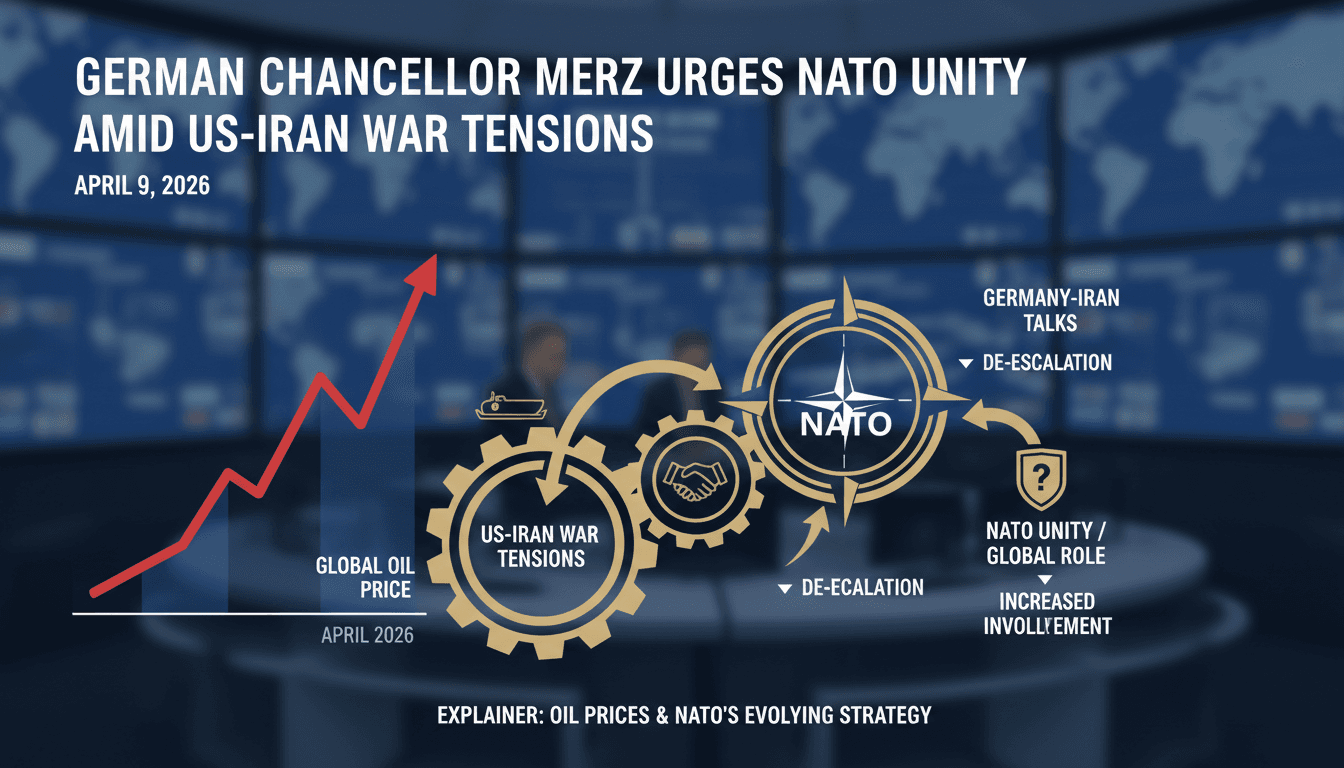
Here's what it means for you.
Your energy costs and geopolitical stability are intertwined as NATO navigates the complexities of the US-Iran conflict.
Why it matters
NATO's cohesion is crucial for European security and economic stability amid rising tensions and energy crises.
What happened (in 30 seconds)
- Chancellor Merz declared on April 9, 2026, that NATO must remain united despite pressures from the US regarding the Iran conflict.
- Germany announced it would resume direct talks with Iran, coordinated with the US and EU, following a temporary ceasefire.
- Trump's demands for NATO support in securing the Strait of Hormuz have raised concerns among European allies about military involvement.
The context you actually need
- The US-Iran war, which began on February 28, 2026, has escalated tensions within NATO, already strained by the Ukraine conflict.
- Oil prices surged to over $120 per barrel after Iran closed the Strait of Hormuz, leading to a global energy crisis affecting economies worldwide.
- Germany's position reflects a balancing act between supporting US interests and addressing domestic concerns about military engagement and energy security.
What's really happening
Chancellor Friedrich Merz's statement in Berlin underscores a pivotal moment for NATO as it grapples with the implications of the ongoing US-Iran war. The conflict, ignited by US and Israeli strikes on Iranian targets, has not only resulted in significant loss of life but has also triggered a global energy crisis, with oil prices skyrocketing due to the closure of the Strait of Hormuz. This strategic waterway is crucial for global oil transport, and its disruption has sent shockwaves through international markets.
Merz's emphasis on NATO unity is a direct response to US President Donald Trump's demands for allied support in securing the Strait. Trump's aggressive stance towards Iran, including threats of destruction unless the strait is reopened, has created friction within NATO. European leaders, wary of escalating military involvement in a conflict outside Europe, have expressed reservations about committing troops or resources to the US-led efforts.
Germany's decision to resume talks with Iran, coordinated with the US and European partners, reflects a strategic pivot aimed at de-escalating tensions while maintaining NATO's integrity. The recent two-week ceasefire, brokered by Pakistan, provides a temporary reprieve but does not resolve the underlying issues. Merz's call for a long-term ceasefire, backed by a UN mandate and parliamentary approval, highlights Germany's cautious approach to military engagement.
The economic implications are significant. With Brent Crude oil prices exceeding $120 per barrel, the energy crisis is felt acutely in regions like Dubai, where residents face rising fuel and energy costs. The volatility in oil prices not only affects consumers but also has broader implications for global markets and economic stability.
As NATO navigates these challenges, the alliance's unity will be tested. European leaders are increasingly reluctant to engage in conflicts that do not directly threaten their security, raising questions about the future of transatlantic relations and collective defense commitments.
Who feels it first (and how)
- Energy consumers: Rising fuel prices impact household budgets and transportation costs.
- Businesses: Companies reliant on stable energy prices face increased operational costs, affecting profitability.
- Geopolitical analysts: Professionals monitoring NATO dynamics must reassess risk assessments and strategic forecasts.
- European governments: Leaders face pressure to balance national interests with NATO obligations, influencing domestic politics.
What to watch next
- NATO's response to future US demands regarding military support in the Iran conflict will indicate the alliance's unity and strategic direction.
- Oil price fluctuations in response to geopolitical developments will impact global markets and regional economies, particularly in energy-dependent areas.
- Germany's diplomatic efforts with Iran could reshape European engagement strategies and influence NATO's collective approach to non-European conflicts.
The US-Iran war has escalated tensions within NATO and caused a global energy crisis.
European leaders will continue to seek diplomatic solutions while avoiding direct military involvement.
The long-term implications of the ceasefire and Germany's diplomatic efforts on NATO's cohesion and energy security.
Frequently Asked Questions
- Why it matters?
- NATO's cohesion is crucial for European security and economic stability amid rising tensions and energy crises.
- What happened (in 30 seconds)?
- Chancellor Merz declared on April 9, 2026, that NATO must remain united despite pressures from the US regarding the Iran conflict. Germany announced it would resume direct talks with Iran, coordinated with the US and EU, following a temporary ceasefire. Trump's demands for NATO support in securing the Strait of Hormuz have raised concerns among European allies about military involvement.
- What's really happening?
- Chancellor Friedrich Merz's statement in Berlin underscores a pivotal moment for NATO as it grapples with the implications of the ongoing US-Iran war. The conflict, ignited by US and Israeli strikes on Iranian targets, has not only resulted in significant loss of life but has also triggered a global energy crisis, with oil prices skyrocketing due to the closure of the Strait of Hormuz. This strategic waterway is crucial for global oil transport, and its disruption has sent shockwaves through int
- Who feels it first (and how)?
- Energy consumers: Rising fuel prices impact household budgets and transportation costs. Businesses: Companies reliant on stable energy prices face increased operational costs, affecting profitability. Geopolitical analysts: Professionals monitoring NATO dynamics must reassess risk assessments and strategic forecasts. European governments: Leaders face pressure to balance national interests with NATO obligations, influencing domestic politics.
- What to watch next?
- NATO's response to future US demands regarding military support in the Iran conflict will indicate the alliance's unity and strategic direction. Oil price fluctuations in response to geopolitical developments will impact global markets and regional economies, particularly in energy-dependent areas. Germany's diplomatic efforts with Iran could reshape European engagement strategies and influence NATO's collective approach to non-European conflicts.
Regional and international reporting focused on Middle Eastern politics, diplomacy, and economics.
"Asharq Al-Awsat is a Saudi-owned international newspaper reflecting mainstream Gulf political perspectives."
— A47 Editor
Germany's Merz: We Do Not Want NATO to Split over US-Iran War
Germany's opposition leader, Friedrich Merz, has expressed concerns about NATO potentially fracturing over the ongoing conflict between the US and Iran, emphasizing the need for unity among member states.
Regional coverage and analysis focused on politics, diplomacy, and business across the Middle East.
"Al-Monitor is known for analytical reporting on Middle East politics and policy developments."
— A47 Editor
Germany's Merz: We do not want NATO to split over U.S.-Iran war
German Chancellor Friedrich Merz emphasized the importance of maintaining NATO unity amid rising tensions from the U.S.-Iran conflict, expressing concerns that the war could further strain relations between the U.S. and its European allies. He urged ...
International coverage of politics, security, and social issues.
"Global News is a mainstream Canadian outlet with a centrist editorial stance, focusing on factual reporting."
— A47 Editor
Don’t want NATO to split over U.S.-Iran war, German chancellor says
German Chancellor Friedrich Merz urged U.S. President Donald Trump to engage in urgent negotiations with Iran, emphasizing the importance of maintaining NATO unity amid rising tensions related to the U.S.-Iran conflict.