
Court of Appeal Overturns Murder Conviction of Benjamin Field in High-Profile Case
Here's what it means for you.
The quashing of a high-profile murder conviction raises questions about the reliability of the justice system and its impact on public trust.
Why it matters
This case highlights potential flaws in jury instructions and the broader implications for legal standards in criminal trials.
What happened (in 30 seconds)
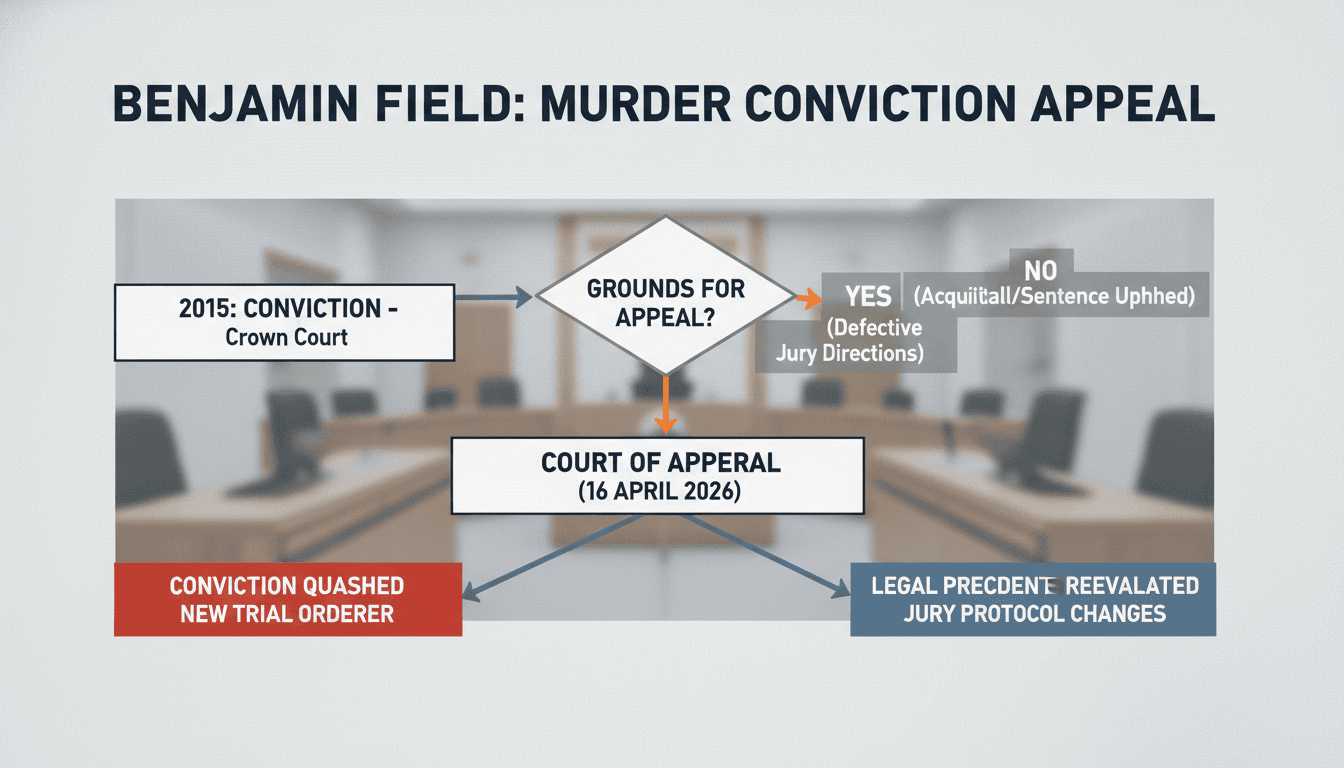
- On April 16, 2026, the Court of Appeal quashed Benjamin Field's murder conviction for the death of Peter Farquhar.
- Field was originally sentenced to life imprisonment in 2019 after being found guilty of manipulating and drugging Farquhar.
- A retrial has been ordered, and the Crown Prosecution Service has been granted leave to appeal to the Supreme Court.
The context you actually need
- Field's manipulation tactics included gaslighting and administering drugs to induce confusion in Farquhar, ultimately leading to his death in 2015.
- The Criminal Cases Review Commission referred the case back to the Court of Appeal, citing exceptional circumstances despite no new evidence.
- The Court's ruling focused on defective jury directions regarding alcohol administration and the voluntary nature of Farquhar's consumption.
What's really happening
The quashing of Benjamin Field's conviction for the murder of Peter Farquhar underscores significant issues within the criminal justice system, particularly concerning jury instructions and the interpretation of evidence. The Court of Appeal's decision to overturn the conviction was rooted in the finding that the jury had received inadequate guidance on critical aspects of the case, specifically regarding the administration of alcohol and the voluntary consumption by Farquhar. This raises fundamental questions about how juries are instructed to evaluate evidence and the potential for wrongful convictions based on flawed legal frameworks.
Field's case is emblematic of broader systemic issues that can arise in high-stakes criminal trials. The reliance on jury interpretation of complex medical and psychological evidence can lead to misjudgments, particularly when the instructions provided are ambiguous or misleading. The Court's ruling highlights the necessity for clear and precise jury directions to ensure that jurors can make informed decisions based on the evidence presented. This case may prompt a reevaluation of how jury instructions are formulated and delivered, potentially leading to reforms aimed at enhancing the clarity and effectiveness of legal guidance.
Moreover, the implications of this ruling extend beyond the immediate parties involved. The Crown Prosecution Service's decision to appeal to the Supreme Court indicates a recognition of the case's significance in shaping legal precedents. If the Supreme Court upholds the Court of Appeal's decision, it could set a new standard for how similar cases are handled in the future, influencing the prosecution's approach to cases involving complex evidence and jury instructions.
The retrial ordered by the Court of Appeal also raises concerns about the emotional and psychological toll on the families involved, particularly Farquhar's relatives, who may have to relive the trauma of the case. The legal process can be lengthy and arduous, and the uncertainty surrounding the retrial may prolong their suffering. Additionally, the case has garnered significant media attention, which can further complicate the proceedings and impact public perception of the justice system.
As the legal landscape evolves in response to this ruling, stakeholders across the justice system—including legal practitioners, policymakers, and advocacy groups—will need to engage in discussions about best practices and potential reforms to prevent similar issues from arising in the future. The outcome of this case could serve as a catalyst for change, prompting a reassessment of how justice is administered and ensuring that the rights of all parties are upheld.
Who feels it first (and how)
- Legal professionals: Lawyers and judges may need to adapt to new standards in jury instructions and evidence evaluation.
- Victims' families: Families of victims may experience renewed trauma during retrials and appeals.
- Public trust: The general public may question the reliability of the justice system, impacting perceptions of legal fairness.
What to watch next
- Supreme Court appeal: The outcome of the Crown Prosecution Service's appeal could redefine legal standards for jury instructions.
- Reforms in jury instructions: Watch for potential changes in how juries are instructed in complex cases, which could affect future trials.
- Public response: Monitor public sentiment regarding the justice system, as high-profile cases can influence trust and engagement with legal processes.
Benjamin Field's conviction has been quashed, and a retrial has been ordered.
The Crown Prosecution Service will pursue an appeal to the Supreme Court, which may lead to significant legal precedents.
The long-term impact on public trust in the justice system remains uncertain.
Frequently Asked Questions
- Why it matters?
- This case highlights potential flaws in jury instructions and the broader implications for legal standards in criminal trials.
- What happened (in 30 seconds)?
- On April 16, 2026, the Court of Appeal quashed Benjamin Field's murder conviction for the death of Peter Farquhar. Field was originally sentenced to life imprisonment in 2019 after being found guilty of manipulating and drugging Farquhar. A retrial has been ordered, and the Crown Prosecution Service has been granted leave to appeal to the Supreme Court.
- What's really happening?
- The quashing of Benjamin Field's conviction for the murder of Peter Farquhar underscores significant issues within the criminal justice system, particularly concerning jury instructions and the interpretation of evidence. The Court of Appeal's decision to overturn the conviction was rooted in the finding that the jury had received inadequate guidance on critical aspects of the case, specifically regarding the administration of alcohol and the voluntary consumption by Farquhar. This raises fundam
- Who feels it first (and how)?
- Legal professionals: Lawyers and judges may need to adapt to new standards in jury instructions and evidence evaluation. Victims' families: Families of victims may experience renewed trauma during retrials and appeals. Public trust: The general public may question the reliability of the justice system, impacting perceptions of legal fairness.
- What to watch next?
- Supreme Court appeal: The outcome of the Crown Prosecution Service's appeal could redefine legal standards for jury instructions. Reforms in jury instructions: Watch for potential changes in how juries are instructed in complex cases, which could affect future trials. Public response: Monitor public sentiment regarding the justice system, as high-profile cases can influence trust and engagement with legal processes.
International coverage from The Guardian's global desks.
"The Guardian is known for its progressive editorial stance and in-depth analysis."
— A47 Editor
Church warden jailed for life for murder of lecturer has conviction quashed
Benjamin Field, a former church warden, has had his life sentence for the murder of university lecturer Peter Farquhar quashed by the Court of Appeal, which has ordered a retrial. Field was originally convicted in 2019 for the murder of the 69-year-o...
UK politics, business, and social stories.
"Sky News is a UK-based 24-hour channel known for fast-breaking news and political coverage."
— A47 Editor
Church warden serving life for murder of university lecturer has conviction quashed
The Court of Appeal has quashed the life sentence of a former church warden, who was convicted for the murder of university lecturer Peter Farquhar. The case involved allegations of fraud by Ben Field, who was implicated in the circumstances surround...