
Pakistan Prime Minister Reports US-Iran Ceasefire Violations Amid Ongoing Tensions
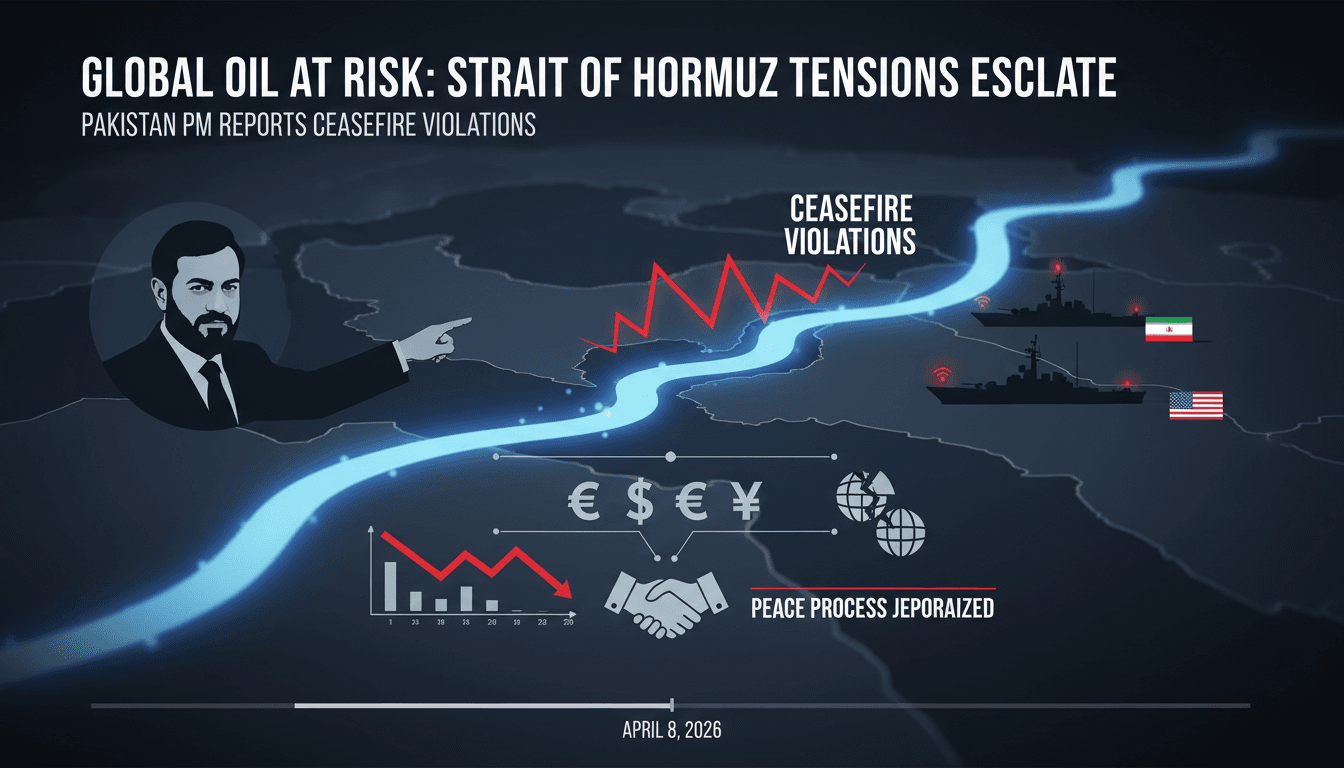
Here's what it means for you.
Rising tensions in the Middle East could impact global oil prices and regional stability, affecting your daily costs and security.
Why it matters
The ongoing ceasefire violations threaten diplomatic negotiations, which could lead to economic repercussions worldwide.
What happened (in 30 seconds)
- On April 8, 2026, Pakistan Prime Minister Shehbaz Sharif reported multiple ceasefire violations between the US and Iran.
- Iran blamed Israel for the incidents, while the US maintained readiness to resume military operations if necessary.
- Diplomatic talks are scheduled in Islamabad on April 10, 2026, amid a strained ceasefire.
The context you actually need
- The ceasefire was established after 40 days of escalating conflict that began with US strikes on Iranian targets in late February 2026.
- Pakistan has positioned itself as a mediator, facilitating indirect communications leading to the truce agreement effective April 7, 2026.
- Debris from intercepted Iranian missiles has already caused damage in Dubai, highlighting the conflict's regional implications.
What's really happening
The ceasefire between the United States and Iran, brokered by Pakistan, was intended to halt a series of violent escalations that had resulted in approximately 1,900 deaths in Iran alone. This conflict escalated significantly after US military strikes on Iranian targets in February 2026, which prompted Iran to retaliate with missile attacks that disrupted shipping lanes in the Strait of Hormuz. The geopolitical stakes are high, as the Strait is a critical artery for global oil transport.
The ceasefire, effective from April 7, was a fragile attempt to restore some semblance of order and facilitate diplomatic negotiations. However, just hours after the announcement, reports of violations surfaced, casting doubt on the commitment of involved parties to uphold the truce. Sharif's call for restraint reflects a broader concern that any further escalation could derail the peace process and lead to renewed hostilities.
Iran's attribution of the violations to Israel complicates the situation further, as it suggests a proxy conflict that could draw in additional regional players. The US's readiness to resume military operations indicates that it is prepared to respond to perceived threats, which could exacerbate tensions. The situation is precarious, as any miscalculation could lead to a broader conflict, impacting not only the Middle East but also global markets.
The aftermath of the ceasefire violations has immediate implications for oil prices, especially with the anticipated reopening of the Strait of Hormuz. Markets are closely monitoring the situation, as stability in this region is crucial for maintaining fuel prices. The Pakistani government’s role as a mediator positions it strategically, but it also places it under pressure to ensure compliance from both sides.
As the ceasefire remains strained, the potential for further violence looms large, and the diplomatic talks scheduled for April 10 will be critical in determining the next steps for all parties involved. The outcome of these negotiations will have significant implications for regional stability and global economic conditions.
Who feels it first (and how)
- Oil consumers: Fluctuations in oil prices could lead to increased costs at the pump.
- Businesses in Dubai: Damage from missile debris and air traffic disruptions could affect operations and safety.
- Regional governments: Increased military readiness may strain budgets and diplomatic relations.
What to watch next
- Diplomatic outcomes: The results of the talks in Islamabad on April 10 will indicate whether the ceasefire can be maintained.
- Market reactions: Watch for changes in oil prices following any announcements or escalations in conflict.
- Military movements: Increased military activity from the US or Israel could signal a shift towards renewed hostilities.
The ceasefire is currently strained, with reported violations.
Economic impacts on oil prices and regional stability will continue to evolve.
The long-term effectiveness of Pakistan's mediation efforts remains uncertain.
Frequently Asked Questions
- Why it matters?
- The ongoing ceasefire violations threaten diplomatic negotiations, which could lead to economic repercussions worldwide.
- What happened (in 30 seconds)?
- On April 8, 2026, Pakistan Prime Minister Shehbaz Sharif reported multiple ceasefire violations between the US and Iran. Iran blamed Israel for the incidents, while the US maintained readiness to resume military operations if necessary. Diplomatic talks are scheduled in Islamabad on April 10, 2026, amid a strained ceasefire.
- What's really happening?
- The ceasefire between the United States and Iran, brokered by Pakistan, was intended to halt a series of violent escalations that had resulted in approximately 1,900 deaths in Iran alone. This conflict escalated significantly after US military strikes on Iranian targets in February 2026, which prompted Iran to retaliate with missile attacks that disrupted shipping lanes in the Strait of Hormuz. The geopolitical stakes are high, as the Strait is a critical artery for global oil transport. The ce
- Who feels it first (and how)?
- Oil consumers: Fluctuations in oil prices could lead to increased costs at the pump. Businesses in Dubai: Damage from missile debris and air traffic disruptions could affect operations and safety. Regional governments: Increased military readiness may strain budgets and diplomatic relations.
- What to watch next?
- Diplomatic outcomes: The results of the talks in Islamabad on April 10 will indicate whether the ceasefire can be maintained. Market reactions: Watch for changes in oil prices following any announcements or escalations in conflict. Military movements: Increased military activity from the US or Israel could signal a shift towards renewed hostilities.
Arabic-language UAE newspaper coverage focused on domestic affairs, public institutions, business, society, and regional developments.
"Al Khaleej coverage generally reflects a mainstream UAE editorial lens with strong attention to public affairs, institutions, and regional developments."
— A47 Editor
باكستان: انتهاكات وقف النار بين أمريكا وإيران تقوّض السلام
Pakistani Prime Minister Shahbaz Sharif reported on Wednesday that there have been violations of the ceasefire between the United States and Iran, raising concerns about the stability of peace in the region. These violations could exacerbate tensions...
Arabic-language coverage of political affairs and current events.
"Okaz political coverage typically follows mainstream Saudi framing on national and regional affairs."
— A47 Editor
وفدان أمريكي وإيراني سيصلان إسلام أباد.. باكستان تحذّر من تقويض عملية السلام
Pakistani Prime Minister Shahbaz Sharif warned that violations of the ceasefire undermine the spirit of the peace process, urging all parties to respect the two-week truce. He emphasized the importance of diplomacy in achieving a peaceful resolution ...