
Trump Calls 45-Day Iran Ceasefire Proposal a Significant Step Amid Ongoing Conflict
Here's what it means for you.
Rising oil prices and geopolitical instability could directly impact your energy costs and economic outlook.
Why it matters
The ongoing conflict and proposed ceasefire are critical to global energy markets and regional stability.
What happened (in 30 seconds)
- Trump announced a 45-day ceasefire proposal amid the ongoing US-Israel-Iran war, calling it a "very significant step."
- Iran rejected the proposal, presenting a counteroffer with ten demands, including sanctions relief.
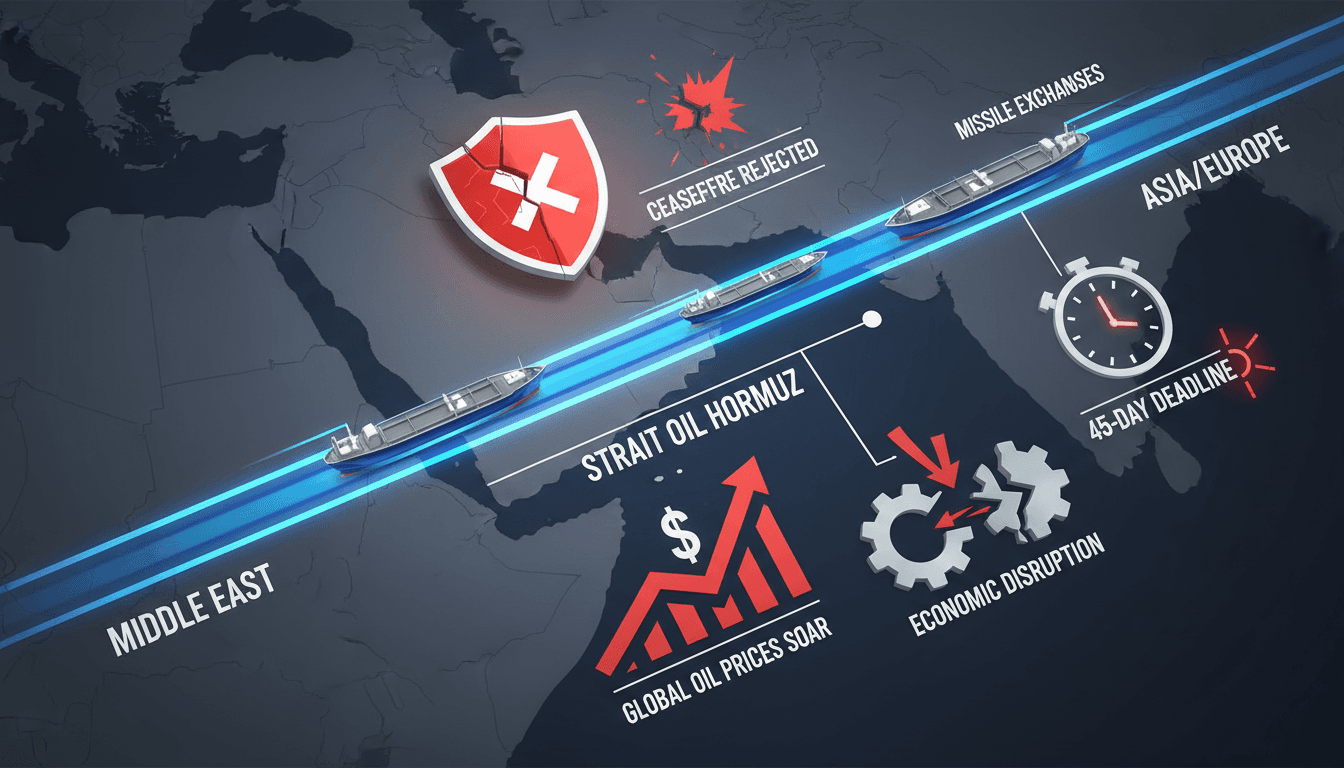
- Global oil prices surged as tensions escalated, with the Strait of Hormuz closed, affecting approximately 21% of the world's seaborne oil trade.
The context you actually need
- The Iran war began on February 28, 2026, when U.S. and Israeli forces launched airstrikes targeting Iranian military and nuclear sites, prompting Iran to retaliate.
- The Strait of Hormuz, a vital shipping route, was closed by Iran on March 4, leading to significant disruptions in global energy supplies and rising oil prices.
- Diplomatic efforts, including mediation by Pakistan, have stalled, with Iran's rejection of the ceasefire proposal highlighting the complexities of negotiations.
What's really happening
The proposed 45-day ceasefire in the ongoing conflict between the U.S., Israel, and Iran represents a critical juncture in a war that has already seen significant military engagement and geopolitical ramifications. The conflict began with Operation Epic Fury, a coordinated assault by U.S. and Israeli forces aimed at crippling Iran's military capabilities and nuclear ambitions. This aggressive strategy was met with swift retaliation from Iran, which not only closed the Strait of Hormuz but also launched missile strikes on regional targets.
The closure of the Strait of Hormuz, a crucial artery for global oil transport, has significant implications for energy markets. Approximately 21% of the world's seaborne oil trade passes through this narrow waterway, and its closure has already led to rising Brent crude prices, which have exceeded $120 per barrel. This spike in oil prices is felt globally, particularly in energy-dependent economies, leading to increased fuel costs for consumers and businesses alike.
The diplomatic landscape is equally fraught. Trump's characterization of the ceasefire proposal as a "very significant step" reflects an attempt to de-escalate tensions while maintaining a hardline stance against Iran. However, Iran's rejection of the proposal, coupled with its counteroffer demanding an end to hostilities and sanctions relief, indicates a deep-seated unwillingness to compromise. This stalemate not only prolongs the conflict but also exacerbates economic pressures on nations reliant on oil imports.
The U.S. administration's threats of military action against Iranian infrastructure if the Strait remains closed further complicates the situation. Such threats could lead to broader military engagement, potentially drawing in other regional players and escalating the conflict beyond its current scope. The involvement of Pakistan as a mediator highlights the international dimension of the crisis, as countries around the world are keenly aware of the potential for widespread economic fallout.
As the situation develops, the interconnectedness of global markets means that the repercussions of this conflict will be felt far beyond the Middle East. Energy prices will likely continue to fluctuate based on developments in the region, impacting everything from transportation costs to inflation rates in various economies.
Who feels it first (and how)
- Consumers: Higher fuel prices will directly affect household budgets and transportation costs.
- Businesses: Companies reliant on oil and gas may face increased operational costs, impacting profitability.
- Investors: Volatility in oil prices can lead to fluctuations in stock markets, particularly in energy sectors.
- Governments: Nations dependent on oil imports will experience economic strain, potentially leading to policy shifts.
What to watch next
- Oil price trends: Continued fluctuations in oil prices will indicate market reactions to the conflict and ceasefire negotiations.
- Diplomatic developments: Any new proposals or mediation efforts could signal shifts in the conflict's trajectory.
- Military actions: Escalations or de-escalations in military engagement will impact regional stability and global markets.
The U.S. and Israel initiated military action against Iran, leading to significant conflict.
Oil prices will remain volatile as the situation unfolds, affecting global economies.
The future of diplomatic negotiations and potential resolutions to the conflict remains uncertain.
Frequently Asked Questions
- Why it matters?
- The ongoing conflict and proposed ceasefire are critical to global energy markets and regional stability.
- What happened (in 30 seconds)?
- Trump announced a 45-day ceasefire proposal amid the ongoing US-Israel-Iran war, calling it a "very significant step." Iran rejected the proposal, presenting a counteroffer with ten demands, including sanctions relief. Global oil prices surged as tensions escalated, with the Strait of Hormuz closed, affecting approximately 21% of the world's seaborne oil trade.
- What's really happening?
- The proposed 45-day ceasefire in the ongoing conflict between the U.S., Israel, and Iran represents a critical juncture in a war that has already seen significant military engagement and geopolitical ramifications. The conflict began with Operation Epic Fury, a coordinated assault by U.S. and Israeli forces aimed at crippling Iran's military capabilities and nuclear ambitions. This aggressive strategy was met with swift retaliation from Iran, which not only closed the Strait of Hormuz but also l
- Who feels it first (and how)?
- Consumers: Higher fuel prices will directly affect household budgets and transportation costs. Businesses: Companies reliant on oil and gas may face increased operational costs, impacting profitability. Investors: Volatility in oil prices can lead to fluctuations in stock markets, particularly in energy sectors. Governments: Nations dependent on oil imports will experience economic strain, potentially leading to policy shifts.
- What to watch next?
- Oil price trends: Continued fluctuations in oil prices will indicate market reactions to the conflict and ceasefire negotiations. Diplomatic developments: Any new proposals or mediation efforts could signal shifts in the conflict's trajectory. Military actions: Escalations or de-escalations in military engagement will impact regional stability and global markets.
Regional coverage and analysis focused on politics, diplomacy, and business across the Middle East.
"Al-Monitor is known for analytical reporting on Middle East politics and policy developments."
— A47 Editor
Trump says Iran ceasefire proposal 'very significant step'
U.S. President Donald Trump described a proposed ceasefire in the ongoing Iran war as a 'very significant step,' although he noted it is insufficient to resolve the conflict. This statement followed the White House's confirmation of a potential 45-da...
Capitol Hill news, legislation, and policy insight.
"The Hill specializes in U.S. politics and policy, with a focus on Capitol Hill developments and a reputation for insider reporting."
— A47 Editor
Trump: Iran ceasefire proposal 'significant,' 'not good enough'
President Trump acknowledged that Iran's latest ceasefire proposal is a significant step forward, though he deemed it insufficient. This statement was made during a press briefing ahead of the White House's annual Easter Egg Roll, highlighting ongoin...
U.S. political news and right-leaning commentary.
"Fox News is a highly influential conservative news outlet known for right-leaning political commentary and coverage."
— A47 Editor
Trump reveals Iran made 'significant proposal' after ultimatum, but 'not good enough'
President Trump announced that Iran has made a 'significant proposal' in response to an ultimatum, but he deemed it insufficient during a press briefing at the White House Easter Egg Roll. This statement comes amid ongoing military tensions and strik...