
US and Iran Reach Two-Week Ceasefire Agreement Amid Ongoing Conflict
Here's what it means for you.
The recent ceasefire between the U.S. and Iran could stabilize oil markets, impacting global supply chains and energy costs.
Why it matters
This ceasefire is crucial for global oil supply stability, influencing energy prices and economic conditions worldwide.
What happened (in 30 seconds)
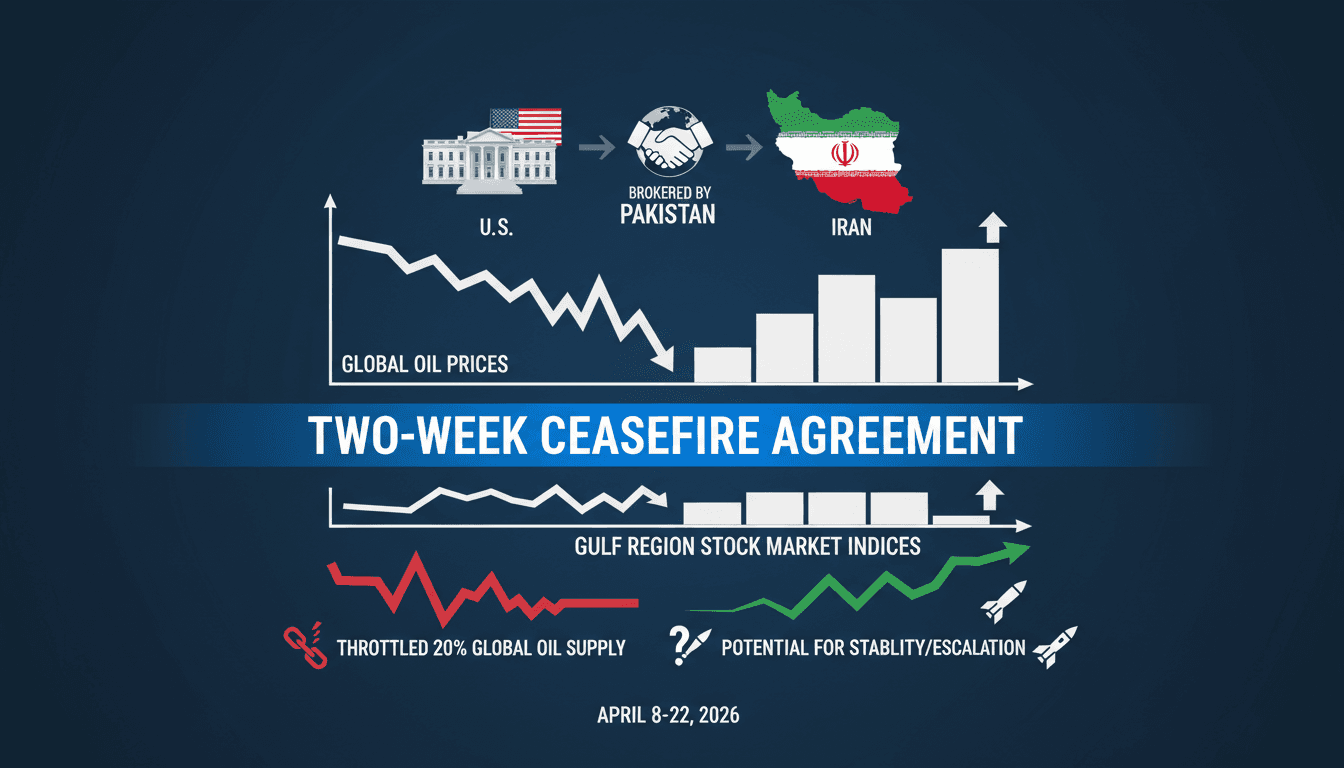
- On April 8, 2026, U.S. President Donald Trump announced a two-week ceasefire with Iran, brokered by Pakistan.
- The agreement follows a conflict that disrupted 20% of global oil supplies, leading to spiking oil prices.
- Despite the truce, violations occurred almost immediately, with strikes reported in Lebanon and Gulf states.
The context you actually need
- The conflict began on February 28, 2026, when Iran partially closed the Strait of Hormuz, impacting oil supply and prices.
- U.S. and Israeli actions targeted Iranian military assets, escalating tensions and prompting Iranian retaliation against Gulf states.
- The ceasefire aims to address broader issues, including nuclear negotiations and regional stability, amidst ongoing military actions.
What's really happening
The U.S.–Iran ceasefire agreement represents a fragile pause in a conflict that has significant implications for global oil markets and geopolitical stability. The situation escalated dramatically when Iran closed the Strait of Hormuz, a critical chokepoint for oil transport, which resulted in a 20% reduction in global oil supply. This disruption sent oil prices soaring to $118 per barrel, causing alarm in markets worldwide.
The U.S. responded with threats to strike Iranian infrastructure, which included power grids and ports, aiming to pressure Iran into compliance. The involvement of Israel, which conducted strikes against Hezbollah in Lebanon, further complicated the situation. These actions created a volatile environment where regional powers were on high alert, and the potential for a broader conflict loomed large.
The ceasefire, brokered by Pakistan, was a strategic move to de-escalate tensions and stabilize oil prices. However, the immediate aftermath saw violations of the ceasefire, with Israel launching strikes on Hezbollah and Iran retaliating against Gulf oil facilities. This indicates that while the ceasefire may have momentarily halted some hostilities, the underlying tensions remain unresolved.
The economic implications are significant. Oil prices dropped 15% below $100 per barrel following the announcement, with Brent crude trading at $94. This price relief has spurred stock market rallies in Gulf states, particularly in Dubai, where the Financial Market General Index surged by 8.5%, the largest gain in over a decade. The ceasefire has provided a temporary reprieve for businesses and consumers, but the fragility of the agreement means that volatility could return if hostilities resume.
Negotiations are set to continue in Islamabad, focusing on critical issues such as nuclear capabilities, sanctions, and regional stability. The outcome of these talks will be pivotal in determining the future of U.S.–Iran relations and the broader geopolitical landscape in the Middle East.
Who feels it first (and how)
- Energy sector professionals: Fluctuations in oil prices directly impact job stability and profitability.
- Investors in Gulf markets: Stock market performance is closely tied to oil prices and geopolitical stability.
- Consumers globally: Changes in oil prices affect transportation and goods costs, influencing everyday expenses.
What to watch next
- Further negotiations in Islamabad: The outcomes will shape future U.S.–Iran relations and regional stability, impacting oil supply.
- Market reactions to ceasefire violations: Continued military actions could lead to renewed volatility in oil prices and stock markets.
- Global oil supply trends: Watch for shifts in production levels from OPEC and non-OPEC countries in response to the ceasefire.
The ceasefire is currently fragile, with ongoing violations reported.
Oil prices will remain volatile as the situation develops and negotiations unfold.
The long-term effectiveness of the ceasefire in achieving lasting peace and stability in the region.
Frequently Asked Questions
- Why it matters?
- This ceasefire is crucial for global oil supply stability, influencing energy prices and economic conditions worldwide.
- What happened (in 30 seconds)?
- On April 8, 2026, U.S. President Donald Trump announced a two-week ceasefire with Iran, brokered by Pakistan. The agreement follows a conflict that disrupted 20% of global oil supplies, leading to spiking oil prices. Despite the truce, violations occurred almost immediately, with strikes reported in Lebanon and Gulf states.
- What's really happening?
- The U.S.–Iran ceasefire agreement represents a fragile pause in a conflict that has significant implications for global oil markets and geopolitical stability. The situation escalated dramatically when Iran closed the Strait of Hormuz, a critical chokepoint for oil transport, which resulted in a 20% reduction in global oil supply. This disruption sent oil prices soaring to $118 per barrel, causing alarm in markets worldwide. The U.S. responded with threats to strike Iranian infrastructure, whic
- Who feels it first (and how)?
- Energy sector professionals: Fluctuations in oil prices directly impact job stability and profitability. Investors in Gulf markets: Stock market performance is closely tied to oil prices and geopolitical stability. Consumers globally: Changes in oil prices affect transportation and goods costs, influencing everyday expenses.
- What to watch next?
- Further negotiations in Islamabad: The outcomes will shape future U.S.–Iran relations and regional stability, impacting oil supply. Market reactions to ceasefire violations: Continued military actions could lead to renewed volatility in oil prices and stock markets. Global oil supply trends: Watch for shifts in production levels from OPEC and non-OPEC countries in response to the ceasefire.
Regional coverage and analysis focused on politics, diplomacy, and business across the Middle East.
"Al-Monitor is known for analytical reporting on Middle East politics and policy developments."
— A47 Editor
Explainer-US-Iran ceasefire: what we know
On April 7, 2026, U.S. President Donald Trump announced a two-week ceasefire with Iran, facilitated by Pakistan, following escalating military tensions. This ceasefire comes just before a deadline for Iran to reopen the strategically vital Strait of ...
Regional coverage and analysis focused on politics, diplomacy, and business across the Middle East.
"Al-Monitor is known for analytical reporting on Middle East politics and policy developments."
— A47 Editor
Explainer-What the US, Iran, Israel and Pakistan have said about the ceasefire
The United States, Iran, and Israel have agreed to a two-week ceasefire, facilitated by Pakistan, following escalating military tensions and a looming deadline set by President Donald Trump for Iran to reopen the strategic Strait of Hormuz. This ceas...
European coverage of Middle East politics and security issues.
"France 24 offers international reporting with a European editorial perspective."
— A47 Editor
Macron urges Trump, Iran's Pezeshkian to include Lebanon in ceasefire as Israeli strikes kill 182
French President Emmanuel Macron has called on U.S. President Donald Trump and Iranian President Masoud Pezeshkian to include Lebanon in a ceasefire agreement, following Israeli airstrikes that resulted in 182 fatalities. This urgent plea comes amid ...
Coverage of current events and conflicts in the Middle East.
"France 24 is viewed as a globally focused outlet with balanced coverage and a European perspective."
— A47 Editor
Macron urges Trump, Iran's Pezeshkian to include Lebanon in ceasefire as Israeli strikes kill 182
French President Emmanuel Macron has called on U.S. President Donald Trump and Iranian President Masoud Pezeshkian to include Lebanon in a ceasefire agreement, following Israeli airstrikes that resulted in 182 fatalities. This urgent plea comes amid ...
News from the United States including domestic politics, society, and culture.
"The Guardian is known for its progressive editorial stance and in-depth analysis, often advocating for social justice, environmental issues, and liberal values."
— A47 Editor
Trump news at a glance: president steps back from threat to destroy Iran’s ‘whole civilization’ after ceasefire deal reached
President Donald Trump announced a two-week conditional ceasefire with Iran, following a last-minute diplomatic intervention led by Pakistan, which came just before a self-imposed deadline for Iran to comply with U.S. demands. This ceasefire aims to ...
English-language reporting on Saudi politics, policy, and society.
"Saudi Gazette reflects mainstream Saudi institutional perspectives."
— A47 Editor
Trump announces 2-week ceasefire with Iran
US President Donald Trump announced a two-week ceasefire with Iran, following discussions with Pakistani leaders, including Prime Minister Shehbaz Sharif. The ceasefire is contingent upon Iran's immediate and safe reopening of the Strait of Hormuz. T...
RT is a Russian state-funded network covering global events from a Russian perspective.
"RT is widely criticized for promoting pro-Kremlin narratives and is considered by many to be a state propaganda outlet."
— A47 Editor
Trump walks back threat to destroy Iranian civilization
President Donald Trump has announced a two-week ceasefire with Iran, retracting his previous threats to destroy Iranian civilization and suspending military action against the country. This decision follows heightened tensions and an ultimatum demand...
UAE-based English-language newspaper covering regional politics, economics, and global affairs.
"The National reflects Emirati policy perspectives while maintaining international editorial standards."
— A47 Editor
US and Tehran agree to conditional ceasefire after Trump threatened to destroy Iran's civilisation
The United States and Iran have reached a conditional two-week ceasefire agreement following escalating tensions and threats from President Donald Trump to destroy Iranian civilization unless Iran reopened the strategic Strait of Hormuz. This agreeme...