
European Commission's Age Verification App Ready to Combat Online Child Safety Risks
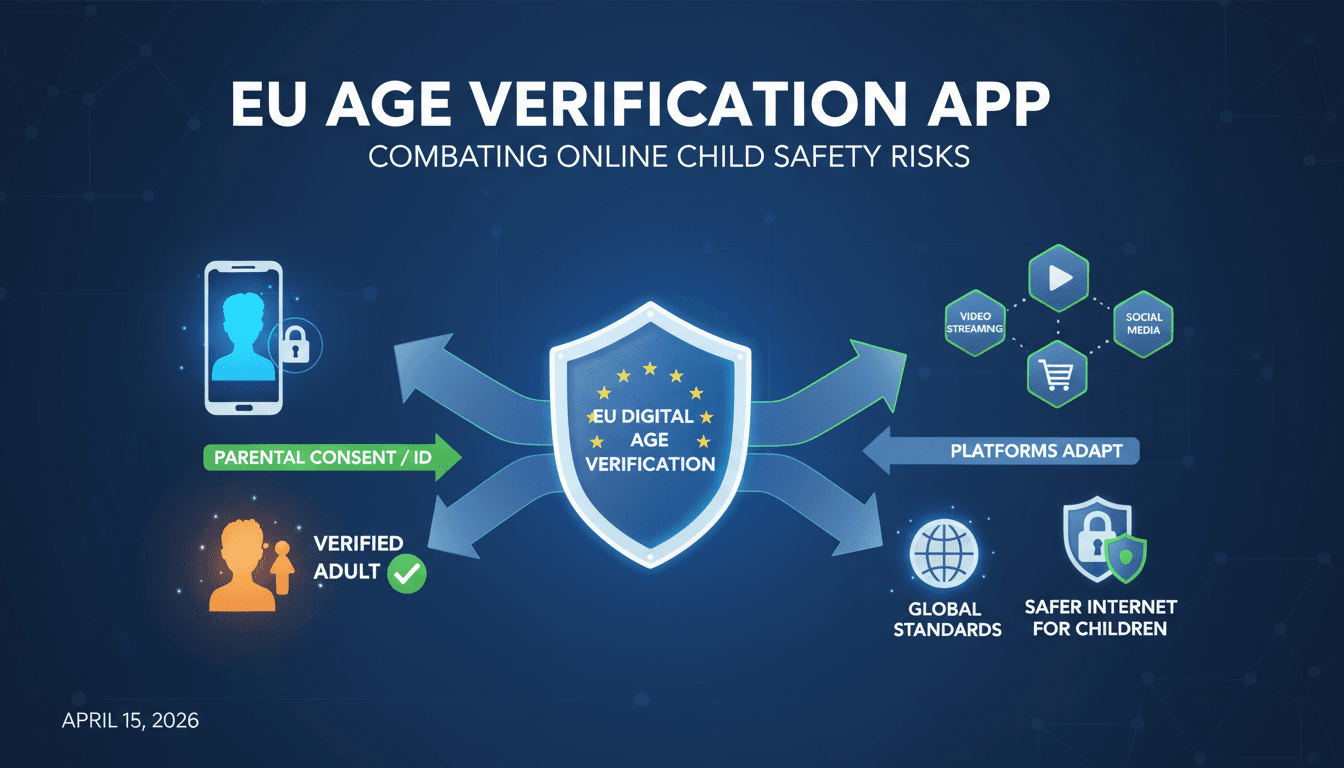
Here's what it means for you.
If you engage with digital platforms in Europe, expect stricter age verification processes aimed at protecting minors.
Why it matters
This initiative reflects a growing regulatory trend to enhance child safety online, impacting how platforms operate and how users interact with them.
What happened (in 30 seconds)
- On April 15, 2026, the European Commission announced the technical readiness of its age verification app designed to protect children online.
- The app integrates with national digital wallets in several EU member states, allowing users to verify their age using legal identification documents.
- Commission President Ursula von der Leyen emphasized the app as a vital tool for parents and educators to safeguard minors from harmful content.
The context you actually need
- The Digital Services Act (DSA) mandates online platforms to mitigate risks to minors, including exposure to harmful content and addictive designs.
- Previous enforcement actions targeted major platforms like TikTok and Meta for inadequate age controls, with fines reaching up to 6% of global turnover.
- Public sentiment is strong, with 9 in 10 Europeans supporting urgent action to enhance online protection for children, according to a 2025 survey.
What's really happening
The European Commission's age verification app is a significant step in the ongoing evolution of the Digital Services Act (DSA), which has been in effect since 2022. The DSA aims to create a safer online environment, particularly for minors, by imposing stringent requirements on digital platforms. The app's technical readiness marks a pivotal moment in this regulatory framework, as it is designed to ensure that users can verify their age without compromising their privacy.
The app utilizes government-issued identification documents to confirm users' ages, integrating seamlessly into national digital wallets across member states like France, Italy, Spain, and Greece. This approach not only enhances security but also addresses privacy concerns by ensuring that user data remains anonymous and is not tracked. The app's deployment is expected to coincide with the DSA's obligations for platforms to implement robust age verification measures, creating a more accountable digital landscape.
The implications of this development are multifaceted. For one, it empowers parents, teachers, and caretakers by providing them with tools to monitor and control minors' access to potentially harmful content. This shift in responsibility from platforms to guardians reflects a broader trend in digital governance, where accountability is increasingly placed on users and their support systems rather than solely on tech companies.
However, the rollout of the app is not without its challenges. Critics have raised concerns about the potential for circumvention through VPNs, as seen in other regions like the UK and Australia. Additionally, privacy advocates question the app's claims of anonymity, fearing that it could lead to increased tracking of users. The tech industry is also bracing for ongoing scrutiny, as platforms face investigations under the DSA for compliance failures.
As member states advance their national age limits, the app's introduction could set a precedent for similar initiatives worldwide. The EU's proactive stance on child safety online may influence other regions, including the UAE, where similar regulations are being implemented. The interplay between these regulatory frameworks could lead to a more harmonized approach to online safety, but it also raises questions about the balance between user privacy and the need for protection.
Who feels it first (and how)
- Parents and guardians: They will have enhanced tools to monitor and control their children's online activities.
- Digital platforms: Companies like TikTok, Meta, and Snapchat will face increased scrutiny and potential penalties for non-compliance.
- Children and teenagers: They may experience restricted access to certain online content, impacting their digital interactions.
- Privacy advocates: They will closely monitor the app's implementation and its implications for user data privacy.
- EU member states: National governments will need to adapt their regulations and enforcement mechanisms in line with the DSA.
What to watch next
- Implementation timelines: Monitor when the app will be rolled out across member states and how quickly platforms adapt to the new requirements.
- Compliance penalties: Watch for enforcement actions against platforms that fail to meet the DSA's age verification standards, which could set industry benchmarks.
- Public response: Keep an eye on how parents and educators react to the app's effectiveness in protecting children online, as this will influence future regulatory measures.
The app is technically ready and will be integrated into national digital wallets.
Increased scrutiny and enforcement actions against non-compliant platforms will follow the app's rollout.
The long-term effectiveness of the app in preventing minors' access to harmful content remains to be seen.
Frequently Asked Questions
- Why it matters?
- This initiative reflects a growing regulatory trend to enhance child safety online, impacting how platforms operate and how users interact with them.
- What happened (in 30 seconds)?
- On April 15, 2026, the European Commission announced the technical readiness of its age verification app designed to protect children online. The app integrates with national digital wallets in several EU member states, allowing users to verify their age using legal identification documents. Commission President Ursula von der Leyen emphasized the app as a vital tool for parents and educators to safeguard minors from harmful content.
- What's really happening?
- The European Commission's age verification app is a significant step in the ongoing evolution of the Digital Services Act (DSA), which has been in effect since 2022. The DSA aims to create a safer online environment, particularly for minors, by imposing stringent requirements on digital platforms. The app's technical readiness marks a pivotal moment in this regulatory framework, as it is designed to ensure that users can verify their age without compromising their privacy. The app utilizes gove
- Who feels it first (and how)?
- Parents and guardians: They will have enhanced tools to monitor and control their children's online activities. Digital platforms: Companies like TikTok, Meta, and Snapchat will face increased scrutiny and potential penalties for non-compliance. Children and teenagers: They may experience restricted access to certain online content, impacting their digital interactions. Privacy advocates: They will closely monitor the app's implementation and its implications for user data privacy. EU me
- What to watch next?
- Implementation timelines: Monitor when the app will be rolled out across member states and how quickly platforms adapt to the new requirements. Compliance penalties: Watch for enforcement actions against platforms that fail to meet the DSA's age verification standards, which could set industry benchmarks. Public response: Keep an eye on how parents and educators react to the app's effectiveness in protecting children online, as this will influence future regulatory measures.
Latest tech news, product reviews, and analysis for consumers and professionals.
"CNET delivers accessible and detailed technology reporting, including trusted product reviews and how-to guides."
— A47 Editor
How to Keep Kids Safe Online? Europe Believes Its Age Verification App Is the Answer
The European Commission has announced that its new age verification app, aimed at keeping children safe online, is technically ready and will soon be available, as stated by President Ursula von der Leyen. This initiative comes in response to growing...
Technology business news, market impacts, and innovation trends.
"Bloomberg is a premier financial and tech news provider, respected for its in-depth reporting and analytical rigor."
— A47 Editor
EU Unveils Age Verification App as Social Media Bans Gain Steam
The European Union has introduced a new app designed to verify users' ages online, establishing a benchmark for age verification technology as various countries contemplate legislation to restrict social media access for younger teenagers.
Technology and innovation coverage, including consumer tech and digital transformation stories.
"Emirates 24|7 technology coverage often highlights practical tech developments with relevance to Gulf readers and businesses."
— A47 Editor
EU children's social media access curbed soon as age verification app is ready EU children's social media access curbed soon as age verification app is ready
The European Commission has announced the readiness of an age verification app aimed at regulating children's access to social media, as stated by President Ursula von der Leyen. This initiative comes as EU member states, inspired by Australia's rece...