
Trump Administration Considers Military Strikes on Iran After Failed Peace Talks
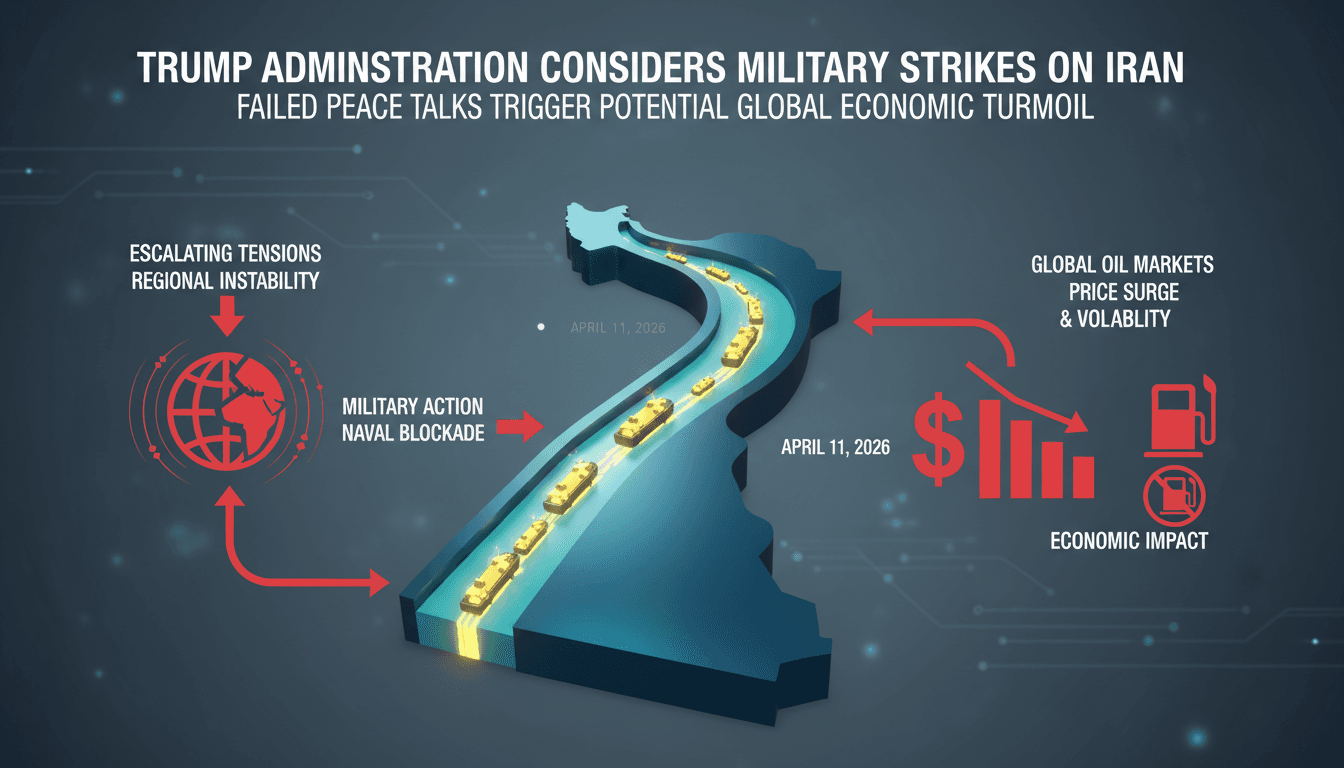
Here's what it means for you.
Rising tensions in the Middle East could lead to increased energy prices and market volatility, impacting global economies.
Why it matters
The U.S.-Iran conflict directly influences global oil supply and prices, affecting economies worldwide.
What happened (in 30 seconds)
- U.S. President Donald Trump is considering limited military strikes against Iran after peace talks in Islamabad collapsed.
- A U.S. naval blockade of the Strait of Hormuz was implemented to counter Iranian tolls and mines, escalating tensions.
- Oil prices surged following the blockade announcement, impacting global markets and raising concerns over energy inflation.
The context you actually need
- The U.S.-Iran conflict has escalated into open hostilities, with a fragile ceasefire established earlier in April 2026.
- Key issues include Iran's nuclear program, control over the Strait of Hormuz, and funding of proxy groups like Hezbollah.
- Pakistan mediated high-stakes talks in Islamabad, but negotiations failed after Iran rejected U.S. demands.
What's really happening
The collapse of peace talks in Islamabad on April 11, 2026, marked a significant turning point in U.S.-Iran relations. U.S. Vice President JD Vance led a 21-hour negotiation effort aimed at addressing critical issues such as Iran's nuclear ambitions and its influence in the Strait of Hormuz. However, Iran's refusal to concede on these points prompted President Trump to consider military options, including limited strikes on Iranian infrastructure.
The U.S. has a vested interest in maintaining free navigation through the Strait of Hormuz, a vital corridor for global oil transport. Approximately 20% of the world's oil passes through this strait, making it a strategic focal point for U.S. foreign policy. The blockade announced on April 12, 2026, aims to interdict vessels paying tolls to Iran and clear mines, which the U.S. claims threaten maritime safety. This move, however, violates the fragile ceasefire established just weeks prior, raising the stakes for all parties involved.
The economic implications are profound. Oil prices surged above $100 per barrel following the blockade announcement, reflecting market fears of supply disruptions. This spike in prices could lead to increased fuel costs for consumers and businesses, particularly in regions heavily reliant on oil imports. In Dubai, for instance, residents are already feeling the pinch as fuel prices rise, and the Dubai Financial Market is experiencing volatility due to these developments.
Moreover, the U.S. is weighing its military options carefully. While limited strikes on Iranian infrastructure, such as desalination plants, are under consideration, full-scale bombing campaigns are deemed too risky. The potential for retaliation from Iran could escalate the conflict further, drawing in U.S. allies and destabilizing the region.
The situation is fluid, with diplomatic channels still open but strained. Saudi Arabia has urged the U.S. to lift the blockade and return to negotiations, while Iran has vowed to retaliate against any military actions. Pakistan, as the mediator, is concerned about the escalation and its implications for regional stability.
Who feels it first (and how)
- Consumers: Increased fuel prices will affect daily expenses and transportation costs.
- Businesses: Companies reliant on oil will face higher operational costs, impacting profitability.
- Investors: Market volatility may lead to cautious investment strategies, particularly in energy sectors.
- Governments: Nations dependent on oil imports will experience economic strain, influencing policy decisions.
What to watch next
- Oil price fluctuations: Monitoring how prices respond to military actions and diplomatic efforts will be crucial for economic forecasts.
- Diplomatic negotiations: Any signs of renewed talks or concessions from Iran could shift the current trajectory of conflict.
- Military movements: Increased U.S. military presence in the region may indicate a shift towards more aggressive posturing.
The U.S. has implemented a naval blockade of the Strait of Hormuz.
Oil prices will continue to rise amid fears of supply disruptions.
The long-term impact of military strikes on regional stability and U.S.-Iran relations remains uncertain.
Frequently Asked Questions
- Why it matters?
- The U.S.-Iran conflict directly influences global oil supply and prices, affecting economies worldwide.
- What happened (in 30 seconds)?
- U.S. President Donald Trump is considering limited military strikes against Iran after peace talks in Islamabad collapsed. A U.S. naval blockade of the Strait of Hormuz was implemented to counter Iranian tolls and mines, escalating tensions. Oil prices surged following the blockade announcement, impacting global markets and raising concerns over energy inflation.
- What's really happening?
- The collapse of peace talks in Islamabad on April 11, 2026, marked a significant turning point in U.S.-Iran relations. U.S. Vice President JD Vance led a 21-hour negotiation effort aimed at addressing critical issues such as Iran's nuclear ambitions and its influence in the Strait of Hormuz. However, Iran's refusal to concede on these points prompted President Trump to consider military options, including limited strikes on Iranian infrastructure. The U.S. has a vested interest in maintaining f
- Who feels it first (and how)?
- Consumers: Increased fuel prices will affect daily expenses and transportation costs. Businesses: Companies reliant on oil will face higher operational costs, impacting profitability. Investors: Market volatility may lead to cautious investment strategies, particularly in energy sectors. Governments: Nations dependent on oil imports will experience economic strain, influencing policy decisions.
- What to watch next?
- Oil price fluctuations: Monitoring how prices respond to military actions and diplomatic efforts will be crucial for economic forecasts. Diplomatic negotiations: Any signs of renewed talks or concessions from Iran could shift the current trajectory of conflict. Military movements: Increased U.S. military presence in the region may indicate a shift towards more aggressive posturing.
Arabic-language coverage of international news and geopolitics.
"RT Arabic is a Russian state-funded outlet often criticized for promoting Kremlin-aligned narratives."
— A47 Editor
"وول ستريت جورنال: ترامب يدرس استئناف ضربات محدودة ضد إيران بعد انهيار مفاوضات إسلام آباد
The Wall Street Journal reported that U.S. President Donald Trump is considering limited strikes against Iran following the collapse of negotiations in Islamabad, coinciding with a blockade of the Strait of Hormuz. This development indicates a potent...
Arabic-language digital news outlet covering UAE, regional, and international developments with broad general-news coverage.
"Al Ain News coverage typically blends UAE-focused reporting with wider Arab regional and international news."
— A47 Editor
وول ستريت جورنال: ترامب يدرس استئناف الضربات العسكرية على إيران
The Wall Street Journal reported that U.S. President Donald Trump and his advisors are considering resuming limited military strikes against Iran following unsuccessful talks in Pakistan. This development indicates a potential shift in U.S. foreign p...
Arabic-language political and world news coverage for UAE readers.
"Emarat Al Youm world coverage usually presents international developments through a UAE and Arab audience lens."
— A47 Editor
"وول ستريت جورنال": ترامب يدرس توجيه ضربات محدودة لإيران بعد انهيار المحادثات "وول ستريت جورنال": ترامب يدرس توجيه ضربات محدودة لإيران بعد انهيار المحادثات
According to the Wall Street Journal, President Donald Trump is considering limited strikes against Iran following the collapse of negotiations. This information comes from officials and insiders familiar with the situation.
Pan-Arab political news and analysis.
"Al-Quds Al-Arabi is a London-based Arabic newspaper known for political coverage."
— A47 Editor
وول ستريت جورنال: ترامب يدرس توجيه ضربات محدودة لإيران بعد انهيار المحادثات
The Wall Street Journal reported that U.S. President Donald Trump and his advisors are considering resuming limited military strikes against Iran and establishing U.S. control over the Strait of Hormuz as a strategy to break the deadlock in peace tal...